
Engagieren Sie einen Berater, wenn Ihrem Team praktische ISMS-Erfahrung fehlt, Ihr Zeitplan unter einem Jahr liegt oder Sie gleichzeitig mehr als ein Framework anstreben. Bevor Sie jemanden in die engere Wahl nehmen, verlangen Sie drei Dinge schriftlich: einen namentlich benannten leitenden Praktiker mit echten Qualifikationen, vertragliche Unabhängigkeit von der Zertifizierungsstelle, die Sie zertifizieren wird, sowie einen Lückenanalyse-Vorschlag mit fest definierten Lieferergebnissen und Terminen. Schließen Sie jede Firma aus, die sich nicht zu allen drei Punkten schriftlich verpflichtet. Ihr nächster Schritt ist einfach: Senden Sie eine Anfrage für einen schriftlichen Lückenanalyse-Vorschlag an zwei oder drei Berater und vergleichen Sie die Antworten.
TL;DR:
- Wählen Sie einen ISO 27001 Berater mit relevanter Branchenerfahrung und Vertrautheit mit Cloud-Infrastrukturen, um praxisnahe Risikobewertungen und Kontrollzuordnungen sicherzustellen.
- Vergewissern Sie sich, dass die Qualifikationen des Beraters mindestens eine formale ISO 27001 Lead Implementer- oder Lead Auditor-Zertifizierung sowie spezifische Expertise in der Größe und Branche Ihrer Organisation umfassen.
- Fordern Sie detaillierte Angebote mit namentlich genanntem Personal, klaren Lieferergebnissen wie einem Lückenbericht, festen Zeitplänen und Referenzen von vergleichbaren Kunden an, um vage Zusagen zu vermeiden.
- Bevorzugen Sie Festpreisverträge, wenn der Umfang klar definiert ist, und erwägen Sie kombinierte ISO- und SOC 2-Projekte, um die Gesamtkosten zu senken – insbesondere für mittelgroße Organisationen.
- Verwenden Sie Tools wie den ISMS Calculator, um Kosten und Aufwand vorab zu schätzen, und achten Sie bei der Auswahl auf Angebote mit namentlich genannten Praktikern, konkreten Lieferergebnissen und einer nachgewiesenen Erfolgsbilanz.
Inhaltsverzeichnis
- Was ISO 27001 Berater tun und wann man einen engagiert
- Auswahlkriterien: Qualifikationen, Erfahrung und Pflichtbestandteile eines Angebots
- Engagement-Modelle und Preisgestaltung: Festpreis, T&M und Kostentreiber
- Prüffragen, Referenzprüfungen und Warnsignale, die Sie vermeiden sollten
- Zeitplan und Erwartungen: Von der Lückenanalyse bis zum Überwachungsaudit
- Unabhängigkeit und Übergabe: Was Ihr Vertrag festlegen sollte
- Softwareplattformen, vCISO und hybride Ansätze
- Praktische nächste Schritte: RFP-Checkliste und ein 6- bis 12-Monats-Plan
- Die Einschätzung eines Praktikers zur Auswahl des richtigen Beraters
- Beschleunigen Sie Ihre Beratersuche mit dem ISMS Calculator
- Quellen
Was ISO 27001 Berater tun und wann man einen engagiert
Ein guter Berater erledigt die Arbeit, die einen über 100 Seiten langen Standard in etwas verwandelt, das Ihr Team tatsächlich umsetzen kann. Dazu gehören eine Lückenanalyse gegenüber Ihren aktuellen Kontrollen, eine Risikobewertung und ein Risikobehandlungsplan, eine Anwendbarkeitserklärung (Statement of Applicability), die aufzeigt, welche der 93 Annex A-Kontrollen für Sie gelten, schriftliche Richtlinien, die Vorbereitung interner Audits sowie praktische Unterstützung bei der Zertifizierungsaudit-Vorbereitung. Secureframes Leitfaden darüber, was ein ISO 27001 Berater tut, beschreibt dies als die Übersetzung des Standards in ein operatives Informationssicherheits-Managementsystem – und nicht nur als das Übergeben einer Richtlinienvorlage.
Mehrere Situationen veranlassen Organisationen dazu, externe Hilfe in Anspruch zu nehmen, anstatt sich allein durchzukämpfen:
- Niemand im Team hat zuvor ein ISMS betrieben, und allein die Einarbeitungszeit würde sechs Monate in Anspruch nehmen.
- Sie haben einen engen Zeitplan – oft weil ein Kunde oder Investor einen Zertifizierungstermin gesetzt hat.
- Sie verfolgen ISO 27001 parallel zu SOC 2 oder einem anderen Framework und möchten jemanden, der die Überschneidungen kartiert, anstatt zwei separate Projekte durchzuführen.
- Enterprise-Käufer in Ihrer Vertriebspipeline erwarten ein ausgereiftes, extern validiertes Programm – kein Mindestmaß-Ergebnis.
Das bedeutet jedoch nicht, dass ein Berater automatisch notwendig ist. Wenn Ihr Umfang überschaubar ist – etwa ein einzelnes kleines SaaS-Produkt mit einer einzigen Hosting-Umgebung – und Sie bereits einen sicherheitsbewussten Ingenieur oder Compliance-Mitarbeiter haben, der echte Stunden in das Projekt investieren kann, kann ein plattformgestützter Ansatz mit gezielten Expertenreviews ausreichen. Der entscheidende Faktor ist nicht die Unternehmensgröße. Es geht darum, ob jemand intern die Risikobewertung, Kontrollzuordnung und Audit-Evidenz verantworten kann, ohne monatelang den Standard von Grund auf neu zu erlernen.
Auswahlkriterien: Qualifikationen, Erfahrung und Pflichtbestandteile eines Angebots
Qualifikationen sind der schnellste Filter, aber nicht der einzige. Ein Berater sollte mindestens eine formale ISO 27001 Lead Implementer- oder Lead Auditor-Zertifizierung besitzen. CISSP, CISA oder CISM ergänzen die Tiefe auf den Gebieten Sicherheit, Audit und Management und sind umso relevanter, je komplexer Ihre Umgebung wird.
Qualifikationen allein verraten Ihnen nicht, ob jemand tatsächlich ein Projekt wie Ihres durchgeführt hat. Arbeiten Sie diese Punkte der Reihe nach durch:
- Übereinstimmung bei Größe und Branche. Ein Berater, der fünf FinTech-Startups mit 20 Mitarbeitern zertifiziert hat, versteht Ihr Risikoprofil besser als jemand, dessen Erfahrung ausschließlich in der Fertigungsindustrie mit 2.000 Mitarbeitern liegt.
- Cloud- vs. On-Premise-Kenntnisse bestätigen. Wenn Sie AWS-nativ sind, wird ein Berater mit einem Hintergrund in klassischen Rechenzentren abrechnungspflichtige Stunden damit verbringen, sich in Ihre Infrastruktur einzuarbeiten.
- Nach interner Audit-Kompetenz fragen. Jemand, der auch Ihr erforderliches internes Audit durchführen oder Ihr Team darin schulen kann, erspart Ihnen eine zweite Beauftragung.
- Struktur des Angebots prüfen. Es sollte die tatsächlich tätige Person namentlich benennen – nicht nur die Marke der Firma.
- Ein Muster-Lieferergebnis anfordern. Eine geschwärzte Anwendbarkeitserklärung oder ein Lückenbericht sagt Ihnen in zehn Minuten mehr als ein einstündiges Verkaufsgespräch.
Ein Angebot, das Eigentümerschaftsdetails, Zeitpläne oder die Unterstützung bei Überwachungsaudits auslässt, wurde geschrieben, um einen Abschluss zu erzielen – nicht um ein Projekt durchzuführen.
Profi-Tipp: Fordern Sie von jedem Finalisten dasselbe geschwärzte Dokument an – einen Muster-Lückenbericht. Der Vergleich von drei Berichten nebeneinander zeigt, wer in Risiken und Kontrollen denkt und wer lediglich Checklisten kopiert.
Engagement-Modelle und Preisgestaltung: Festpreis, T&M und Kostentreiber
Die meisten ISO 27001 Beratungsleistungen fallen in vier Kategorien: Festpreis für einen definierten Umfang, Zeit- und Materialabrechnung auf Stundenbasis, ein Retainer- oder Fractional-CISO-Arrangement für laufende Unterstützung sowie Hybridmodelle, die den Preis für Lückenanalyse und Aufbau fixieren, aber für alles, was während des Projekts entdeckt wird, stündlich abrechnen.
Die Kosten schwanken in Abhängigkeit einiger Variablen:
- Wie viele Bereiche, Standorte und Geschäftseinheiten im Geltungsbereich liegen.
- Ob Ihre Infrastruktur cloud-nativ, on-premise oder ein unübersichtlicher Mix aus beidem ist.
- Wie viel Nachbesserungsarbeit Ihre Lückenanalyse aufdeckt, bevor Sie auditbereit sind.
- Akkreditierungs- und Zertifizierungsaudit-Gebühren, die separat von den Beratungsgebühren abgerechnet werden.
Veröffentlichte Kostendaten zeigen eine große Bandbreite: Fokussierte Lückenanalyse-und-Aufbau-Engagements können im unteren fünfstelligen Bereich beginnen, während praxisnahe Programme für mittelgroße Organisationen häufig zwischen 40.000 und 90.000 US-Dollar liegen – vor den Akkreditierungsgebühren.
Festpreisvereinbarungen sind immer dann anzustreben, wenn der Umfang hinreichend gut definiert ist, da sie Ihnen Budgetsicherheit geben – in einem Prozess, der andernfalls eskalieren kann, wenn neue Risiken auftauchen. Wenn Sie ebenfalls SOC 2 anstreben, fragen Sie, ob der Berater kombinierte ISO- und SOC 2-Engagements durchführt, da sich die Frameworks ausreichend überschneiden, sodass ein gemeinsames Programm oft günstiger ist als zwei aufeinanderfolgende. Unabhängig vom gewählten Modell sollten Sie sich zunächst die Kostenaufschlüsselung des ISMS Calculator ansehen, damit Sie wissen, wie ein faires Angebot für Ihre Größe und Branche aussieht.
Prüffragen, Referenzprüfungen und Warnsignale, die Sie vermeiden sollten
Stellen Sie diese Fragen, bevor Sie irgendetwas unterzeichnen:
- Wer ist die namentlich genannte Person, die die praktische Arbeit übernimmt, und welche Erfolgsbilanz hat sie bei Organisationen Ihrer Größe?
- Können Sie uns eine geschwärzte Anwendbarkeitserklärung oder einen Lückenbericht von einem früheren Kunden zeigen?
- Wie gehen Sie mit unserem internen Audit um – führen Sie es durch, schulen Sie uns, es selbst durchzuführen, oder lassen Sie diese Lücke offen?
- Begleiten Sie uns durch Überwachungsaudits, oder endet Ihr Engagement mit der Zertifizierung?
- Sind Sie oder ein verbundenes Unternehmen mit der Zertifizierungsstelle verbunden, die uns auditieren wird?
Referenzprüfungen sind wichtiger als das Verkaufsgespräch. Rufen Sie zwei oder drei frühere Kunden an und fragen Sie gezielt nach der Ähnlichkeit des Umfangs, ob Zeitpläne eingehalten wurden und wie der Berater mit Nachbesserungen umging, wenn Lücken schlimmer als erwartet ausfielen. Ein Berater, der bei einem vergleichbaren Projekt jeden Termin überschritten hat, wird das wahrscheinlich auch bei Ihnen tun.
Achten Sie auf diese Warnsignale:
- Kein leitender Praktiker im Angebot namentlich genannt – nur ein Firmenlogo.
- Lieferergebnisse in vager Sprache wie „umfassende Unterstützung" ohne beigefügte Dokumentenliste beschrieben.
- Eine Firma, die sowohl Ihr ISMS aufbaut als auch Ihr Zertifikat ausstellt – was grundlegende Unparteilichkeitsanforderungen verletzt.
- Keine Aussage dazu, was nach dem Zertifizierungsaudit passiert – also keinerlei Unterstützung bei Überwachungsaudits.
Eine Firma, die auch nur eine dieser Fragen ausweicht, sagt Ihnen damit etwas. Referenzprüfungen bei ähnlich großen Organisationen in Ihrer Branche, kombiniert mit einem schriftlichen Lückenanalyse-Vorschlag, sind genau die Überprüfungsschritte, auf denen Sie bestehen sollten, bevor Geld den Besitzer wechselt.
Zeitplan und Erwartungen: Von der Lückenanalyse bis zum Überwachungsaudit
Die meisten ISO 27001 Projekte verlaufen nach einem vorhersehbaren Rhythmus – auch wenn die Gesamtdauer je nach Umfang variiert:
- Lückenbewertung: 2 bis 4 Wochen, um den Ist-Zustand gegenüber den 93 Annex A-Kontrollen des Standards zu erfassen.
- ISMS-Aufbau: Mehrere Wochen bis einige Monate, umfasst Richtlinien, Risikobehandlung und Kontrollimplementierung.
- Internes Audit: Eine fokussierte Überprüfung, die bestätigt, dass das ISMS tatsächlich funktioniert, bevor ein externer Auditor es sieht.
- Stufe-1-Audit: Die Zertifizierungsstelle prüft Dokumentation und Bereitschaft.
- Stufe-2-Audit: Die Zertifizierungsstelle prüft, ob die Kontrollen wie dokumentiert funktionieren – typischerweise einige Wochen bis ein paar Monate nach dem Stufe-1-Audit.
Berater leisten den größten Mehrwert an den unübersichtlichsten Stellen: beim Sammeln von Nachweisen aus verstreuten Systemen, beim Nachverfolgen von Nachbesserungsmaßnahmen, die während des Aufbaus auftauchen, und beim Durchführen eines internen Audits, das Probleme erkennt, bevor ein externer Auditor sie findet. Die Aufgabe der Zertifizierungsstelle ist enger gefasst und streng getrennt. Sie auditiert und zertifiziert; sie baut Ihr ISMS nicht auf und schreibt keine Richtlinien.
Beginnen Sie mit der Vorbereitung auf Überwachungsaudits in dem Moment, in dem Sie zertifiziert sind – nicht in der Woche vor dem Jahrestag. Fragen Sie Ihren Berater vorab, ob die laufende Überwachungsaudit-Unterstützung Teil des Engagements oder eine separate Position ist.
Unabhängigkeit und Übergabe: Was Ihr Vertrag festlegen sollte
Der Berater, der Ihnen beim Aufbau Ihres ISMS hilft, kann nicht gleichzeitig derjenige sein, der es zertifiziert. Das ist keine Präferenz, sondern eine grundlegende Unparteilichkeitsanforderung – und jede Firma, die diese Grenze verwischt, gefährdet die Glaubwürdigkeit Ihres Zertifikats.
Bestätigen Sie vor der Unterzeichnung, dass die Zertifizierungsstelle, die Sie verwenden werden, unabhängig akkreditiert ist und keine Eigentümer- oder Empfehlungsbeziehung mit Ihrem Berater hat. Fragen Sie Ihren Berater direkt, ob er eine finanzielle oder eigentumsrechtliche Verbindung zu einer bestimmten Zertifizierungsstelle hat, und lassen Sie die Antwort schriftlich festhalten.
Ihr Vertrag sollte eine saubere Übergabe vorsehen: Die Lieferergebnisse des Beraters (Richtlinien, Risikoregister, Anwendbarkeitserklärung, interne Auditberichte) gehen auf Sie und Ihre gewählte Zertifizierungsstelle über – ohne Abhängigkeit davon, dass der Berater weiterhin involviert ist, damit sie verständlich bleiben. Er sollte auch festlegen, ob der Berater Sie durch das Stufe-1- und Stufe-2-Audit begleitet und ob er Ihnen hilft, Nachweise für Überwachungsaudits in den Jahren zwei und drei zu dokumentieren. Eine Firma, die ihre eigene Dokumentation so strukturiert, dass nur sie diese interpretieren kann, kauft sich damit still und leise eine Verlängerung.

Softwareplattformen, vCISO und hybride Ansätze
Compliance-Plattformen automatisieren die Teile, die kein Urteilsvermögen erfordern: Beweiserfassung, Richtlinienvorlagen und anfängliche Risikozuordnung. Was sie nicht können, ist situationsbezogene Entscheidungen bei der Kontrollanpassung zu treffen oder Nuancen zu erkennen, die ein erfahrener Auditor beanstanden würde.
Ein Fractional CISO oder ein hybrides Modell passt gut, wenn Sie strategischen Input auf Führungsebene benötigen, aber keine Vollzeit-Aufbauarbeit – insbesondere für Organisationen, die bereits kompetente interne Mitarbeiter haben. Der kosteneffektivste Weg für viele mittelgroße Teams: Verwenden Sie ein Schätzwerkzeug, um das Projekt zu umreißen und den Reifegrad zu bewerten, und engagieren Sie dann einen Berater für ein kurzes, definiertes Engagement, das die Teile abdeckt, die Ihr internes Team nicht leisten kann – anstatt von Tag eins an für ein Full-Scope-Engagement zu bezahlen.
Praktische nächste Schritte: RFP-Checkliste und ein 6- bis 12-Monats-Plan

Senden Sie den Finalisten eine einseitige Ausschreibung mit folgenden Anforderungen: namentlich genannter leitender Praktiker und Qualifikationen, ein geschwärzter Muster-Lückenbericht oder eine Muster-Anwendbarkeitserklärung, Festpreis- vs. T&M-Preisgestaltung, Referenzen von ähnlich großen Kunden sowie bestätigte Unterstützung bei Überwachungsaudits.
Ein realistischer Meilensteinplan sieht folgendermaßen aus:
- Monate 1 bis 2: Lückenanalyse und Abgrenzung des Geltungsbereichs, Beraterauswahl abgeschlossen.
- Monate 2 bis 4: Richtlinienentwicklung, Risikobehandlungsplan, Beginn der Kontrollimplementierung.
- Monate 4 bis 6: Internes Audit, Behebung der Feststellungen.
- Monate 6 bis 8: Stufe-1-Audit mit Ihrer Zertifizierungsstelle.
- Monate 8 bis 12: Behebung der Stufe-1-Feststellungen, anschließend Stufe-2-Zertifizierungsaudit.
Verwenden Sie die Zertifizierungs-Checkliste des ISMS Calculator, um die rund 80 Schritte innerhalb dieses Zeitplans zu verfolgen. Wenn Sie auf zwei oder drei Finalisten reduziert haben, ist die Entscheidungsregel einfach: Wählen Sie das Angebot mit dem namentlich genannten leitenden Praktiker, den klarsten fest definierten Lieferergebnissen und der stärksten Referenzprüfung – nicht das mit der niedrigsten Zahl auf der Seite.
Die Einschätzung eines Praktikers zur Auswahl des richtigen Beraters
Der Fehler, den ich am häufigsten sehe, ist, dass Auftraggeber dies wie einen Massenartikeleinkauf behandeln und ausschließlich nach dem Preis entscheiden. Die Firmen, die es wert sind, bezahlt zu werden, nennen einen leitenden Praktiker namentlich, legen ihre Lieferergebnisse schriftlich fest und übergeben Ihnen eine Dokumentation, die Ihr eigenes Team nach ihrem Abgang tatsächlich pflegen kann. Dieser letzte Punkt unterscheidet einen echten Berater von einem Anbieter, der mit Ihrem Logo versehene Vorlagen-Richtlinien verkauft.
— Martin
Beschleunigen Sie Ihre Beratersuche mit dem ISMS Calculator
Bevor Sie eine einzige Ausschreibung versenden, verschaffen Sie sich eine echte Zahl, gegen die Sie verhandeln können. Die Reifegradbeurteilung des ISMS Calculator liefert Ihnen eine auf Ihre Unternehmensgröße, Branche und aktuelle Sicherheitsreife zugeschnittene Kosten- und Aufwandsschätzung – damit Sie in Beratergespräche gehen, wissend, wie ein faires Angebot aussieht, anstatt zu raten.
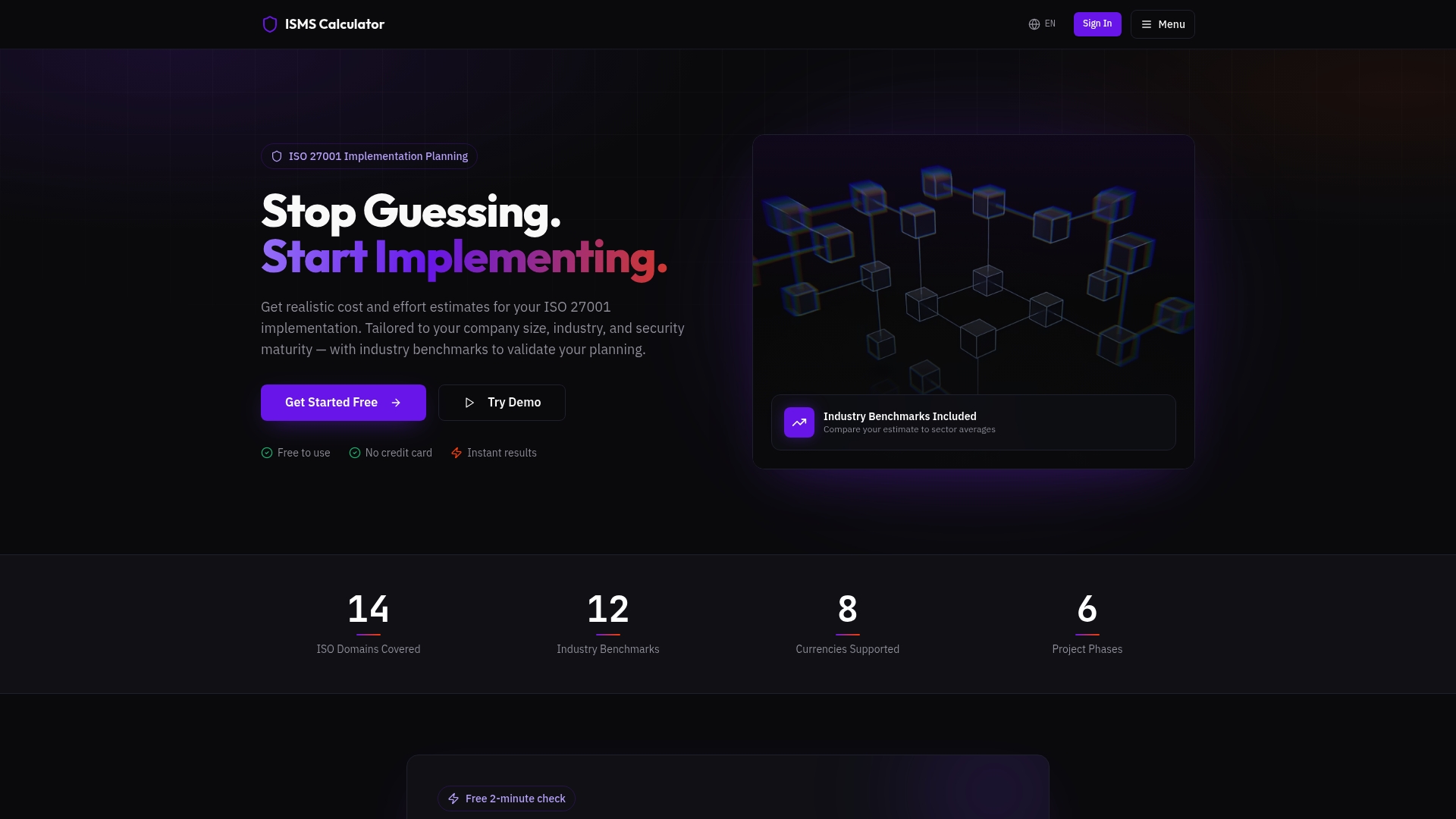
Das Tool führt eine Reifeprüfung über alle vier ISO/IEC 27001:2022 Kontrollthemen durch, erstellt einen anpassbaren Implementierungszeitplan und ermöglicht es Ihnen, mehrere Schätzungen zu speichern und mit den Angeboten der Berater zu vergleichen. Sobald Sie Ihre Zahlen haben, können Sie über das Verzeichnis unabhängiger Berater des ISMS Calculator eine Vorstellung anfordern – abgestimmt nach Branche und Umfang anstelle einer generischen Suche. Führen Sie die kostenlose zweiminütige Reifegradprüfung auf der ISMS Calculator Plattform noch heute durch und gehen Sie mit einer konkreten Zahl – nicht einer Schätzung – in Ihr erstes Beratergespräch.
Quellen
Für weiterführende Details zu Qualifikationen und Servicemodellen empfiehlt sich Elevate Consults Analyse zur Auswahl von ISO 27001 Beratern. Zu Preisstrukturen und Einsparungen bei kombinierten Frameworks lohnt sich die Lektüre der ISO 27001 Beratungsseite von SOC 2 Advisory. Zu Unabhängigkeitsregeln und Firmenvergleichen empfiehlt sich das Beraterverzeichnis von SOC 2 Auditors. Starten Sie im ISMS Calculator mit dem Leitfaden zur Lückenanalyse und, wenn Sie ein SaaS-Unternehmen sind, mit dem ISO 27001 Leitfaden für Technologieunternehmen.
- Selecting the Best ISO 27001 Consultants: Credentials, Costs & Service Models (2026)
- ISO 27001 Certification Consulting | SOC 2 Advisory
- ISO 27001 Consultants: 35 Firms Compared (2026)