
Un conjunto de políticas ISO 27001 es la colección de documentos de gobernanza, procedimientos y registros lista para auditoría que demuestra que tu sistema de gestión de seguridad de la información (ISMS) funciona realmente. La mayoría de las organizaciones medianas suelen necesitar un conjunto de políticas principales dimensionado según su alcance y sus decisiones de tratamiento, que generalmente incluye un número considerable de políticas. Comienza eligiendo un paquete de plantillas con un mapeo real de Annex A y, a continuación, personaliza cada documento en función de tu propio plan de tratamiento de riesgos, en lugar de publicar texto genérico.
Resumen ejecutivo:
- La mayoría de las organizaciones medianas necesitan alrededor de 18 políticas principales que cubran gestión de riesgos, control de acceso, respuesta a incidentes y seguridad física, adaptadas a su alcance.
- Validar plantillas implica comprobar que tengan un mapeo adecuado de Annex A, notas de implementación, campos de control documental y ejemplos de evidencias, no solo texto genérico.
- Las políticas deben ser claras y estructuradas en torno a propósito, alcance, responsabilidades, normas, excepciones, cumplimiento y control documental para demostrar eficazmente su aplicación durante las auditorías.
- Las evidencias, como registros de riesgos, informes de auditoría, registros de formación y registros de incidentes, son fundamentales y deben organizarse por etapas para demostrar la implementación de las políticas durante al menos un ciclo operativo completo.
- Construir un conjunto de políticas listo para la certificación depende del tamaño y el alcance de la organización; herramientas como ISMS Calculator ayudan a estimar el esfuerzo, la duración y el presupuesto mediante planes de proyecto personalizados.
Tabla de Contenidos
- ¿Qué políticas exige realmente un conjunto de políticas ISO 27001?
- ¿Dónde encontrar plantillas de políticas ISO 27001 listas para auditoría?
- ¿Cómo redactar y estructurar cada política de seguridad?
- ¿Cómo se mapean las políticas con los controles de Annex A y las cláusulas de ISO 27001?
- ¿Qué registros y evidencias solicitan realmente los auditores?
- ¿Cómo personalizar un paquete de plantillas para tu organización?
- ¿Cuánto tiempo lleva construir y certificar un conjunto de políticas?
- Por qué menos políticas, pero más claras, superan a un conjunto de políticas más extenso
- Cómo ISMS Calculator te ayuda a dimensionar y planificar tu conjunto de políticas
- Fuentes
¿Qué Políticas Exige Realmente un Conjunto de Políticas ISO 27001?
Todo conjunto de políticas de un ISMS comienza con el mismo documento de referencia: la Política de Seguridad de la Información de alto nivel, acompañada de una declaración de alcance del ISMS claramente redactada. A partir de ahí se ramifica todo lo demás, construido en torno a tu metodología de evaluación y tratamiento de riesgos y la Declaración de Aplicabilidad (SoA) que registra cuáles de los 93 controles de Annex A te aplican y por qué.
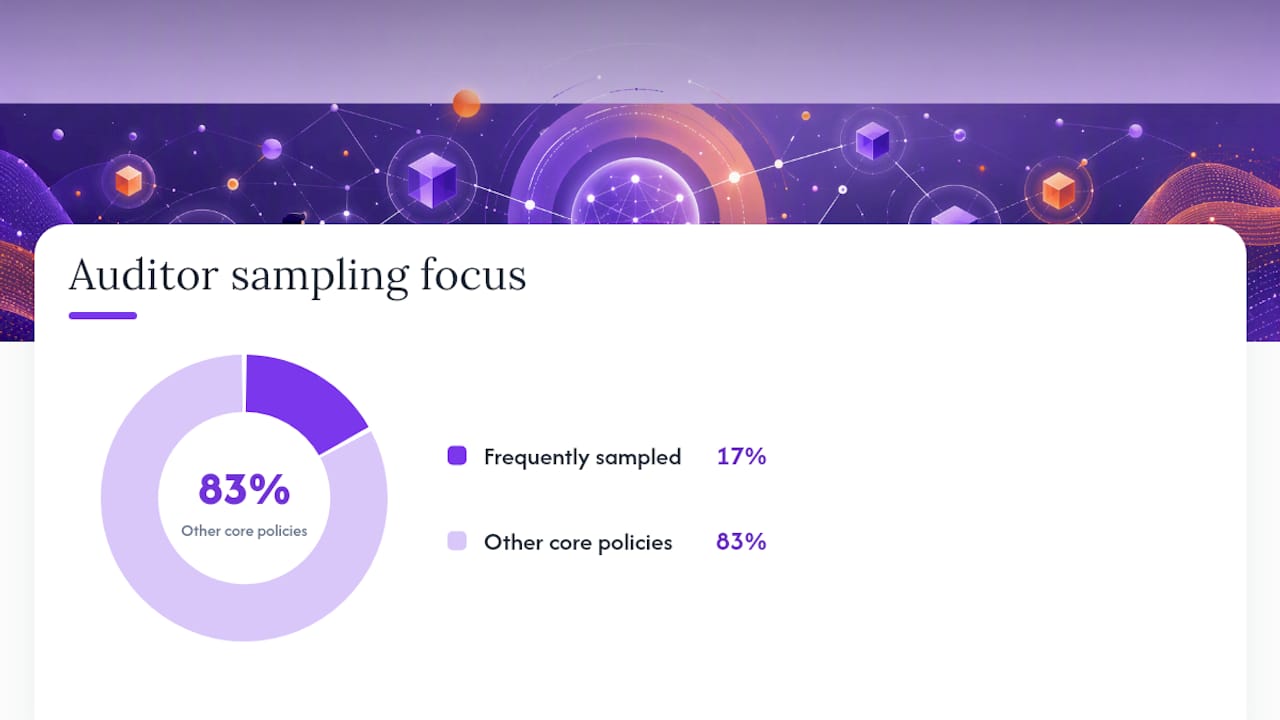
Más allá de ese documento de referencia, el inventario de trabajo que la mayoría de los equipos de cumplimiento elaboran es bastante consistente entre sectores. La lista de documentos obligatorios de Advisera confirma que el alcance del ISMS, la documentación de evaluación y tratamiento de riesgos, la SoA, los informes de auditoría interna y las actas de revisión por la dirección son el núcleo irrenunciable. Las guías prácticas construidas sobre esa base suelen llegar a unas 18 políticas principales una vez que se añaden los documentos operativos que los auditores realmente revisan.
A continuación se presenta el inventario que aparece en prácticamente todas las listas de políticas ISO 27001:
- Política de Seguridad de la Información — el documento marco; establece el tono y el compromiso de la dirección.
- Metodología de Evaluación y Tratamiento de Riesgos — define cómo se identifican, puntúan y tratan los riesgos.
- Declaración de Aplicabilidad — el mapa maestro de los controles de Annex A que aplican y por qué.
- Política de Control de Acceso — rige la identidad, la autenticación y la gestión de privilegios.
- Política de Gestión de Activos — realiza el seguimiento de la propiedad del hardware, software y datos a lo largo de su ciclo de vida.
- Política de Criptografía — establece las normas de uso del cifrado, la gestión de claves y los estándares de algoritmos.
- Política de Respuesta a Incidentes — define los plazos de detección, escalado y notificación.
- Política de Seguridad de Proveedores — abarca la evaluación de riesgos de terceros y las cláusulas de seguridad contractuales.
- Política de Continuidad de Negocio — documenta los objetivos de recuperación y las pruebas de continuidad.
- Política de Uso Aceptable — establece las normas dirigidas a los empleados sobre el uso de sistemas y el tratamiento de datos.
- Política de Clasificación de Datos — define los niveles de sensibilidad y las normas de manejo por nivel.
- Política de Gestión de Cambios — controla cómo se aprueban los cambios en sistemas e infraestructuras.
- Política de Desarrollo Seguro — aplicable a las organizaciones que desarrollan o personalizan software.
- Política de Seguridad Física — cubre el acceso a instalaciones, los equipos y los controles ambientales.
Los auditores revisan la Política de Seguridad de la Información, la Política de Control de Acceso y la Política de Respuesta a Incidentes más que cualquier otra, porque esas tres tienden a exponer las brechas entre lo que está escrito y lo que se practica. Asigna propietarios claros desde el principio. El control de acceso suele corresponder a las operaciones de TI, la respuesta a incidentes a un responsable de seguridad, y la seguridad de proveedores a compras o legal. Repartir la propiedad de esta manera mantiene cada política del ISMS vinculada a alguien que realmente pueda aportar evidencias cuando un auditor las solicite.
¿Dónde Encontrar Plantillas de Políticas ISO 27001 Listas para Auditoría?
Un paquete de plantillas que no está mapeado con los controles de Annex A no es más que un documento Word genérico con un título que suena a seguridad. Antes de adoptar cualquier plantilla de política ISO 27001, comprueba cuatro cosas: el mapeo de cláusulas y controles, notas de implementación que expliquen lo que los auditores buscan realmente, campos de control documental integrados en la propia plantilla y ejemplos de evidencias que muestren cómo es el resultado final.
Hay algunas opciones reales que se adaptan a distintos presupuestos y plazos:
- Kits de inicio de código abierto. El kit de inicio de CenedrilTeam en GitHub cubre los 93 controles de Annex A y las cláusulas del ISMS con 21 documentos de política, registros y tablas de mapeo, publicado bajo licencia CC BY 4.0. No tiene coste, pero requiere una revisión cuidadosa de las matrices de riesgo y los esquemas de categorización predeterminados antes de adoptarlos como propios.
- Suites de políticas elaboradas por la comunidad y consultores. Proyectos como la suite de políticas de nivel empresarial en GitHub mapean más de diez políticas directamente con los controles de Annex A, lo que resulta útil como segundo punto de referencia al verificar tu propia cobertura.
- Paquetes de plantillas comerciales. El paquete de políticas ISO 27001 de AuditFront incluye notas de implementación que explican los errores más habituales junto con las plantillas DOCX, lo que suele ahorrar horas de la pregunta "¿qué quiere ver realmente el auditor aquí?".
Consejo profesional: Abre cualquier plantilla candidata y busca las palabras "insertar" o "pendiente". Si encuentras más de un puñado, el paquete todavía necesita una personalización real, no una edición superficial.
Valida rápidamente la preparación para la auditoría comprobando si la plantilla ya hace referencia a tus controles de la SoA por número, incluye una tabla de historial de versiones e indica quién aprueba los cambios. Si faltan esas tres cosas, estás ante un documento genérico, no uno listo para auditoría.
¿Cómo Redactar y Estructurar Cada Política de Seguridad?
Una política que parece un contrato legal suele fallar por la misma razón que una política sin historial de versiones: nadie puede demostrar que se está cumpliendo. La guía de documentación de CertPro es contundente al respecto: los auditores quieren contenido específico de la organización, aprobación formal, un ciclo de revisión definido y evidencias de que la política fue comunicada, no solo redactada.
Estructura cada política en torno a los mismos siete campos, siempre:
- Propósito — una o dos frases sobre por qué existe la política.
- Alcance — a quién y a qué se aplica (departamentos, sistemas, terceros).
- Responsabilidades — roles nominados, no solo "TI" o "dirección".
- Declaraciones de política — las normas reales, redactadas en lenguaje claro y con referencias cruzadas a los números de control específicos de la SoA.
- Excepciones — cómo se solicitan y aprueban las desviaciones.
- Cumplimiento — consecuencias del incumplimiento y cómo se supervisa el cumplimiento.
- Control documental — propietario, aprobador, número de versión, fecha de entrada en vigor y fecha de próxima revisión.
El lenguaje claro supera casi siempre a la redacción legalista. Una frase como "Las contraseñas deben tener un mínimo de 12 caracteres y renovarse cada 90 días para las cuentas privilegiadas" se cumple. Una frase enterrada en tres cláusulas subordinadas sobre "medidas razonables y apropiadas" no lo hace.
Consejo profesional: Mantén una tabla de control documental compartida para todas las políticas, de modo que el número de versión, la fecha de revisión y el formato del aprobador sean idénticos en todas partes. Los auditores detectan las inconsistencias en estos campos más rápido que casi cualquier otra cosa.
Como evidencia de comunicación, cuentan un acuse de recibo firmado en tu plataforma de RRHH o LMS, las actas de una reunión en la que se explicó la política al equipo, o un hilo de confirmación por correo electrónico. Lo que no cuenta: asumir que la gente la ha leído porque está en una unidad compartida.
¿Cómo se Mapean las Políticas con las Cláusulas de ISO 27001 y los Controles de Annex A?
La revisión de 2022 reorganizó Annex A en cuatro temáticas: controles organizativos, de personas, físicos y tecnológicos, con un total de 93 controles. Cada temática se mapea claramente con un puñado de políticas, lo que hace que el ejercicio de mapeo sea mucho menos doloroso de lo que parece una vez que se ve expuesto.
| Cláusula o temática de control | Política que la cubre habitualmente | Ejemplos de controles |
|---|---|---|
| Cláusulas 4-7 (sistema de gestión) | Política de Seguridad de la Información, Procedimiento de Revisión por la Dirección | Compromiso del liderazgo, auditoría interna, acción correctiva |
| Controles organizativos (A.5) | Política de Gestión de Riesgos, Política de Seguridad de Proveedores | Roles, relaciones con proveedores, gestión de incidentes |
| Controles de personas (A.6) | Política de Uso Aceptable, Política de Seguridad en RRHH | Verificación de antecedentes, trabajo remoto, proceso disciplinario |
| Controles físicos (A.7) | Política de Seguridad Física | Zonas seguras, ubicación de equipos, política de escritorio limpio |
| Controles tecnológicos (A.12) | Política de Control de Acceso, Política de Criptografía, Política de Desarrollo Seguro | Autenticación, cifrado, inteligencia de amenazas, servicios en la nube |
Los nuevos controles de 2022, como la inteligencia de amenazas, la seguridad de los servicios en la nube y la codificación segura, no necesitan políticas independientes nuevas en la mayoría de los casos. Generalmente encajan dentro de los documentos existentes: la inteligencia de amenazas dentro de la Política de Respuesta a Incidentes, los servicios en la nube dentro de la Seguridad de Proveedores, y la codificación segura dentro de una Política de Desarrollo Seguro. Para un análisis más detallado de los controles individuales, vale la pena guardar en marcadores el desglose de controles de Annex A junto con tu SoA.
¿Qué Registros y Evidencias Solicitan Realmente los Auditores?
Las deficiencias documentales, no las políticas mal redactadas, causan la mayoría de las no conformidades en las auditorías iniciales. Los auditores quieren pruebas de que una política se cumple, no pruebas de que existe.
Los registros que surgen en casi todas las conversaciones de auditoría:
- Registro de riesgos con el estado de tratamiento actual de cada riesgo identificado.
- Declaración de Aplicabilidad, versión vigente, con justificación de los controles excluidos.
- Informes de auditoría interna y evidencias de que los hallazgos fueron cerrados.
- Actas de revisión por la dirección que demuestren que el ISMS fue realmente debatido a nivel de liderazgo.
- Registros de formación en concienciación sobre seguridad, preferiblemente vinculados a fechas de finalización y contenidos cubiertos.
- Registros de incidentes, incluidos los casi-incidentes, con los plazos de respuesta documentados.
- Resultados de pruebas de copia de seguridad y recuperación, fechados y con indicación de resultado satisfactorio o fallido.
Organiza las evidencias en dos carpetas desde el primer día: un paquete de Fase 1 (políticas, alcance, SoA, metodología de riesgos) y un paquete de Fase 2 (registros operativos que demuestren que esas políticas se siguieron durante al menos un ciclo completo). Una retención de 3 años es una línea de base habitual para la mayoría de los tipos de evidencias, aunque el registro de riesgos y la pista de auditoría deben permanecer accesibles durante todo el ciclo de certificación. Restringe el acceso de escritura a las carpetas de evidencias, ya que la pregunta "¿quién puede editar este registro?" es un seguimiento habitual del auditor. Para un análisis más completo de lo que los auditores esperan ver por categoría, la guía de tipos de evidencias incluye ejemplos de artefactos específicos que vale la pena revisar antes de que se abra tu ventana de auditoría.
¿Cómo Personalizar un Paquete de Plantillas para tu Organización?
Descargar un kit de inicio es la parte fácil. Convertirlo en algo que un auditor acepte como tuyo requiere un proceso breve y repetible.
- Confirma el alcance de tu ISMS. Escribe exactamente qué unidades de negocio, ubicaciones y sistemas están dentro del alcance antes de tocar una sola plantilla.
- Mapea Annex A frente a tu evaluación de riesgos. Decide qué controles se aplican y registra la justificación de las exclusiones en tu SoA.
- Elige tu fuente de plantillas. Opta por un kit de código abierto, un paquete comercial o una combinación de ambos según tu presupuesto y calendario.
- Personaliza las declaraciones de política. Reemplaza cada marcador de posición con tus umbrales reales, herramientas y roles nominados.
- Asigna propietarios de documentos. Cada política necesita una persona responsable, no un departamento.
- Tramita la aprobación. Firma formal, con fecha y registrada, no un correo electrónico que diga "parece bien".
- Publica y comunica. Distribúyela a través de un canal con seguimiento y recoge el acuse de recibo.
El error más habitual es dejar sin modificar las matrices de riesgo o los niveles de clasificación predeterminados, que los auditores detectan al instante porque el lenguaje no coincide con la forma en que la organización habla realmente sobre el riesgo. La guía de personalización de plantillas sugiere aproximadamente entre 2 y 4 horas por política para una organización pequeña, y más para alcances medianos y grandes donde varias unidades de negocio necesitan aportaciones independientes.
Consejo profesional: Realiza una revisión interna de cinco minutos con alguien ajeno al equipo de seguridad antes de la entrega. Si no puede resumir la norma principal de una política en una sola frase, necesita un lenguaje más sencillo.
¿Cuánto Tiempo Lleva Construir y Certificar un Conjunto de Políticas?
Una vez que sabes aproximadamente cuántas políticas necesitas, la pregunta real es cuánto tiempo y presupuesto consumirá todo el proyecto, y eso depende en gran medida del tamaño de la organización, la documentación existente y cuántas unidades de negocio están en el alcance.
Un plan por fases generalmente se divide en cinco etapas: definición del alcance y análisis de brechas, documentación de políticas, recopilación de evidencias durante al menos un ciclo operativo completo, auditoría interna y revisión por la dirección antes de que aparezca el organismo de certificación. ISMS Calculator convierte esas etapas en un cronograma personalizado al estilo Gantt una vez que introduces el tamaño de tu empresa, el sector y la madurez de seguridad actual, en lugar de obligarte a adivinar con plantillas de proyecto genéricas.
- Una organización pequeña con menos de 50 empleados y un alcance reducido a menudo completa la documentación y la recopilación de evidencias en pocos meses.
- Una organización mediana que abarca varios departamentos o un producto SaaS generalmente necesita más tiempo para las evaluaciones de proveedores y la madurez de las evidencias, especialmente en torno a las revisiones de acceso y los registros de incidentes.
- Una organización grande o multisede suele invertir más tiempo en la negociación del alcance y la gestión del cambio antes de que las políticas se redacten siquiera.
La evaluación de madurez de la herramienta puntúa tu organización en las cuatro temáticas de controles de Annex A, lo que suele ser la forma más rápida de ver qué áreas de política están realmente atrasadas, en lugar de asumir que todos los dominios necesitan la misma atención. Combinada con comparaciones con el modelo de referencia, esa puntuación convierte un proyecto vago de "necesitamos políticas" en una lista priorizada de qué construir primero. Ejecutar la verificación gratuita de preparación en 2 minutos te proporciona una estimación de base antes de comprometer presupuesto o una fecha de certificación con nadie.
Por Qué Menos Políticas, Pero Más Claras, Superan a un Conjunto de Políticas Más Extenso
La mayoría de las organizaciones no suspenden las auditorías porque les falta una política. Las suspenden porque las políticas que tienen no coinciden con lo que la gente hace realmente, y nadie conservó las evidencias para demostrarlo. He visto equipos añadir una quinta variante de política de copias de seguridad mientras su registro de incidentes lleva tres meses sin actualizarse. Eso es ir al revés.
Las políticas en lenguaje claro que los empleados pueden resumir se cumplen, y las políticas que se cumplen generan su propia pista de evidencias. Las densas y legalistas se archivan y se olvidan. Si estás mirando una lista de 25 políticas sin saber por dónde empezar, deja de optimizar el recuento de documentos y empieza a cerrar las brechas de evidencias. Una breve verificación de preparación y una comparación con el modelo de referencia te dirán más rápido que otra ronda de redacción de políticas dónde reside el riesgo real.
— Martin
Cómo ISMS Calculator te Ayuda a Dimensionar y Planificar tu Conjunto de Políticas
Todas las opciones que este artículo ha cubierto —kits de inicio de código abierto, paquetes de plantillas comerciales y listas de verificación de documentos obligatorios— te proporcionan los documentos en sí. Ninguna te dice cuánto tiempo llevará todo el proyecto ni cuánto le costará a tu equipo en horas y presupuesto. Esa es la pieza que completa ISMS Calculator.
Introduce el tamaño de tu empresa, el sector y la madurez de seguridad actual, y la plataforma construye una estimación personalizada de costes y esfuerzo en lugar de un valor de referencia genérico. Obtienes una puntuación de madurez en las cuatro temáticas de controles de Annex A, una comparación con el modelo de referencia y un diagrama de Gantt personalizable que convierte tu conjunto de políticas en un plan de proyecto por fases con fechas reales. Exporta los resultados como PDF o un enlace compartible cuando necesites presentar cifras de presupuesto a la dirección.
Comienza con la verificación de preparación gratuita de 2 minutos para obtener una estimación de base sin coste, y luego guarda y compara varios escenarios una vez que sepas cómo los cambios de alcance afectan al calendario. Si quieres una estimación más profunda y guiada antes de comprometerte con una fecha de certificación, la evaluación de preparación ISO 27001 recorre las mismas variables con mayor granularidad.
Fuentes
- Kit de inicio gratuito ISO 27001:2022 — políticas, registros, planes y otras plantillas (GitHub)
- Políticas y procedimientos ISO 27001: qué necesitas y cómo documentarlos | CertPro