
Un alcance bien delimitado y documentado, combinado con un control formal de cambios de alcance, es la forma más rápida de prevenir la expansión del alcance en ISO 27001 y mantener su proyecto de certificación en plazo. Si observa que los límites de su ISMS se amplían cada vez que alguien incorpora una nueva herramienta SaaS o una unidad de negocio, la solución no son más reuniones. Es una declaración de alcance escrita que su auditor pueda precisar en diez minutos, respaldada por un proceso que hace que cada incorporación pase por una puerta de control en lugar de una conversación de pasillo.
Dos acciones para esta semana:
- Convoque un taller de definición de alcance con TI, legal y los responsables de las unidades de negocio, y elabore un borrador de la declaración de alcance antes de que termine la reunión.
- Registre por escrito cada exclusión, con una justificación breve de por qué queda fuera y cómo se controla la interfaz con el entorno incluido en el alcance.
Consejo profesional: Lleve su registro de riesgos al taller de alcance, no después. El alcance y la evaluación de riesgos deben negociarse conjuntamente, porque un límite que ignora su panorama real de riesgos será cuestionado en la Fase 1.
La cláusula 4.3 de ISO/IEC 27001 es el documento que su auditor solicitará en primer lugar, y su Declaración de Aplicabilidad debe tener una trazabilidad clara hasta él. Todo lo que se expone a continuación se basa en ese fundamento.
Conclusiones clave
Prevenir la expansión del alcance en ISO 27001 requiere una declaración de alcance documentada y justificada conforme a la Cláusula 4.3, así como una puerta de control de cambios formal para cada propuesta de incorporación.
| Punto | Detalle |
|---|---|
| Comience con un alcance acotado | Certifique primero el producto o servicio principal y amplíe en las auditorías de seguimiento o en la recertificación. |
| Documente las exclusiones con justificación | Cada sistema excluido necesita un motivo escrito, una descripción de la interfaz y un control de mitigación. |
| Controle cada incorporación | Utilice una Solicitud de Cambio de Alcance con campos de coste, días de auditoría y brechas de evidencia antes de la aprobación. |
| Actualice primero la SoA y el registro de riesgos | Ningún cambio de alcance se aprueba hasta que la SoA y el registro de riesgos lo reflejen. |
| Modele los cambios antes de aprobarlos | El estimador de Ismscalculator le permite comparar el alcance actual con una incorporación propuesta antes de la aprobación. |
Tabla de contenidos
- ¿Qué es la expansión del alcance en ISO 27001 y por qué importa?
- Causas habituales y modos de fallo que originan la expansión del alcance
- Manual práctico de prevención: controles que detienen la expansión del alcance
- Resultados del taller de alcance y redacción de ejemplo
- Gestión de cambios de alcance durante la implementación
- Cómo las herramientas y los puntos de referencia le ayudan a mantener el alcance bajo control
- Lo que los implementadores pasan sistemáticamente por alto
- Convierta las decisiones de alcance en cifras antes de aprobarlas
- Fuentes
¿Qué es la expansión del alcance en ISO 27001 y por qué importa?
La expansión del alcance se produce cuando el límite de su sistema de gestión de seguridad de la información se amplía más allá de lo que definió originalmente, generalmente sin que nadie lo haya decidido formalmente. Se incorpora un nuevo proveedor en la nube porque "de todas formas gestiona datos de clientes". Una oficina regional queda integrada porque alguien dio por hecho que ya estaba cubierta. Nada pasa por un proceso de cambio y, cuando se da cuenta, su Declaración de Aplicabilidad ya no refleja lo que realmente está operando.
El coste no es abstracto. Los días de auditoría escalan con el número de ubicaciones, sistemas y flujos de datos que el auditor debe examinar, por lo que un alcance mayor implica proporcionalmente más recopilación de evidencias, tiempo de entrevistas y el correspondiente incremento en la tarifa de certificación. La guía práctica sobre definición de alcance señala de forma consistente que un límite inicial más acotado es la palanca que mantiene el esfuerzo de auditoría proporcional a lo que la organización realmente necesita certificar.
Los auditores detectan la expansión del alcance a través de varias no conformidades recurrentes:
- Sistemas referenciados en las evaluaciones de riesgos o en la SoA que no aparecen en la declaración de alcance documentada.
- Exclusiones listadas sin justificación, que los revisores de la Fase 1 rechazan de plano.
- Interfaces con terceros o proveedores en la nube que no están documentadas, lo que obliga al auditor a tratar el sistema conectado como parte del alcance por defecto.
Todas estas situaciones son evitables. No son fallos extraordinarios. Son lo que ocurre cuando las decisiones sobre el alcance se toman de manera informal y nunca vuelven a quedar reflejadas en la documentación.
Causas habituales y modos de fallo que originan la expansión del alcance
El alcance rara vez se desborda de golpe. Se expande a través de pequeñas decisiones individualmente razonables que nadie contrasta con el límite original. Una tesis doctoral que analizó proyectos de implementación de ISO 27001 concluyó que las declaraciones de alcance vagas o excesivamente amplias eran una causa directa de retrabajos y retrasos en los proyectos, no una mera inconveniencia.
- Lenguaje de alcance impreciso. Expresiones como "la infraestructura TI de la empresa" en lugar de sistemas, ubicaciones y flujos de datos específicos dejan margen para interpretaciones infinitas, y cada interpretación acaba necesitando resolverse bajo la presión de una auditoría.
- Incorporaciones tardías sin nueva evaluación. Una nueva herramienta SaaS, una unidad de negocio adquirida o el lanzamiento de una funcionalidad se absorben en "la forma en que funcionan las cosas ahora" sin que nadie las haya pasado antes por una evaluación de riesgos.
- Riesgo de interfaz con terceros. La guía de definición de alcance para empresas señala que los auditores rastrean cada punto de conexión, y una interfaz no definida con un proveedor o filial suele tratarse como parte del alcance por defecto, ampliando silenciosamente su límite de certificación.
- TI en la sombra y adopción no gestionada de la nube. Los equipos crean sus propias cuentas en la nube o suscripciones SaaS al margen del proceso de compras, y esos activos acceden a datos regulados mucho antes de que alguien actualice el inventario de activos.
- Gobernanza débil y ausencia de puertas de control. Sin un punto de verificación formal, las incorporaciones ocurren por defecto en lugar de por decisión. Nadie dice que sí; nadie dice que no. El alcance simplemente crece.
Un análisis relacionado de errores en la definición de alcance de ISO 27001 identifica la infraestructura en la nube no incluida y las dependencias de proveedores no documentadas entre las razones más comunes por las que los plazos de certificación se retrasan. El patrón en todas las fuentes es el mismo: la expansión del alcance es primero un fallo de documentación y gobernanza, y solo después un problema técnico.
Manual práctico de prevención: controles que detienen la expansión del alcance
Prevenir la expansión del alcance no consiste en redactar un documento de alcance más extenso. Consiste en redactarlo de forma más precisa y establecer una puerta de control para cada intento posterior de ampliarlo.
- Adopte un enfoque de alcance acotado desde el primer día. Certifique el producto o servicio principal que realmente necesita certificación y justifique ese límite en función de sus servicios de negocio y los requisitos de las partes interesadas (clientes, reguladores, contratos). El manual de ISO para ISO/IEC 27001 es explícito en que el alcance debe estar documentado y justificado, no solo descrito.
- Realice un taller de definición de alcance real. Reúna en una sala a TI, legal, RRHH y los responsables de las unidades de negocio. Los entregables son concretos: un mapa de activos, un diagrama de interfaces que muestre cada conexión con sistemas fuera del alcance, y una redacción de alcance en borrador que nombre sistemas en lugar de describir categorías.
- Documente explícitamente cada dimensión. Su declaración de alcance necesita límites organizativos (qué entidades jurídicas, qué departamentos), límites físicos (qué ubicaciones), límites de sistemas (qué aplicaciones e infraestructura específicas) y límites de flujos de datos (qué datos se mueven y hacia dónde). Las exclusiones necesitan una justificación escrita, no una evasiva.
- Cree una plantilla de Solicitud de Cambio de Alcance. Cualquier incorporación propuesta —un nuevo proveedor, una nueva oficina, una nueva línea de producto— debe pasar por un formulario breve que recoja el impacto en costes, el incremento esperado de días de auditoría y las brechas que genera en las evidencias existentes.
- Establezca niveles de aprobación. Un cambio que añade una herramienta SaaS de bajo riesgo puede requerir únicamente la firma del propietario del control. Un cambio que incorpora una nueva unidad de negocio o una adquisición necesita la aprobación de la dirección ejecutiva y una conversación de redefinición del alcance completa.
- Actualice la SoA y el registro de riesgos antes de la aprobación, no después. Si un cambio propuesto no ha pasado por la evaluación de riesgos, no se aprueba. Esta única regla frena la mayoría de los intentos de ampliación ad hoc antes de que se produzcan.
- Notifique a su organismo de certificación cuando los cambios sean materiales. Si un cambio de alcance altera significativamente lo que se va a auditar, su organismo de certificación debe saberlo antes de la próxima auditoría, no durante ella.
Vincular internamente sus decisiones de alcance con su plan de proyecto general también resulta útil. Una línea de tiempo de implementación detallada facilita identificar exactamente en qué punto un cambio de alcance retrasará sus hitos, y una lista de verificación de certificación completa ayuda a confirmar qué artefactos de evidencia requerirá una determinada incorporación.
Consejo profesional: Exija una mini-evaluación de riesgos de una página antes de que cualquier activo se añada al alcance, incluso de manera informal. Lleva veinte minutos y es la forma más rápida de evitar que la TI en la sombra se convierta en un hallazgo de auditoría seis meses después.

Resultados del taller de alcance y redacción de ejemplo
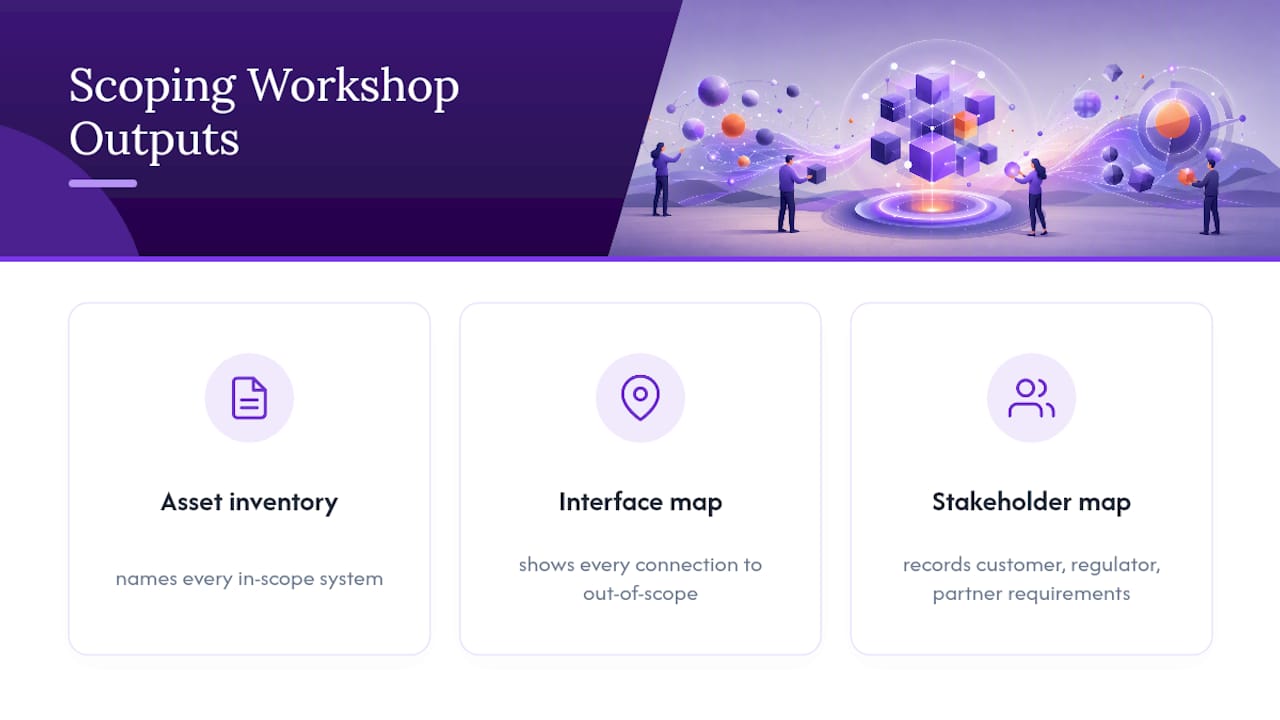
Un taller de definición de alcance solo es útil si produce documentos, no solo consenso en una sala. Salga con tres cosas: un inventario de activos que nombre cada sistema incluido en el alcance, un mapa de interfaces que muestre cada conexión con elementos fuera del alcance, y un mapa de partes interesadas que recoja lo que clientes, reguladores y socios realmente requieren de la certificación.
Una redacción débil tiene este aspecto: "El ISMS cubre la infraestructura en la nube de la empresa y los procesos de negocio relacionados." El auditor preguntará qué cuentas en la nube, qué procesos y qué significa "relacionados", y usted no tendrá una respuesta rápida.
Una redacción sólida para un producto SaaS se parece más a esto:
El ISMS cubre el diseño, desarrollo, alojamiento y soporte de [Nombre del Producto], incluida la infraestructura de producción alojada en la cuenta de AWS 123456789 en la región eu-west-1, la plataforma de atención al cliente y todo el personal de Ingeniería, Producto y Atención al Cliente implicado en la prestación del servicio. Los sistemas corporativos de TI utilizados exclusivamente para funciones internas de RRHH y finanzas quedan excluidos, ya que no procesan datos de clientes y no tienen interfaz con los sistemas de producción.
Esta redacción funciona porque nombra cuentas, nombra equipos y expone la justificación de la exclusión en la misma frase. Una guía práctica para empresas SaaS y tecnológicas desarrolla variaciones de este patrón para diferentes configuraciones de alojamiento.
Las declaraciones de alcance organizativo más amplias requieren una mayor justificación por exclusión, dado que la superficie de auditoría es mayor. Para cada exclusión, registre cuatro elementos: qué se excluye, por qué se excluye, qué interfaces la conectan con el entorno incluido en el alcance y qué controles de mitigación se aplican a esa interfaz.
Gestión de cambios de alcance durante la implementación
Los cambios de alcance legítimos ocurren. El objetivo no es bloquear cada incorporación, sino asegurarse de que todas pasen por la misma puerta de control en lugar de llegar como una sorpresa durante la Fase 2.
- Presente una Solicitud de Cambio de Alcance. Criterios mínimos de aceptación: un sistema o entidad identificado, un motivo de negocio declarado y una clasificación de riesgo inicial.
- Actualice las evidencias antes de la aprobación. El registro de riesgos necesita una nueva entrada, la SoA necesita un mapeo de controles correspondiente y el plan de pruebas de controles debe contemplar la incorporación. Sin actualización, sin aprobación.
- Revise la línea base de costes y plazos, o aplace. Las incorporaciones pequeñas pueden absorberse en el proyecto actual. Las más grandes —una nueva unidad de negocio, una adquisición— a menudo tiene más sentido aplazarlas a la próxima auditoría de seguimiento o al ciclo de recertificación, cuando dispone de un año completo para desarrollar las evidencias correctamente.
- Comunique el cambio. Las partes interesadas internas deben conocer qué ha cambiado y por qué. Si el cambio es material, su organismo de certificación necesita un aviso previo, no una sorpresa en la próxima auditoría.
Vale la pena combinar este proceso con una guía de metodología de evaluación de riesgos, ya que todo cambio de alcance es en realidad una actualización de la evaluación de riesgos con sombrero de gestión de proyectos.
Cómo las herramientas y los puntos de referencia le ayudan a mantener el alcance bajo control
Toda decisión de alcance es en realidad una decisión de coste y esfuerzo con sombrero de cumplimiento, y es ahí donde un estimador en tiempo real demuestra su valor. Antes de aprobar la incorporación de una nueva filial o una nueva región en la nube a su ISMS, modélelo: cuántos días de auditoría adicionales, cuánta recopilación de evidencias extra, cuántas semanas más en la línea de tiempo.
- Pase su alcance actual por una evaluación de madurez en los cuatro temas de controles del Anexo A para ver en qué punto se encuentra.
- Modele una incorporación propuesta como un escenario independiente y compárelo lado a lado con su línea base actual.
- Genere un diagrama de Gantt con el alcance definido y un registro de cambios de la SoA como artefactos concretos para adjuntar a su Solicitud de Cambio de Alcance.
- Comience con una verificación de preparación gratuita de 2 minutos y guarde ambos escenarios (alcance actual, incorporación propuesta) para comparar el impacto en costes y plazos antes de que nadie apruebe nada.
Esto convierte una conversación subjetiva de "¿deberíamos añadir esto?" en una conversación basada en cifras, que es exactamente lo que un propietario de control o un director financiero necesita antes de aprobar una ampliación del alcance. Los patrones de riesgo relacionados con el proyecto se abordan en esta guía sobre riesgos de proyectos ISO 27001.
Lo que los implementadores pasan sistemáticamente por alto
El punto ciego que más caro le cuesta a los equipos no es la gran decisión de alcance, sino la pequeña que nadie pensó en verificar: una interfaz con un sistema de proveedor que nadie documentó, o una cuenta en la nube que alguien creó al margen del proceso de compras. Las mini-evaluaciones de riesgo previas a la aprobación y las convenciones de nomenclatura coherentes para los sistemas incluidos en el alcance detectan ambas situaciones, de forma económica, antes de que lo haga el auditor.
— Martin
Convierta las decisiones de alcance en cifras antes de aprobarlas
Ismscalculator le ofrece lo que más falta en las conversaciones sobre alcance: una respuesta rápida y concreta a "qué nos costará realmente esta incorporación". En lugar de debatir un cambio de alcance propuesto en abstracto, lo modela —una unidad de negocio añadida, una nueva región en la nube, una filial adquirida— frente a su línea base actual y ve el diferencial de esfuerzo antes de que nadie lo apruebe.
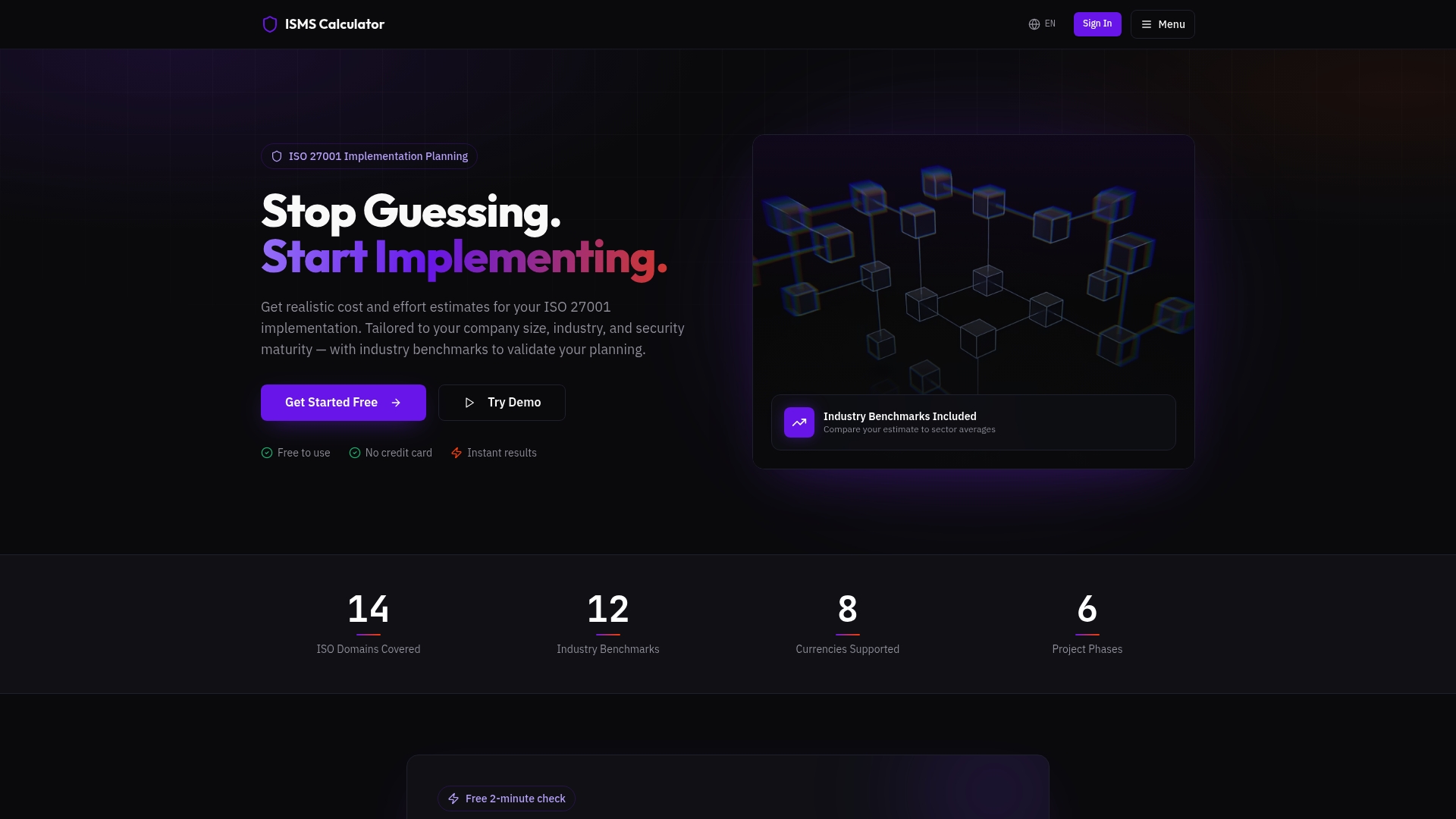
El estimador de costes y esfuerzo en tiempo real de la plataforma se ajusta al tamaño de su empresa, sector y madurez de seguridad actual, de modo que las cifras reflejan su situación real en lugar de una plantilla genérica. Realice la evaluación de madurez en los cuatro temas de controles de ISO/IEC 27001:2022, genere un diagrama de Gantt con el alcance definido para su plan de implementación y exporte un PDF que pueda adjuntar directamente a una Solicitud de Cambio de Alcance para la aprobación del propietario del control.
Comience con la verificación de preparación gratuita de 2 minutos para ver en qué punto se encuentra su alcance actual y, a continuación, utilice la evaluación de preparación completa para guardar su alcance actual como línea base y modelar una ampliación propuesta frente a ella antes de aprobar nada.
Fuentes
- ISO/IEC 27001
- ISO 27001 Scope Definition - How to decide what goes in and what stays out | SecComply