
La evaluación de la conformidad es el proceso mediante el cual se demuestra que un producto, servicio, sistema o persona cumple efectivamente un requisito establecido, ya sea que dicho requisito provenga de una norma, una regulación o un contrato. La norma ISO/IEC 17000 la define como la demostración de que se satisfacen los requisitos especificados, y esa idea central lo abarca todo: desde una prueba de seguridad de un casco hasta una auditoría ISO 27001.
Tres aspectos clave que conviene conocer desde el principio:
- Actividades principales: los ensayos, la inspección y la certificación son las herramientas fundamentales para demostrar el cumplimiento.
- Partes intervinientes: las evaluaciones pueden provenir de fuentes de primera parte (autodeclaración), segunda parte (verificación por el comprador), tercera parte (organismo independiente) o de las administraciones públicas.
- Por qué es importante: protege a los consumidores, satisface a los organismos reguladores y permite que los bienes crucen fronteras sin necesidad de ensayos duplicados en cada punto, algo que subrayan tanto el Foro Internacional de Acreditación como la Organización Mundial del Comercio.
Conclusiones clave
La evaluación de la conformidad demuestra que un producto, sistema u organización cumple un requisito especificado, y su credibilidad depende en su totalidad de quién la realiza y de si esa parte está acreditada.
| Punto | Detalles |
|---|---|
| La definición es el punto de partida | ISO/IEC 17000 define la evaluación de la conformidad como la demostración de que se satisfacen los requisitos especificados. |
| La parte que evalúa importa | Las autodeclaraciones de primera parte generan menos confianza en el mercado que la certificación acreditada de tercera parte. |
| La acreditación verifica al verificador | Un certificado emitido por un organismo no acreditado puede ser rechazado por reguladores o compradores internacionales. |
| Los esquemas mantienen la confianza a lo largo del tiempo | La vigilancia continua, y no un único ensayo, es lo que mantiene válida una certificación durante todo el ciclo de vida del producto. |
| Las herramientas de preparación simplifican la planificación | ISMS Calculator ofrece una verificación de preparación gratuita y un estimador de costes para equipos que se preparan para la evaluación del sistema de gestión ISO 27001. |
Tabla de contenidos
- Comprensión de la evaluación de la conformidad y sus principales objetivos
- Quién realiza la evaluación de la conformidad: primera, segunda y tercera parte
- Ensayo, inspección, certificación y el papel de la acreditación
- Esquemas de evaluación de la conformidad, declaraciones y documentos habituales
- Por qué la evaluación de la conformidad es importante para el comercio, los compradores y la gestión de riesgos
- Cómo leer un certificado: una lista de verificación rápida
- Evaluación de la conformidad para sistemas de gestión: el ejemplo de ISO 27001
- Por qué los profesionales tratan la evaluación como un instrumento de confianza
- Adelántate en la preparación para ISO 27001
- Preguntas frecuentes
- Fuentes
Comprensión de la evaluación de la conformidad y sus principales objetivos
Los «requisitos especificados» de la definición de ISO/IEC 17000 no surgen de la nada. Están recogidos en normas técnicas, regulaciones gubernamentales o en las cláusulas de un contrato de compra, y la evaluación de la conformidad es simplemente el mecanismo que verifica si la realidad se ajusta a lo documentado. Un proveedor afirma que su producto cumple una norma de seguridad contra incendios; la evaluación de la conformidad es la forma de verificar esa afirmación en lugar de aceptarla sin más.
Las organizaciones y los reguladores recurren a este proceso por cuatro razones que se solapan: verificar el cumplimiento efectivo, proteger a los consumidores de productos inseguros o que no se corresponden con lo declarado, facilitar el acceso a mercados regulados y reducir los ensayos redundantes que, de otro modo, exigirían por separado múltiples compradores o países. El enfoque del NIST considera las normas y la evaluación de la conformidad como dos mitades de la misma herramienta: la norma establece el listón y la evaluación demuestra que alguien lo ha superado.
Un casco de bicicleta es un ejemplo ilustrativo. La norma de seguridad aplicable especifica los umbrales de resistencia al impacto. Un laboratorio ensaya los cascos reales frente a ese umbral y solo los que superan la prueba tienen derecho a llevar la marca de conformidad. Sin ensayo, sin prueba, sin marca.
Quién realiza la evaluación de la conformidad: primera, segunda y tercera parte
No todas las evaluaciones de la conformidad tienen el mismo peso, y saber quién realizó la verificación indica cuánta confianza merece el resultado. El NIST agrupa estas actividades en tres categorías principales, más una cuarta para los organismos reguladores:
- Primera parte: el fabricante verifica su propio producto frente a una norma y autodeclara la conformidad, habitualmente mediante una Declaración de Conformidad del Proveedor (SDOC, por sus siglas en inglés).
- Segunda parte: un comprador o usuario verifica directamente las afirmaciones del proveedor; es habitual en la contratación entre empresas cuando un cliente importante audita a un proveedor antes de firmar un contrato.
- Tercera parte: un organismo independiente y no vinculado realiza la evaluación y emite la certificación, lo que generalmente genera más confianza en el mercado que la autodeclaración.
- Mandato gubernamental: los reguladores exigen determinadas certificaciones antes de que un producto o servicio pueda acceder legalmente a un mercado, independientemente de lo que prefieran el fabricante o el comprador.
Una SDOC es rápida y de bajo coste, pero sigue siendo el fabricante el que evalúa su propio trabajo. La certificación de tercera parte cuesta más y lleva más tiempo, pero responde a una pregunta que la autodeclaración no puede responder: ¿alguien sin ningún interés en el resultado verificó el trabajo?
Ensayo, inspección, certificación y el papel de la acreditación
La evaluación de la conformidad se desglosa en cinco actividades reconocibles, y confundirlas es uno de los errores más habituales al interpretar un documento de cumplimiento. El NIST las distingue con claridad: los ensayos miden características específicas frente a criterios definidos; la inspección examina un producto o proceso para verificar el cumplimiento general; la certificación (o atestación) emite una confirmación formal de que se satisfacen los requisitos; y la vigilancia repite las comprobaciones a lo largo del tiempo para confirmar que la conformidad se mantiene, en lugar de expirar en el momento en que se firma el certificado.
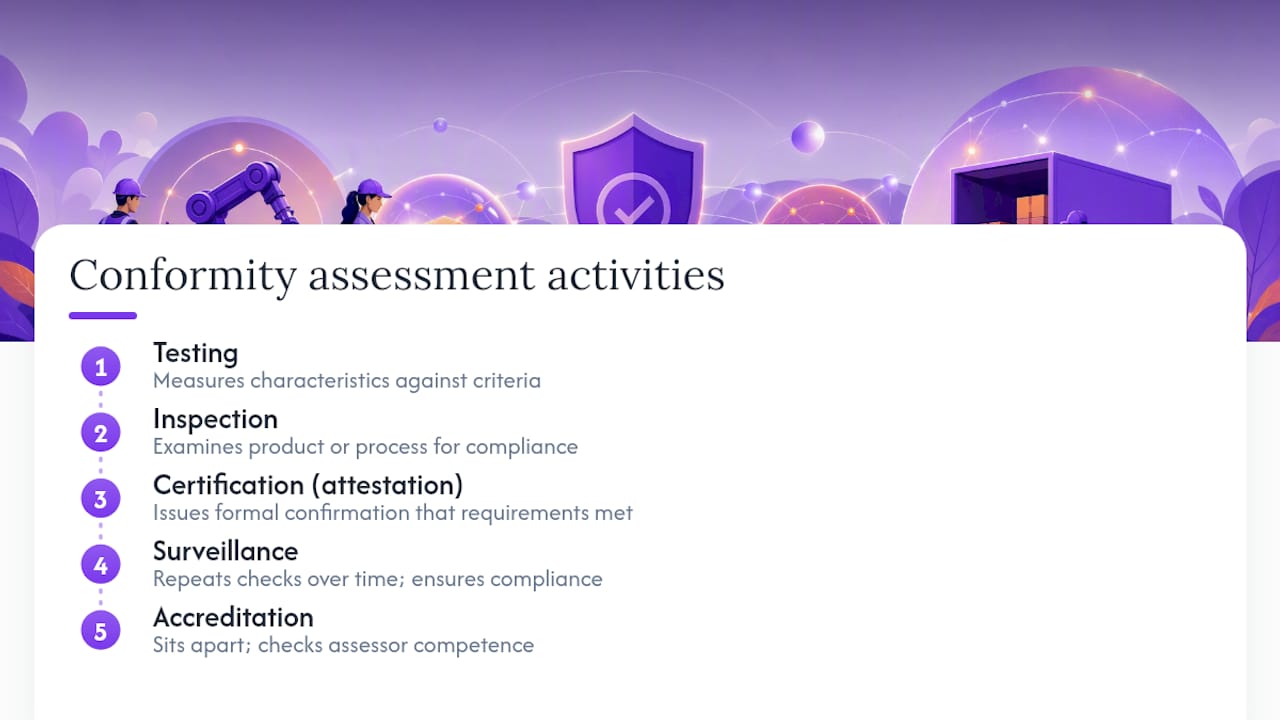
La acreditación ocupa un lugar distinto al de estas cuatro actividades. No evalúa el producto, sino la competencia del organismo que realiza la evaluación. Un informe de ensayo indica que una unidad específica superó un ensayo concreto en una fecha determinada. Un certificado de sistema de gestión indica que los procesos de una organización cumplen los requisitos de una norma. Ninguno de los dos tiene mucho valor si el laboratorio o el organismo de certificación que lo emite carece de acreditación, porque la acreditación es el mecanismo para «verificar al verificador», y sin ella los certificados e informes de ensayo pueden perder la aceptación de reguladores y compradores internacionales.
Consejo práctico: Antes de confiar en cualquier certificado, busque el organismo emisor en el registro público de su organismo nacional de acreditación o en la base de datos internacional del IAF. Si no figura, trate el documento como no verificado, independientemente del aspecto del logotipo.
Esquemas de evaluación de la conformidad, declaraciones y documentos habituales
Un único ensayo es una instantánea puntual. Un esquema de evaluación de la conformidad es algo distinto: es un conjunto documentado de reglas, alcance y procedimientos reproducibles que se aplican de forma coherente a toda una categoría de productos o servicios, e incluye habitualmente una vigilancia continua en lugar de una verificación única. La Publicación Especial del NIST sobre evaluación de la conformidad describe los esquemas como aquello que hace que los resultados sean comparables y reproducibles a lo largo del tiempo y entre distintos fabricantes.
Los documentos que encontrará en la práctica incluyen:
- Informes de ensayo, que muestran los resultados frente a una versión específica de una norma.
- Informes de inspección, que documentan una revisión física o procedimental.
- Declaraciones de Conformidad del Proveedor (SDOC), declaraciones emitidas por el propio fabricante.
- Declaraciones de conformidad, declaraciones más amplias exigidas en ocasiones por la regulación.
- Certificados, confirmación formal de tercera parte, a menudo vinculada a la acreditación.
Todos estos documentos tienen sus limitaciones: una fecha de caducidad, un número de serie específico del producto o una referencia a una versión concreta de una norma que puede haber sido revisada desde entonces. Un certificado para el «Modelo X, versión 2» no es válido para el Modelo X, versión 3.
Por qué la evaluación de la conformidad es importante para el comercio, los compradores y la gestión de riesgos
El beneficio práctico se manifiesta en tres ámbitos: la contratación, la regulación y la gestión de riesgos. Un único certificado aceptado puede eliminar la necesidad de que un producto sea reensayado en cada país al que se envíe, ya que los acuerdos de reconocimiento mutuo permiten que la evaluación acreditada de un país sea válida en otros. Ese es el argumento central de la OMC para considerar la infraestructura de calidad —acreditación, metrología, ensayo— como infraestructura comercial, y no como burocracia administrativa.
Para los compradores, una evaluación creíble agiliza la diligencia debida: en lugar de auditar a cada proveedor desde cero, los equipos de contratación pueden apoyarse en la certificación existente. Para los gestores de riesgos, los resultados de la evaluación de la conformidad son también datos de diagnóstico. Un patrón de incumplimientos por poco en el mismo control, detectado durante la evaluación, indica a un equipo de seguridad o calidad exactamente dónde invertir el próximo presupuesto antes de que se produzca un fallo real.
Cómo leer un certificado: una lista de verificación rápida
No todos los certificados valen lo que parecen. Antes de confiar en uno, compruebe los siguientes puntos:
- ¿Quién lo ha emitido? Confirme que el organismo de certificación es una organización real e identificada, y no un sello genérico sin emisor localizable.
- ¿Está acreditado el emisor? Consulte directamente el registro del organismo de acreditación en lugar de fiarse del logotipo que aparece en el propio certificado.
- ¿Cuál es el alcance? Un certificado que cubre «procesos de desarrollo de software» no equivale a uno que cubre «gestión de la seguridad de la información».
- ¿Son correctas las fechas e identificadores? Los certificados caducados o los números de serie que faltan son señales de alerta.
- ¿Existe evidencia subyacente? Un certificado creíble debe hacer referencia a un informe de auditoría o ensayo real que pueda solicitarse.
Dos señales de alerta aparecen constantemente: organismos de certificación sin acreditación registrada y un alcance redactado de forma vaga para parecer impresionante sin especificar qué se evaluó realmente. Los grupos que hacen seguimiento de las prácticas de evaluación de la conformidad relacionadas con el comercio señalan que un certificado es tan creíble como la competencia e independencia de quien lo ha emitido. Si algo no cuadra, solicite al proveedor el informe de ensayo subyacente o el número de referencia de la acreditación. El titular de un certificado legítimo dispondrá de ambos de inmediato.
Evaluación de la conformidad para sistemas de gestión: el ejemplo de ISO 27001
Los ensayos de producto verifican un elemento físico frente a una especificación. La certificación de sistemas de gestión, como ISO 27001 para la seguridad de la información, verifica si los procesos continuos de una organización —no un único producto— cumplen los requisitos de una norma. Eso es un tipo de demostración diferente: se trata de la coherencia a lo largo del tiempo, no de una aprobación o un suspenso puntuales.
Tres pasos hacen que la preparación sea manejable. Primero, leer el enunciado del alcance real de la norma para saber exactamente qué se certifica. Segundo, realizar una evaluación de brechas o de madurez frente a los dominios de control de la norma para identificar los puntos débiles antes de que lo haga un auditor. Tercero, planificar la vigilancia continua y las acciones correctivas, ya que la certificación no es una meta final. Una herramienta como la evaluación de preparación de ISMS Calculator puede ayudar a estimar el coste y el esfuerzo necesarios para cerrar esas brechas antes de comprometerse con una auditoría formal.
Por qué los profesionales tratan la evaluación como un instrumento de confianza
La evaluación de la conformidad justifica su existencia al generar una confianza operativa que va más allá de un documento firmado. Un certificado archivado tiene escaso valor si nadie utiliza los hallazgos subyacentes.

La actuación práctica consiste en tratar los resultados de la evaluación como datos de diagnóstico. Analice las brechas concretas que aflora una auditoría y utilícelas para priorizar lo que realmente necesita corrección, no solo para archivar una calificación de aprobado.
Adelántate en la preparación para ISO 27001
Si su equipo se enfrenta a una evaluación de la conformidad de un sistema de gestión como ISO 27001, lo más difícil antes de empezar es estimar el coste y los plazos. ISMS Calculator le proporciona una estimación en tiempo real basada en el tamaño de su empresa, el sector y la madurez de seguridad actual, para que planifique con referencias reales en lugar de con una hoja en blanco.
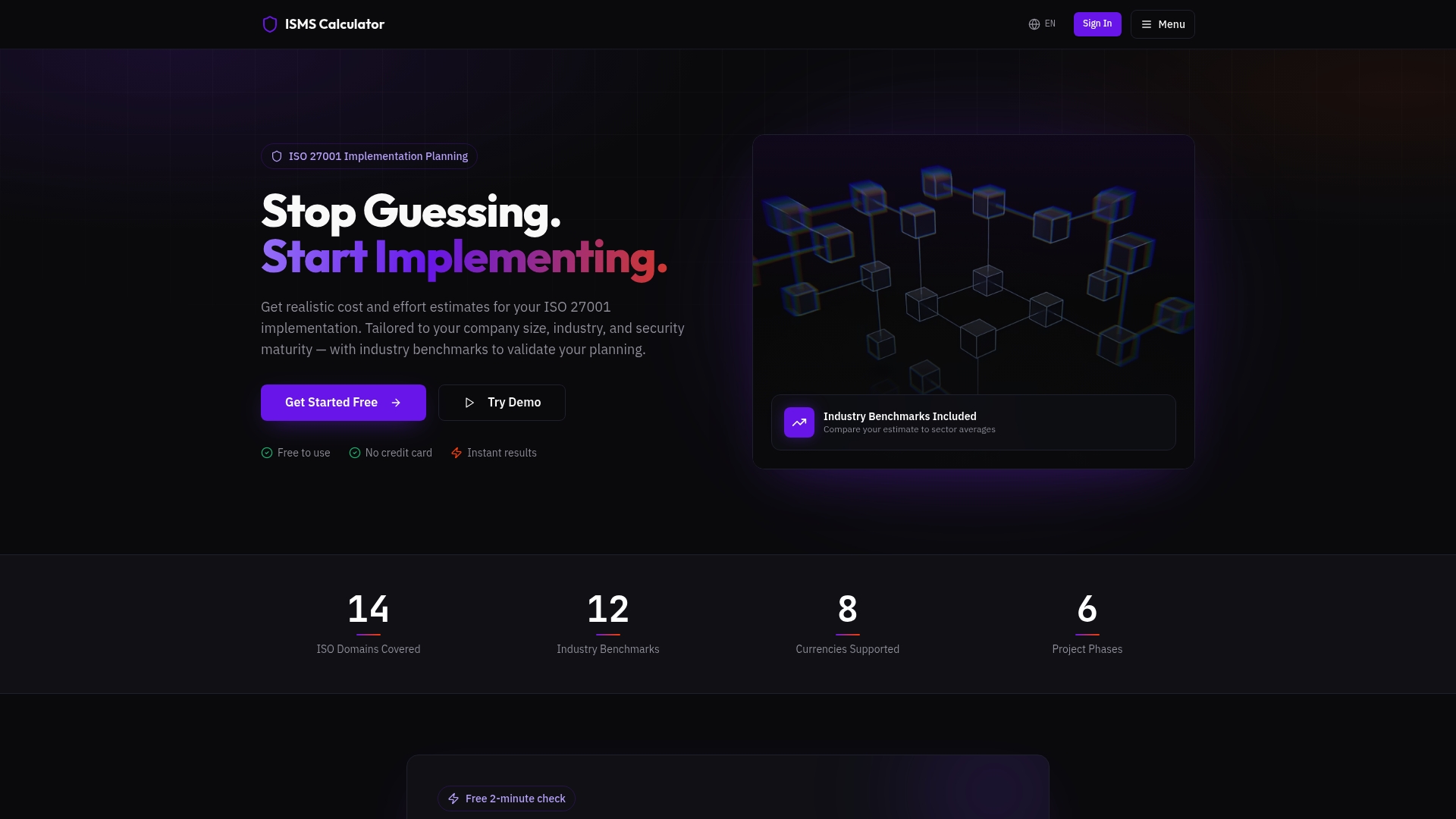
La plataforma incluye una evaluación de madurez en los cuatro temas de control de ISO/IEC 27001:2022, diagramas de Gantt personalizables para planificar las fases de implantación y la posibilidad de guardar y comparar varias estimaciones a medida que cambia el alcance. Si desea una valoración rápida de su situación actual antes de comprometerse con una evaluación completa, comience con la verificación de preparación gratuita de 2 minutos y compruebe cómo se alinea la madurez actual de su organización con los valores de referencia del modelo.
Preguntas frecuentes
¿Qué es la evaluación de la conformidad explicada de forma sencilla? Es el proceso mediante el cual se demuestra que un producto, sistema u organización cumple efectivamente una norma, regulación o cláusula contractual requerida, en lugar de limitarse a afirmarlo.
¿Cuál es la diferencia entre certificación y acreditación? La certificación confirma que un producto o sistema de gestión cumple una norma. La acreditación confirma la competencia del organismo que realiza la certificación, razón por la cual la acreditación y la certificación son procesos distintos.
¿Es tan fiable una Declaración de Conformidad del Proveedor como una certificación de tercera parte? En general, no. Una SDOC es una autoevaluación del fabricante, mientras que la certificación de tercera parte implica que un organismo independiente, habitualmente acreditado, verifica la afirmación.
¿Cómo sé si un certificado es legítimo? Compruebe quién lo ha emitido, confirme su estado de acreditación a través de un registro oficial y verifique que el alcance y las fechas del certificado coinciden con su producto o sistema real.
¿La evaluación de la conformidad se aplica también a servicios y sistemas de gestión, no solo a productos? Sí. Normas como ISO 27001 aplican la evaluación de la conformidad a los procesos continuos de una organización, y no a un único producto físico.
Fuentes
- Término del glosario del NIST: Evaluación de la conformidad (definición de ISO/IEC 17000)
- ABC's of Conformity Assessment (Publicación Especial del NIST)
- Explicación de la OMC: Evaluación de la conformidad
Recomendado
- Ejemplos de no conformidades en ISO 27001: Guía de auditoría 2026 | ISMS Calculator
- Declaración de Aplicabilidad de ISO 27001: una guía completa | ISMS Calculator
- Evaluación de madurez del ISMS: una guía 2026 para equipos de cumplimiento | ISMS Calculator
- Evaluación previa a la auditoría en el ISMS: una guía 2026 para equipos de cumplimiento | ISMS Calculator