
Certificarse sin un análisis de brechas previo es apostar sin tener un plan. Un análisis de brechas convierte un mandato vago como "obtener la certificación ISO 27001" en un proyecto priorizado y con recursos asignados: un documento que lista exactamente qué cláusulas se cumplen, cuáles no, quién es responsable de cada corrección y en qué plazo. Esa estructura es lo que acorta los plazos, evita que los hallazgos de auditoría se conviertan en sorpresas de seis cifras y previene que los equipos construyan controles dos veces por haberlos diseñado mal la primera.
Realícelo antes de tocar el presupuesto de certificación y, por lo general, obtendrá:
- Un registro de brechas mapeado al estándar objetivo, cláusula por cláusula
- Una lista de remediación priorizada por riesgo de auditoría y esfuerzo requerido
- Responsables designados y plazos aproximados para cada elemento pendiente
Conclusiones clave
El análisis de brechas funciona porque transforma un mandato de certificación abstracto en un plan de proyecto priorizado, con responsables y plazos definidos, antes de que se gaste dinero.
| Punto | Detalles |
|---|---|
| Realícelo primero | Complete el análisis de brechas antes de presupuestar, contratar consultores o implementar controles. |
| Mapee cláusula por cláusula | Compare la evidencia actual con cada requisito del estándar, no solo con las prácticas generales. |
| Priorice por severidad | Clasifique las brechas por impacto en la auditoría para que los elementos de mayor riesgo tengan responsable y plazo primero. |
| Alimente la auditoría interna | Utilice los elementos marcados como pendientes de verificación para construir rápidamente su primer programa de auditoría interna. |
| Use un estimador de preparación | Ismscalculator convierte los hallazgos del análisis de brechas en un coste acotado, una puntuación de madurez y un cronograma exportable. |
Tabla de contenidos
- Por qué el análisis de brechas precede a la certificación: definición y alcance
- Cómo el análisis de brechas reduce el tiempo, el coste y el riesgo de certificación
- ¿Cuándo debe realizar un análisis de brechas antes de la certificación?
- Qué cubre realmente un análisis de brechas para la certificación
- Convertir los hallazgos del análisis de brechas en un plan de certificación
- Hallazgos comunes que retrasan la certificación
- Métodos y herramientas para realizar un análisis de brechas eficaz
- Herramientas destacadas: estimadores de preparación y plantillas
- Acelere su planificación con un estimador de preparación
- Fuentes
Por qué el análisis de brechas precede a la certificación: definición y alcance
Un análisis de brechas orientado a la certificación compara su estado «actual» con el estado «objetivo» definido por un estándar, cláusula por cláusula. Para ISO 9001 o ISO 27001, esto significa recorrer cada requisito y formular dos preguntas: ¿existe evidencia y es suficientemente sólida para superar el escrutinio de un auditor?
No es una auditoría interna. Una auditoría interna verifica que un sistema ya implantado funciona correctamente y puede emitir no conformidades. Un análisis de brechas es una comprobación de preparación, realizada antes de que el sistema esté siquiera completo, y debe alimentar el programa de auditoría interna en lugar de reemplazarlo.
- Análisis de brechas: diagnóstico previo a la implantación, sin no conformidades formales
- Auditoría interna: verificación posterior a la implantación, exigida por la mayoría de los estándares de sistemas de gestión
- Evaluación de madurez: ejercicio de puntuación más amplio, que a menudo alimenta el análisis de brechas pero no sustituye al mapeo de cláusulas
Cómo el análisis de brechas reduce el tiempo, el coste y el riesgo de certificación
Omita el análisis de brechas y encontrará sus problemas de la forma más costosa: durante la auditoría externa o, peor aún, después de una auditoría fallida. La detección temprana limita lo que los consultores de cumplimiento denominan el multiplicador de retrabajo. Un control faltante detectado en la segunda semana implica actualizar una política. La misma brecha detectada durante la auditoría de certificación puede costar semanas de remediación, una visita de auditoría de seguimiento y un retraso en la obtención del certificado.
Los equipos que realizan una evaluación de brechas ISO 27001 adecuada al inicio suelen completar la implantación en 9 a 12 meses, mientras que los que la omiten frecuentemente se extienden hasta 14 o 18 meses porque las brechas emergen tarde y resultan más costosas de cerrar.
Consejo profesional: Trate el análisis de brechas como su documento presupuestario, no solo como una lista de verificación. Los equipos financieros responden mucho mejor a "aquí hay 40 acciones priorizadas con horas estimadas" que a "necesitamos certificarnos".
El beneficio concreto se traduce en:
- Un cronograma de implantación realista en lugar de una estimación a ciegas
- Una estimación presupuestaria fundamentada que el departamento financiero aprobará
- Evidencia temprana de preparación para la auditoría que puede mostrar cuando la dirección pregunte "¿vamos por buen camino?"
¿Cuándo debe realizar un análisis de brechas antes de la certificación?
Realícelo antes de su primer intento de certificación, evidentemente, pero también en estos momentos clave:
- Antes de iniciar la certificación inicial frente a ISO 9001, ISO 27001 o un estándar similar
- Después de una revisión importante del estándar (nuevos controles del Annex A, cláusulas reestructuradas)
- Tras una auditoría fallida, para diagnosticar las causas y reconstruir el plan
- Después de una fusión, adquisición o cambio significativo del sistema que altere el alcance
Es una comprobación de preparación puntual, de tipo proyecto, no una auditoría interna recurrente. Sitúela en las semanas uno a cuatro de cualquier programa de certificación, antes de finalizar el presupuesto o contratar consultores.
Qué cubre realmente un análisis de brechas para la certificación
Un análisis de brechas útil produce filas, no párrafos. Cada fila mapea una cláusula o control del Annex A a una evidencia real, o a la ausencia de la misma. Las áreas que suelen analizarse incluyen políticas documentadas, controles operativos, registros de formación, evidencia de proveedores y las métricas o KPI que el estándar espera que se rastreen.
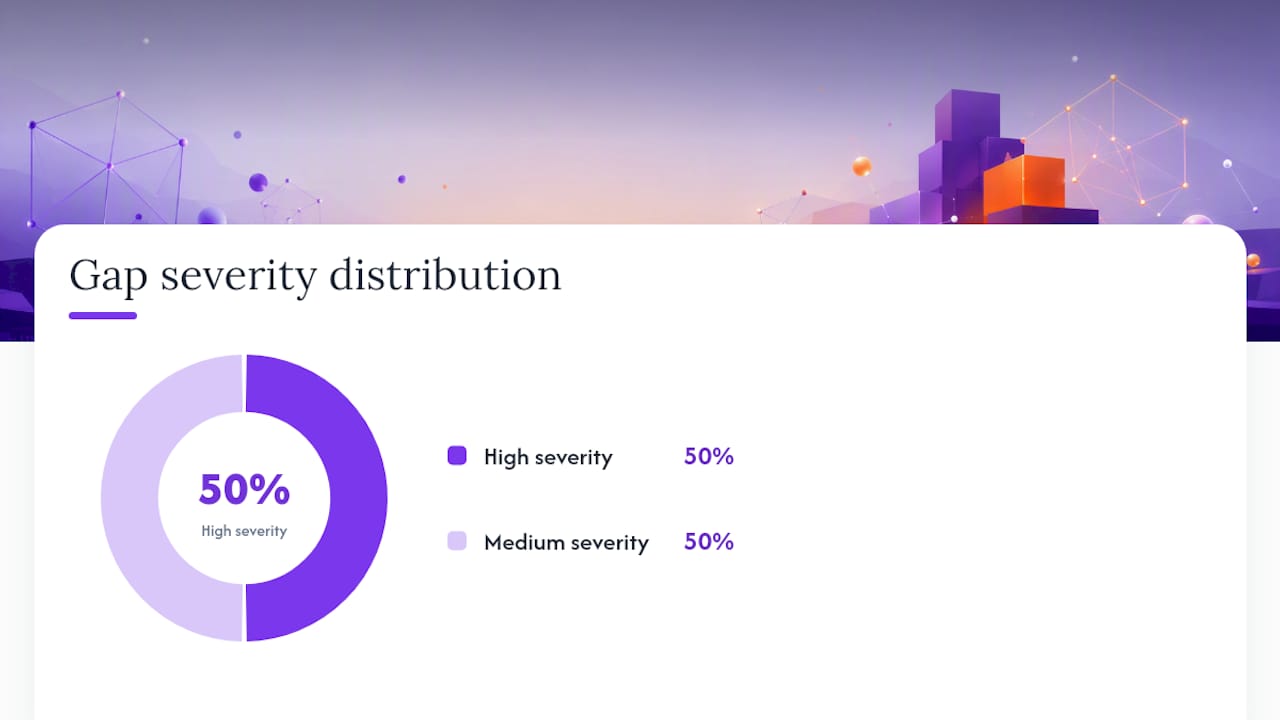
La clasificación por severidad es tan importante como el mapeo en sí. Un registro de riesgos inexistente es un problema de naturaleza distinta a una plantilla de documento desactualizada. «Listo para la auditoría» significa que cada fila de alta severidad tiene un responsable designado, una cadena de evidencias y una fecha objetivo anterior a la ventana de auditoría externa.
| Referencia del requisito | Evidencia actual | Descripción de la brecha | Severidad | Responsable | Fecha estimada |
|---|---|---|---|---|---|
| Control ISO 27001 Annex A (Políticas) | Política en borrador, sin aprobar | Sin aprobación de la dirección | Alta | CISO | Semana 3 |
| ISO 27001 A.8.9 (Gestión de configuración) | Registros de configuración parciales | Sin proceso de línea base formal | Media | Responsable TI | Semana 4 |
| Cláusula ISO 9001 | Sin calendario de auditoría | Programa de auditoría interna no definido | Alta | Responsable del SGC | Semana 2 |
| ISO 27001 A.5.19 (Seguridad en proveedores) | Sin evaluaciones de proveedores | Riesgo de terceros no documentado | Media | Compras | Semana 4 |
Convertir los hallazgos del análisis de brechas en un plan de certificación
Un registro de brechas que permanece indefinidamente en una hoja de cálculo no sirve a nadie. Conviértalo en un proyecto activo siguiendo estos pasos:
- Valide cada hallazgo con el responsable del proceso. No toda brecha detectada durante el análisis inicial sobrevive a una segunda revisión.
- Priorice por impacto en la auditoría y coste de remediación. Corrija primero los elementos que podrían generar una no conformidad mayor.
- Asigne responsables nominales. Una brecha sin responsable nunca se cierra.
- Establezca plazos realistas vinculados a su fecha objetivo de certificación, trabajando hacia atrás.
- Estime el esfuerzo y el presupuesto por elemento y consolide esas cifras para la dirección.
Incorpore la lista priorizada a un diagrama de Gantt o a un seguimiento de hitos para que el progreso sea visible fuera del equipo de cumplimiento.
Consejo profesional: Enfoque su primer programa de auditoría interna en los elementos que el análisis de brechas marcó como «pendientes de verificación». Así obtendrá evidencia de auditoría real rápidamente, en lugar de dedicar su primer ciclo de auditoría interna a rastrear controles nuevos que aún no han tenido tiempo de operar.
Hallazgos comunes que retrasan la certificación
Ciertas brechas aparecen en casi todas las comprobaciones de preparación y suelen ser las que los auditores señalan con mayor severidad.
- Procedimientos documentados ausentes o desactualizados
- Controles que existen sobre el papel pero que carecen de evidencia de que realmente se aplican
- Gestión inmadura del riesgo de proveedores y terceros
- Registros de formación ausentes o incompletos
- Declaraciones de alcance que no coinciden con lo que está realmente en producción
Un control sin evidencia de operación es funcionalmente equivalente a no tener control alguno, desde la perspectiva del auditor. Solo esa brecha explica una gran proporción de las no conformidades mayores en los primeros intentos de certificación.
La falta de evidencia de la operación de los controles tiende a generar no conformidades mayores, ya que los auditores no pueden verificar una política que nadie sigue. Las brechas documentales suelen ser menores, pero acumule suficientes y añadirá días de auditoría y costes adicionales. La mitigación más rápida: realice muestreo de evidencias en sus controles de mayor riesgo semanas antes de la auditoría externa, no la noche anterior.
Métodos y herramientas para realizar un análisis de brechas eficaz
El método debe adaptarse a sus recursos, no al revés. Una lista de verificación cláusula por cláusula funciona para equipos pequeños con sólido conocimiento interno. Los entornos más grandes o complejos se benefician de un marco de tipo POPIT (personas, organización, procesos, información, tecnología) combinado con los 5 Por qués para el análisis de causa raíz de brechas persistentes, un enfoque que la metodología paso a paso de Klipfolio recomienda junto al análisis DAFO.
- Hojas de cálculo y plantillas para alcances pequeños y bien conocidos
- Herramientas de registro de brechas dedicadas para equipos que rastrean docenas de controles en distintos departamentos
- Estimadores de preparación para proyecciones rápidas y comparadas de esfuerzo y coste
- Consultores externos cuando el conocimiento interno sobre el estándar específico es escaso
Utilice plantillas internas cuando su equipo ya comprenda el estándar. Recurra a experiencia externa cuando las brechas no estén claras, no solo las soluciones.
Herramientas destacadas: estimadores de preparación y plantillas
Los estimadores de preparación existen para eliminar las conjeturas de la pregunta «¿cuánto costará esto?». Uno bueno proporciona una estimación de esfuerzo y coste ajustada al tamaño de la empresa y al sector, una puntuación de madurez en los dominios relevantes y un conjunto de paquetes de trabajo sugeridos, para que no tenga que enfrentarse a un registro de brechas en blanco sin saber por dónde empezar.
Las plantillas aceleran el trabajo más tedioso: el mapeo de cláusulas, la recopilación de evidencias y la transformación de hallazgos en bruto en un plan de remediación. El resultado que realmente importa es un registro de brechas combinado con un cronograma exportable del proyecto, ya que esa combinación es lo que el departamento financiero y la dirección pueden aprobar de forma efectiva. Al evaluar cualquier herramienta, compruebe si produce ambos elementos, no solo uno.
Perspectiva del profesional: lo que realmente experimentan los equipos de implantación
En la práctica, los equipos que avanzan más rápido son los que realizan el análisis de brechas antes de que nadie discuta el presupuesto. El respaldo de la dirección es más fácil de conseguir cuando se puede señalar una lista priorizada en lugar de un mandato abstracto. Los plazos realistas son de aproximadamente nueve meses a un año para un equipo enfocado, y cerrar dos o tres brechas de bajo esfuerzo y alta severidad en la primera semana hace más por la motivación del equipo que cualquier reunión de lanzamiento.

Acelere su planificación con un estimador de preparación
Algunos equipos construyen su registro de brechas en una hoja de cálculo, realizan el mapeo de cláusulas de forma manual o contratan a un consultor para que lo haga. Los tres enfoques funcionan. Donde Ismscalculator aporta su mayor valor es en la velocidad: en lugar de dedicar semanas a estimar el esfuerzo manualmente, obtendrá una proyección de coste y cronograma acotada en minutos, comparada con empresas de tamaño e industria similares.
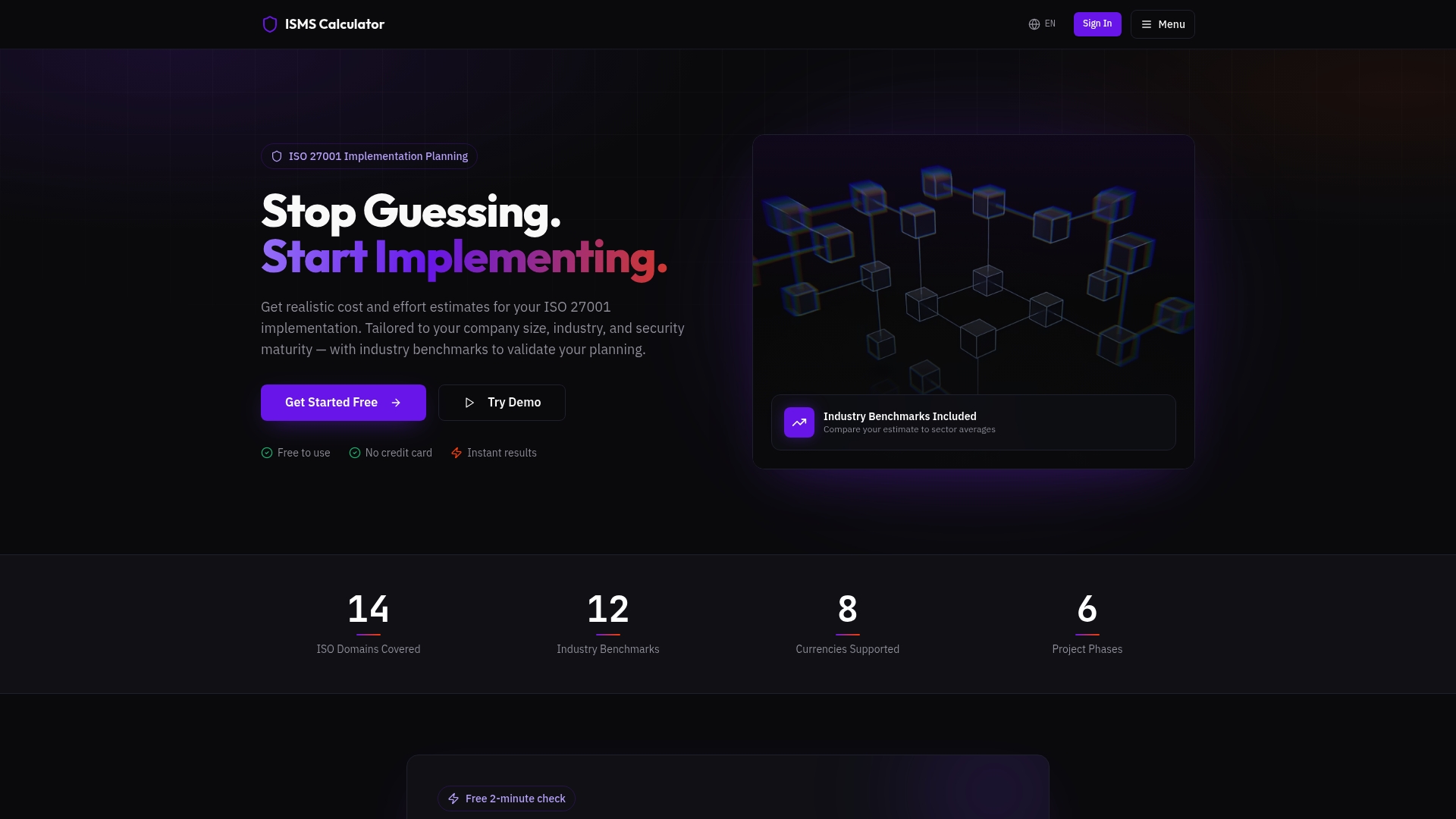
La evaluación de preparación de Ismscalculator puntúa su madurez en los cuatro temas de control de ISO/IEC 27001:2022 y convierte esa puntuación en un diagrama de Gantt exportable que puede entregar directamente a un gestor de proyectos o a un comité de finanzas. Ese es el informe que un director financiero realmente quiere: no «necesitamos certificarnos», sino «aquí está la estimación, el cronograma y los dominios en los que ya llevamos ventaja».
Si desea una primera visión rápida antes de comprometerse con una evaluación completa, empiece por la comprobación de preparación gratuita de 2 minutos. No sustituirá a un registro de brechas detallado ni al criterio de un consultor ante un control genuinamente ambiguo, pero le indicará dónde se encuentra antes de gastar un euro en remediación.
Fuentes
- ISO 27001 Gap Assessment - How to Run One and What to Do With Results | SecComply
- ISO 9001 Gap Analysis: How to Do It Before Your First Certification Audit - QMII
- How to Conduct a Gap Analysis: A Step-by-Step Guide | Klipfolio