
Fraud prevention within information security management systems is the active application of controls and processes designed to deter, detect, and mitigate fraudulent activities that threaten organizational assets and compliance. The industry term for this discipline is fraud risk management, and it sits squarely inside the broader ISMS framework defined by ISO/IEC 27001:2022. Compliance officers and IT managers who treat fraud prevention as a separate function from information security are leaving a critical gap in their defenses. The role of fraud prevention in ISMS is not supplementary. It is structural. Frameworks like MITRE F3 and standards like ISO 27001:2022 control A.5.3 now make that integration explicit and auditable.
How does fraud prevention fit into ISMS organizational controls?
ISO/IEC 27001:2022 control A.5.3 mandates segregation of duties to prevent fraud and error by separating conflicting responsibilities. That single control is one of 93 Annex A controls in the 2022 revision, and it carries more weight than its placement suggests. When one person can initiate, approve, and record a transaction, the conditions for fraud are almost guaranteed. Segregation of duties removes that opportunity by design.
Role-Based Access Control (RBAC) is the most common technical mechanism for enforcing A.5.3. RBAC assigns permissions based on job function, not individual identity, which means a finance analyst cannot also hold system administrator rights. The separation is policy-driven and auditable, which satisfies both internal governance requirements and external audit expectations.

Not every organization can enforce strict separation. Smaller teams often face headcount constraints that make full A.5.3 compliance difficult. Compensating controls such as activity logging, management reviews, and automated alerts are the accepted alternative when strict segregation is impossible. These controls maintain audit compliance without requiring a larger team.
Pro Tip: Document every compensating control with a formal risk acceptance statement signed by a named owner. Auditors expect to see that decision recorded, not just the control itself.
The compliance benefits of getting this right extend beyond the audit room. Organizations with documented segregation of duties and RBAC policies report faster incident investigations because access logs are clean and role boundaries are clear. That speed matters when a fraud incident triggers a regulatory notification deadline.
- Assign each user the minimum access needed for their role, then review quarterly.
- Log all privileged actions, including read access to sensitive financial records.
- Require dual authorization for high-value transactions above a defined threshold.
- Schedule management reviews of access logs at least monthly, not just during audits.
- Document exceptions to A.5.3 with a named approver and a review date.
What is MITRE F3 and how does it improve fraud detection in ISMS?
MITRE F3, the Fight Fraud Framework, bridges cybersecurity and fraud prevention by aligning detection, prevention, and response around fraud actor behaviors. It extends the well-known MITRE ATT&CK model with fraud-specific tactics that cover account preparation and transaction manipulation. That extension is significant because traditional cybersecurity models stop at network intrusion. F3 follows the fraud actor all the way through to financial impact.
The framework gives fraud analysts and cybersecurity defenders a shared language. Before F3, a fraud analyst describing account takeover and a security engineer describing credential stuffing were often talking about the same attack from different angles without realizing it. F3 connects cyber activity to financial outcomes through coordinated strategies, which means both teams can now map their findings to the same taxonomy.
“Visibility into how fraud actors move through each phase of an incident is vital for effective defense and risk assessment.” — MITRE Center for Threat-Informed Defense
ISMS processes benefit from F3 in three concrete ways. First, threat modeling sessions can now include fraud-specific attack paths alongside traditional cyber threats. Second, incident response playbooks can reference F3 tactic codes, making post-incident reviews more structured. Third, risk assessments gain a richer picture of the threat actor landscape, which directly improves the quality of the Statement of Applicability under ISO 27001.
- Map existing ISMS threat scenarios to F3 tactic categories during your next risk assessment cycle.
- Brief fraud analysts and security engineers together using F3 as the common reference point.
- Update incident response playbooks to include F3 tactic codes for fraud-related events.
- Use F3 to identify detection gaps where cyber controls exist but fraud-specific monitoring does not.
How should identity and transaction signals work together in ISMS fraud detection?
Modern fraud prevention moves away from tool-by-tool alert thresholds toward policy-driven correlation rules that combine identity signals and transaction anomalies into a single risk model. The practical difference is significant. A standalone identity verification alert and a standalone transaction anomaly alert each carry a high false-positive rate when evaluated in isolation. Combined into one risk score, they become far more reliable.
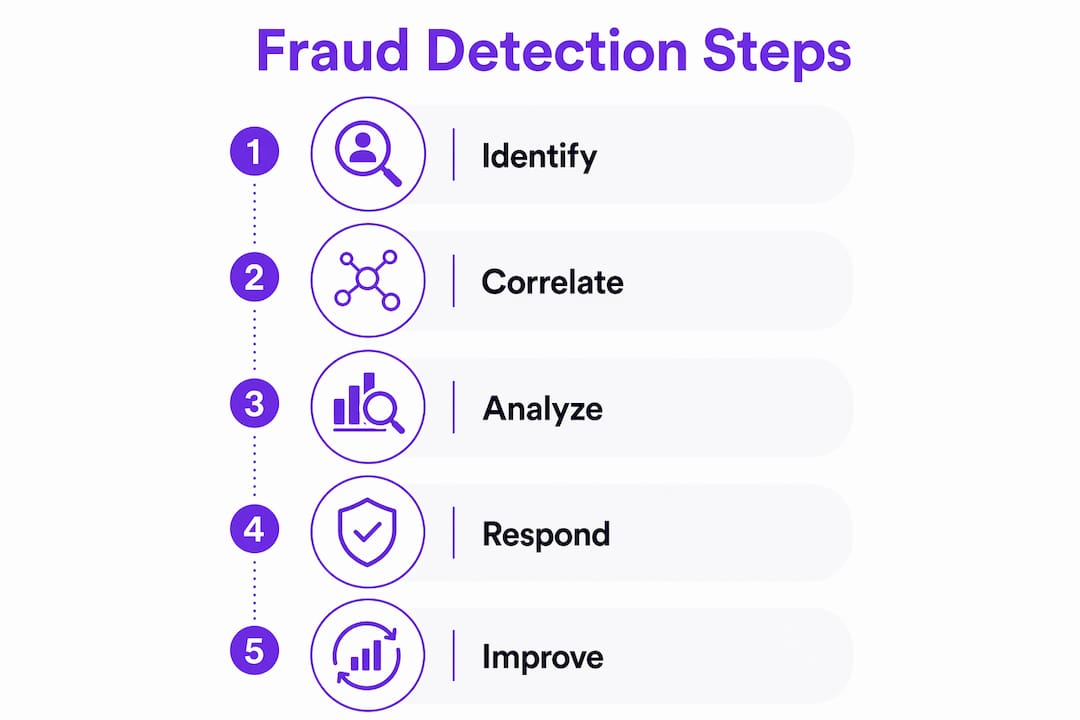
NIST Cybersecurity Framework 2.0 recommends coordinated risk management using identity assurance to inform fraud detection. That recommendation reflects a shift in how security teams think about data. Identity signals, such as device fingerprints, login location, and authentication method, are not just access control data. They are fraud risk data.
Pro Tip: Normalize identity and fraud alert data into a shared schema before building correlation rules. Mismatched field names and timestamp formats are the most common reason unified risk models fail in practice.
| Signal type | Example | Fraud risk indicator |
|---|---|---|
| Identity verification | New device login from unfamiliar country | High risk when combined with transaction |
| Transaction anomaly | Payment amount 10x above user average | Elevated risk in isolation |
| Behavioral pattern | Rapid sequence of small transfers | High risk, classic structuring pattern |
| Authentication event | Failed MFA followed by successful login | Medium risk, warrants investigation |
ML-based fraud detection systems face vulnerabilities like identity spoofing and adversarial manipulation that accuracy metrics alone cannot reveal. STRIDE threat modeling uncovers those vulnerabilities by examining how an attacker could spoof, tamper with, or repudiate data flowing through the detection system. Organizations that skip this step often discover the gap during a real fraud incident rather than a controlled assessment.
Operational security assessments that combine threat modeling, SHAP explainability, and anomaly gating produce more resilient fraud detection systems. SHAP (SHapley Additive exPlanations) makes ML model decisions interpretable, which is critical when a compliance officer needs to explain a fraud decision to a regulator. Anomaly gating adds a rule-based layer that catches edge cases the ML model has not seen before.
How does security culture reduce fraud risk inside an ISMS?
A strong security culture within an ISMS empowers employees to recognize fraudulent activities and reduces risky behaviors that create fraud opportunities. Culture is not a soft concept in this context. It is infrastructure. An employee who understands why access controls exist is less likely to share credentials or bypass approval workflows, even under time pressure.
Empirical research links security culture directly to decreased fraud incidents. Effective security culture supports innovation and decreases human error, which is the root cause of most internal fraud opportunities. When employees understand the connection between their daily behavior and organizational security, they become an active detection layer rather than a passive vulnerability.
Building that culture requires more than annual training. Practical approaches that work inside an ISMS include:
- Run quarterly tabletop exercises that include fraud scenarios, not just data breach scenarios.
- Share anonymized examples of detected fraud attempts in team communications to make threats feel real.
- Create a clear, no-blame reporting channel for employees who suspect fraudulent activity.
- Tie security behavior metrics to performance reviews for roles with elevated access privileges.
- Brief new employees on fraud-specific risks during onboarding, before they receive system access.
The ISO 27001 audit preparation process is a natural moment to assess culture maturity. Auditors increasingly ask about awareness programs and training records, not just technical controls. Organizations that treat culture as a documented ISMS component rather than an informal practice consistently perform better in audit findings related to human error and insider threat.
Key Takeaways
Fraud prevention is most effective when it is built into ISMS controls, frameworks, and culture rather than managed as a separate function.
| Point | Details |
|---|---|
| ISO 27001 A.5.3 is foundational | Segregation of duties and RBAC are the primary controls for preventing internal fraud under ISO 27001:2022. |
| MITRE F3 unifies fraud and cyber teams | F3 gives fraud analysts and security engineers a shared taxonomy, improving detection and incident response. |
| Unified risk models outperform siloed alerts | Combining identity signals and transaction anomalies into one model reduces false positives and improves accuracy. |
| Compensating controls protect resource-limited teams | Documented logging and management reviews maintain audit compliance when strict separation is not feasible. |
| Culture is a measurable fraud control | Security awareness programs and reporting channels reduce human error and insider fraud opportunities. |
Why I think most ISMS fraud programs fail before they start
The most common failure I see is not a technical one. It is organizational. Fraud teams and security teams sit in different reporting lines, use different tools, and measure success with different metrics. The fraud team counts financial losses avoided. The security team counts vulnerabilities patched. Neither number tells the full story, and the gap between them is where fraud actors operate.
MITRE F3 is the most promising development in this space in years, precisely because it forces both teams to use the same vocabulary. But adopting a framework is not the same as changing behavior. I have watched organizations implement F3 taxonomy in their documentation while their fraud analysts and security engineers still do not attend the same meetings.
The compensating controls question is where I see the most practical damage. Teams in smaller organizations often know they cannot fully enforce A.5.3, but they do not document the compensating controls properly. An auditor who finds an undocumented exception treats it as a finding. An auditor who finds a documented exception with a named owner and a review date treats it as evidence of mature risk management. The difference is paperwork, not security posture.
My honest recommendation: run a fraud-specific gap assessment against your current ISMS controls before your next audit cycle. Do not wait for an auditor to find the gaps. Find them yourself, document the compensating controls, and brief both your fraud and security teams on the findings together.
— Martin
Ismscalculator: assess your ISO 27001 fraud prevention controls
Knowing where your ISMS stands on fraud prevention controls is the first step toward fixing the gaps. Ismscalculator gives compliance officers and IT managers a structured way to evaluate their ISO 27001 readiness, including organizational controls like segregation of duties under Annex A.
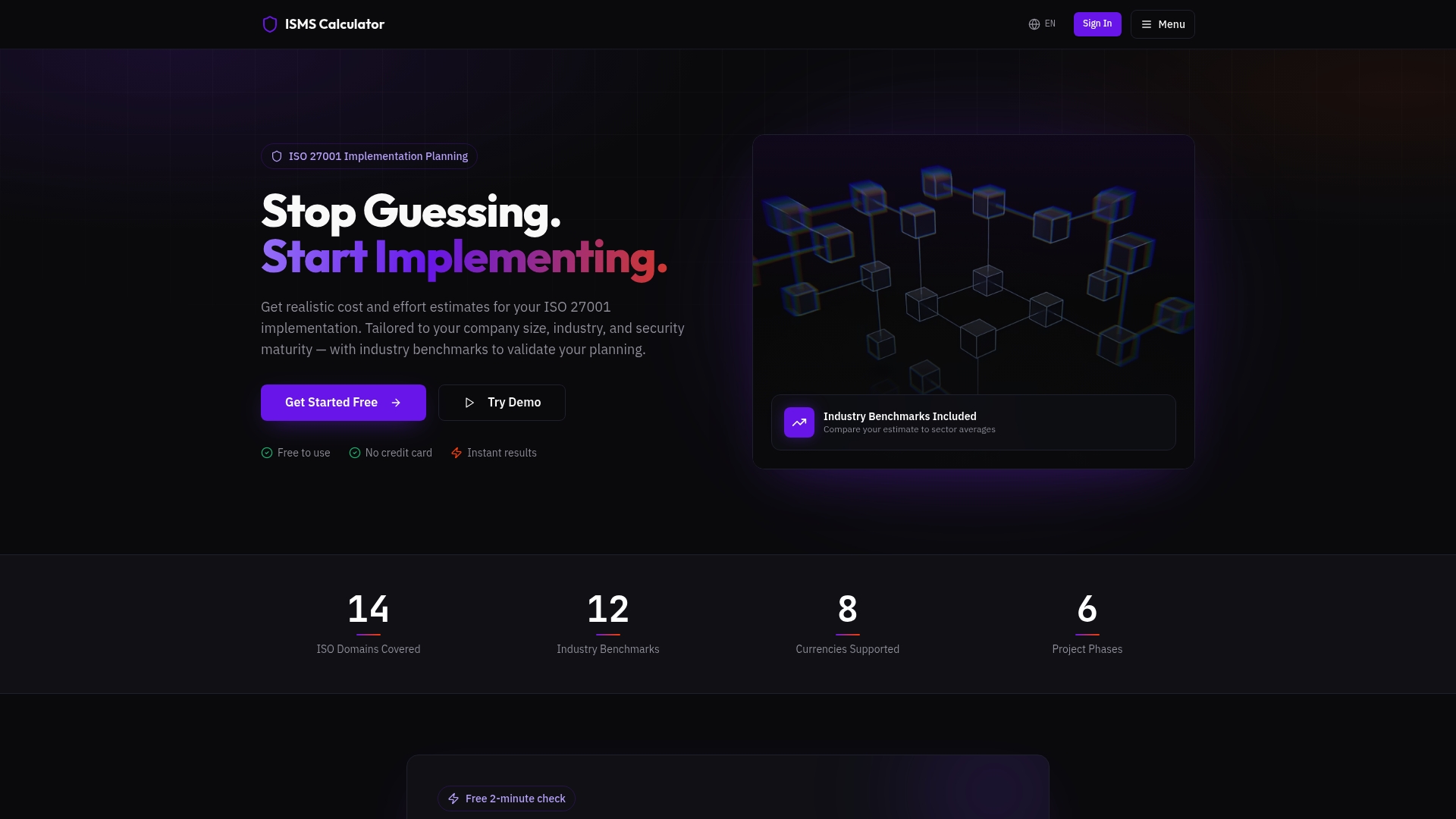
The ISO 27001 readiness assessment covers all four ISO/IEC 27001:2022 control themes, including the organizational controls most relevant to fraud prevention. You can map your current state against model reference comparisons, identify where compensating controls are needed, and generate a prioritized implementation plan. For teams that want a faster starting point, the free 2-minute readiness check identifies your highest-priority gaps without requiring a full assessment session.
FAQ
What is the role of fraud prevention in ISMS?
Fraud prevention in ISMS is the integration of controls, processes, and frameworks that deter, detect, and mitigate fraudulent activities within an organization’s information security program. ISO/IEC 27001:2022 formalizes this through organizational controls like A.5.3 segregation of duties.
What is ISO 27001 control A.5.3?
Control A.5.3 requires organizations to separate conflicting duties to prevent fraud and error. It is one of 93 Annex A controls in ISO 27001:2022 and is typically enforced through Role-Based Access Control and documented compensating controls.
What is MITRE F3 and why does it matter for fraud detection?
MITRE F3 is the Fight Fraud Framework, which extends MITRE ATT&CK with fraud-specific tactics covering account preparation and transaction manipulation. It gives fraud analysts and security engineers a shared language to coordinate detection and response.
How do compensating controls work when segregation of duties is not possible?
When headcount limits strict separation of duties, organizations implement compensating controls such as enhanced activity logging, management reviews, and automated alerts. These must be formally documented with a named owner to satisfy ISO 27001 audit requirements.
How does security culture connect to fraud prevention in ISMS?
Security culture reduces the human error and risky behaviors that create fraud opportunities. Research links effective security culture to decreased fraud incidents, and ISO 27001 auditors increasingly examine training records and awareness programs as evidence of cultural controls.