
Voor de meeste organisaties is de verstandigste keuze een hybride aanpak: houd een interne eigenaar verantwoordelijk voor het ISMS en schakel een consultant in voor de gespecialiseerde, tijdrovende onderdelen. Volledige uitbesteding is alleen zinvol bij een strakke deadline of wanneer er geen intern beveiligingspersoneel aanwezig is; volledig intern werkt wanneer u al over een volwassen beveiligingsteam beschikt. Hoe dan ook, uw eerste stap zou een readiness assessment moeten zijn om te zien waar u werkelijk staat voordat u budget vastlegt.
Samenvatting:
- De kosten voor uitbesteding variëren aanzienlijk; het aantal consultingdagen wordt door organisaties vaak onderschat, waardoor interne reviewtijd de grootste verborgen kostenpost is.
- Een hybride model verlaagt doorgaans de externe kosten en behoudt een betekenisvolle interne betrokkenheid, waardoor de certificeringstijdlijn wordt teruggebracht tot circa 12 maanden.
- Volledig intern bouwen duurt gemiddeld ongeveer 18 maanden, maar ervaren consultants kunnen dit terugbrengen tot circa 12 maanden door gerichte begeleiding te bieden.
- Het is essentieel om de trackrecord van een consultant te verifiëren via klantreferences, slagingspercentages bij certificering en sectorspecifieke ervaring vóór opdrachtverlening.
- Een heldere contractuele scope, duidelijke deliverables, responstijden en overdrachtsprocessen zijn onmisbaar om kostenuitloop, afhankelijkheid en kennisverliesnacertificering te voorkomen.
Inhoudsopgave
- ISO 27001 Uitbestedingsmodellen: Zelf Doen vs. Consultant vs. Hybride
- Wat Kost ISO 27001 Implementatie Werkelijk?
- Hoe Lang Duurt ISO 27001 Met en Zonder Uitbesteding?
- Heeft U de Interne Capaciteit om ISO 27001 Alleen te Implementeren?
- Welke Vragen Stelt U aan een ISO 27001 Consultant?
- Welke ISO 27001 Taken Kunt U het Beste Uitbesteden?
- Wat Gebeurt Er als U Te Veel Uitbesteedt?
- ISO 27001 Consultants vs. Managed Security Service Providers
- Wat Moet Er in een ISO 27001 Uitbestedingscontract Staan?
- Welke Ondersteuning Heeft U Nodig Na Certificering?
- Hoe Verifieert U de ISO 27001 Trackrecord van een Consultant?
- Waarom het Advies "Neem Gewoon een Consultant" de Kern Mist
- Vraag een Op Maat Gemaakte ISO 27001 Kostenraming aan Voordat U met Leveranciers Spreekt
- Bronnen
ISO 27001 Uitbestedingsmodellen: Zelf Doen vs. Consultant vs. Hybride
Er zijn drie routes naar certificering, en de verkeerde kiezen is de duurste fout die organisaties maken nog voordat een project überhaupt van start gaat.
Zelf doen betekent dat uw interne team het ISMS opbouwt, het beleid schrijft, de risicoanalyse uitvoert en de auditrelatie met de certificeringsinstantie beheert zonder externe hulp. Dit werkt wanneer u beschikt over een compliance officer of IT-manager die eerder een ISO 27001-traject heeft doorlopen, of wanneer de organisatie klein genoeg is zodat het raamwerk aansluit op bestaande praktijken. Het is geschikt voor beveiligingsvolwassen teams met ruimte in hun agenda, want de leercurve alleen al kan maanden kosten.
Een consultant inhuren plaatst een externe expert in de leidende rol. Zij voeren de gap-analyse uit, stellen de documentatie op, trainen medewerkers en begeleiden u vaak door de certificeringsaudit. Consultingopdrachten voor een midmarket-project lopen doorgaans op tot 20 tot 50 consultingdagen, en dagtarieven variëren sterk per markt en senioriteit van de specialist. Deze route is het snelst wanneer u een harde deadline heeft (een klantcontract, een aanbestedingsvereiste), maar intern personeel zal nog steeds aanzienlijke uren moeten besteden aan het beoordelen en accorderen van wat de consultant produceert.
Het hybride model combineert een interne ISMS-eigenaar met externe consultingondersteuning voor het technisch zware werk. Begeleiding van implementatiespecialisten pleit consequent voor deze aanpak omdat het snelheid en langetermijneigenaarschap in balans brengt — de consultant versnelt de opbouw, maar het ISMS leeft na het behalen van het certificaat voort binnen de organisatie.
- Zelf doen: lage externe kosten, hoge interne tijdsinvestering, traagste aanlooptijd, het meest geschikt voor teams met eerdere ISO-ervaring.
- Consultant-geleid: hoogste externe kosten, snellere tijdlijn, reëel afhankelijkheidsrisico bij een zwakke overdracht.
- Hybride: gematigde externe kosten, interne tijdsinvestering blijft betekenisvol, beste balans tussen snelheid en blijvende capaciteit.
Wat Kost ISO 27001 Implementatie Werkelijk?
Certificeringskosten zijn niet één bedrag. Het is een bundel van minimaal vijf kostenposten: auditkosten, externe consulting, interne personeelstijd, ISMS-tooling en de kosten van het daadwerkelijk implementeren van maatregelen (nieuwe software, versleuteling, upgrades van toegangsbeheer). Auditkosten zijn vaak het kleinste onderdeel van het totaal, maar toch is dat het bedrag waar de meeste budgetten mee beginnen en eindigen.
Interne personeelstijd is veelal de grootste kostenpost, en die wordt door organisaties het meest onderschat. Wanneer een consultant een offerte indient voor 30 consultingdagen, weerspiegelt dat getal zelden de uren die uw eigen team zal besteden aan het beoordelen van concepten, het verzamelen van bewijsmateriaal en het bijwonen van workshops. Financiële teams reageren doorgaans slecht wanneer die interne uren achteraf als opportuniteitskosten opduiken, nadat de externe facturen al zijn binnengekomen.
Een praktische oplossing: zet persoonsdagen om in euro's voordat u het budget presenteert. Als uw IT-manager 40 uur besteedt aan het beoordelen van beleid tegen een volledig belast tarief van €70 per uur, is dat €2.800 die de auditfactuur nooit zal tonen. Consultantdagtarieven variëren op zichzelf al per regio en specialisatie, dus vraag een schriftelijke uitsplitsing van dagen per fase (gap-analyse, risicoanalyse, documentatie, interne audit, managementreview) in plaats van een totaalbedrag. Voor een volledig overzicht van typische kostenposten en bandbreedtes, raadpleegt u wat ISO 27001-certificering werkelijk kost.
Hoe Lang Duurt ISO 27001 Met en Zonder Uitbesteding?
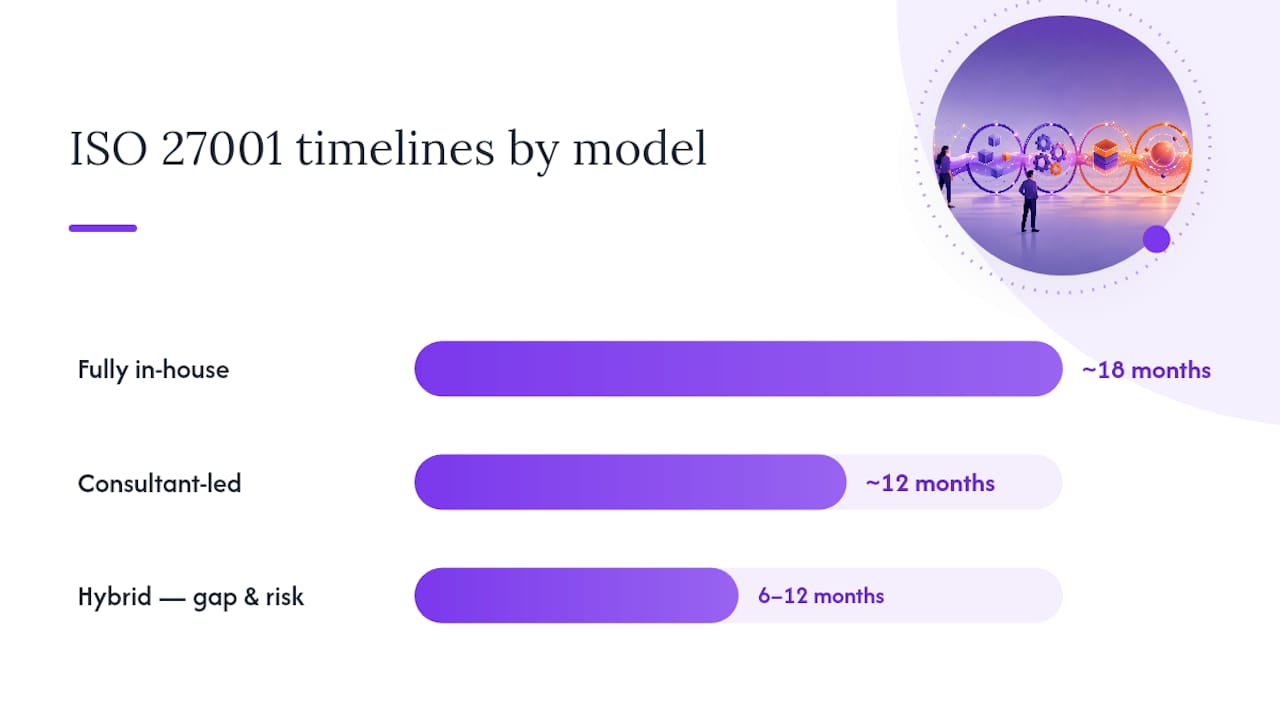
Tijdlijnen lopen sterk uiteen afhankelijk van wie het project aanstuurt. Een volledig intern uitgevoerde opbouw, zeker bij een eerste poging, loopt al snel op naar 18 maanden wanneer u rekening houdt met concurrerende prioriteiten en de leercurve van het schrijven van uw eerste ISMS vanaf nul.
Het inschakelen van een ervaren consultant kan dit aanzienlijk bekorten. Praktische begeleiding suggereert dat een bekwame consultant ongeveer zes maanden van een 18-maanden-opbouw kan afschaven, waarmee u uitkomt op circa 12 maanden, voornamelijk doordat valse starts worden vermeden en de consultant precies weet wat de auditor verwacht. Die snelheid heeft een keerzijde: hoe sneller de consultant werkt, hoe belangrijker het is dat iemand intern het 'waarom' achter elke maatregel absorbeert in plaats van enkel deliverables te accorderen.
Hybride projecten zitten daar tussenin, en de exacte tijdlijn hangt af van hoeveel bandbreedte uw interne eigenaar dat kwartaal daadwerkelijk heeft. Een realistische planningsrange voor de meeste midmarket-organisaties is 6 tot 12 maanden, waarbij de gap-analyse en de risicoanalysefasen doorgaans het eerste derde van het schema in beslag nemen. Voor een fase-voor-fase uitsplitsing, raadpleegt u een gedetailleerde implementatietijdlijn. Welk model u ook kiest, stem de planning af op uw drukste bedrijfsperiodes. Niemand wil een managementreview uitvoeren tijdens het hoogseizoen.
Heeft U de Interne Capaciteit om ISO 27001 Alleen te Implementeren?
Voordat u beslist hoeveel u uitbesteedt, maakt u een eerlijke inventarisatie van wat u al in huis heeft. Deze checklist maakt onderscheid tussen organisaties die het zelfstandig kunnen en die externe hulp nodig hebben.
- Een ISMS-eigenaar: iemand met de bevoegdheid en de tijd om beslissingen te nemen, niet enkel om papierwerk te beheren.
- Ervaring met risicoanalyse: heeft iemand in het team eerder een formele informatiebeveiliging-risicoanalyse uitgevoerd met een erkende methodologie?
- Bandbreedte voor het schrijven van beleid: ISO 27001 vereist tientallen gedocumenteerde beleids- en procedurestukken; iemand moet ze daadwerkelijk schrijven, niet enkel sjablonen goedkeuren.
- Onafhankelijkheid van de interne audit: kunt u een interne auditfunctie bemensen die werkelijk gescheiden is van de mensen die de maatregelen hebben gebouwd?
- Technische implementatievaardigheden: toegangsbeheer, logging, versleuteling en leveranciersrisicobeheer vereisen vaak praktisch technisch werk, niet enkel documentatie.
- Bestuurlijk draagvlak: behandelt het management dit als een gefinancierd project met beschermde tijd, of als iets dat tussen andere taken door wordt gedaan?
Ontbreken twee of meer van deze elementen, dan is dat uw signaal om díe specifieke lacunes uit te besteden in plaats van het hele project. Kleinere organisaties worstelen met name met de onafhankelijkheid van de interne audit, omdat het moeilijk is om uw eigen werk objectief te beoordelen als u een IT-team van vijf personen bent. Het uitbesteden van alleen de interne auditfunctie is gangbaar, redelijk en vaak goedkoper dan het werven voor een rol die u maar één keer per jaar nodig heeft.
Welke Vragen Stelt U aan een ISO 27001 Consultant?
De verkeerde consultant kan u meer tijd kosten dan het zelf doen, dus doorlight hem zoals u elke kritieke leverancier zou doorlichten. Begin met de trackrecord: hoeveel ISO 27001-certificeringen hebben zij daadwerkelijk begeleid, en in welke sectoren? Een consultant die uitsluitend heeft gewerkt met fabrikanten van 500 man, kan moeite hebben met het cloud-native risicoprofiel van een SaaS-bedrijf van 20 personen.
Vraag hen hun gap-analysemethodologie toe te lichten voordat u iets ondertekent. Een korte readiness- of gap-analyse, of deze nu afkomstig is van een consultant of een platform, vermindert latere budgetverrassingen en vertelt u precies welke onderdelen van het project werkelijk externe hulp vereisen. Als een consultant niet kan uitleggen hoe zij die eerste beoordeling zouden structureren, is dat een waarschuwingssignaal.
Andere vragen die u direct kunt stellen:
- Hoeveel consultingdagen raamt u, uitgesplitst per fase?
- Wat gebeurt er als de certificeringsaudit een afwijking constateert? Is herstelbegeleiding inbegrepen of wordt dit apart gefactureerd?
- Wie is eigenaar van de documentatie na afloop van de opdracht? Ontvangen wij bewerkbare bronbestanden, of een vergrendelde PDF?
- Kunt u referenties verstrekken van klanten met een vergelijkbare omvang en in dezelfde sector?
- Wat is uw plan om ons interne team op te leiden, niet enkel om deliverables op te leveren?
Die laatste vraag doet er meer toe dan de meeste opdrachtgevers beseffen. Consultants voor ISO 27001-opdrachten worden bij aanbesteding voornamelijk op prijs vergeleken, maar degenen die een hogere vergoeding waard zijn, bouwen onderweg de capaciteit van uw team op in plaats van u afhankelijk van hen te laten voor elke hercertificering.
Welke ISO 27001 Taken Kunt U het Beste Uitbesteden?
Niet elke taak heeft dezelfde toegevoegde waarde bij uitbesteding. Sommige profiteren werkelijk van externe expertise; andere verliezen waarde op het moment dat u ze overdraagt.
Goede kandidaten voor uitbesteding zijn de initiële gap-analyse (een buitenstaandersperspectief onthult blinde vlekken), de interne audit (onafhankelijkheidsvereisten maken dit een logische keuze voor kleinere teams), penetratietesten (dit vereist bijna altijd gespecialiseerde vaardigheden die u niet intern moet opbouwen voor één jaarlijkse test) en het initieel opstellen van beleid (een consultant die vijftig ISMS-handboeken heeft geschreven, werkt sneller dan een eerste keer).
Taken die beter intern blijven, zijn risicoaanvaardingsbeslissingen (alleen iemand met organisatorisch gezag en context kan hiervoor verantwoordelijk zijn), de dagelijkse uitvoering van maatregelen (toegangsreviews, logmonitoring, incidentrespons vereisen mensen die uw werkelijke omgeving kennen) en de managementreview (dit is expliciet een leiderschapsfunctie, en het uitbesteden ervan ondermijnt het gehele doel van de norm).
Het praktische patroon waar veel midmarket-organisaties op uitkomen: combineer een complianceplatform voor het verzamelen van bewijsmateriaal en doorlopende monitoring met een fractionele consultant voor het oordeelsintensieve werk, zoals risicometodologie en auditbegeleiding. Die combinatie levert vaak een betere totale eigendomskostprijs op dan een zuivere consultingopdracht of een puur softwareabonnement, omdat het platform de repetitieve bewijsverzameling afhandelt terwijl de consultant de onderdelen oppakt die daadwerkelijk expertise vereisen.

Wat Gebeurt Er als U Te Veel Uitbesteedt?
Het grootste risico van volledige uitbesteding zijn niet de kosten. Het is afhankelijkheid. Als een consultant uw volledige ISMS opbouwt en niemand intern begrijpt waarom elke maatregel bestaat, bent u veroordeeld tot het betalen van diezelfde consultant elk jaar voor uw surveillanceaudits en elke keer dat een maatregel moet worden bijgewerkt.
Dit manifesteert zich op een specifieke, voorspelbare manier: het certificaat wordt uitgereikt, de consultant vertrekt, en zes maanden later kan niemand uitleggen waarom een bepaald toegangsbeheerbeleid zegt wat het zegt. Wanneer een auditor tijdens de volgende auditcyclus een gerichte vraag stelt, staat het interne team met de mond vol tanden omdat men nooit de redenering heeft aangeleerd, alleen de voltooide documenten heeft ontvangen.
De maatregel is eenvoudig maar vereist discipline: dring aan op een gestructureerde overdracht als contractuele deliverable, niet als bijzaak. Dat betekent opgenomen trainingssessies, een gedocumenteerde onderbouwing voor elke belangrijke maatregelkeuze (niet enkel de maatregel zelf) en een overgangsperiode waarbij de interne eigenaar vergaderingen leidt terwijl de consultant adviseert in plaats van aanstuurt. Neem dit op in het contract vóór ondertekening, want het is veel eenvoudiger om overdrachtvereisten vooraf te onderhandelen dan ze te eisen nadat de factuur is betaald.
Een hybride model vermindert dit risico structureel, omdat de interne eigenaar vanaf dag één betrokken is in plaats van aan het einde een kant-en-klaar ISMS te ontvangen. Die enkele ontwerpkeuze is de reden waarom hybride opdrachten doorgaans ISMS-programma's opleveren die personeelsverloop en het aflopen van consultantcontracten aanzienlijk beter doorstaan dan volledig uitbestede opbouwen.
ISO 27001 Consultants vs. Managed Security Service Providers
Consultants en managed security service providers (MSSP's) lossen verschillende problemen op, en beide verwarren leidt tot budgetmismatches. Een ISO 27001-consultant wordt doorgaans ingeschakeld voor een afgebakend project: het ISMS opbouwen, u certificeren en dan een stap terugzetten (of overgaan naar een lichtere adviesretainer voor jaarlijkse surveillanceaudits). De opdracht heeft een begin- en einddatum gekoppeld aan de certificeringscyclus.
Een MSSP is een doorlopende operationele dienst; denk aan uitbestede beveiligingsmonitoring, detectie van dreigingen, firewallbeheer of SOC-as-a-service. MSSP's kunnen uw ISO 27001-maatregelen ondersteunen (veel Annex A-vereisten rond logging, monitoring en incidentrespons sluiten direct aan op wat een MSSP al doet), maar zij voeren doorgaans niet uw risicoanalyse uit, stellen uw Verklaring van Toepasselijkheid niet op en beheren uw certificeringsauditrelatie niet.
De twee zijn vaak complementair in plaats van concurrerend. Een consultant kan de monitoring- en logvereisten ontwerpen die uw ISMS nodig heeft en vervolgens een MSSP aanbevelen om die monitoring dagelijks te laten uitvoeren. Als u al betaalt voor MSSP-diensten, vraag die aanbieder dan rechtstreeks welke documentatie en rapportage zij kunnen leveren als auditbewijs. Dit kan het aantal benodigde consultinguren voor het technische maatregelengedeelte van het project aanzienlijk verminderen, omdat u niet twee keer betaalt voor werk dat de MSSP al uitvoert.
Wat Moet Er in een ISO 27001 Uitbestedingscontract Staan?
Scopecreep is de meest gehoorde klacht van organisaties die ISO 27001-werk hebben uitbesteed, en dit is bijna altijd terug te voeren op een vage taakomschrijving. Zorg vóór ondertekening dat de deliverables expliciet zijn vermeld: welke documenten, hoeveel workshops, of de interne audit is inbegrepen en wat "certificeringsondersteuning" daadwerkelijk inhoudt tijdens de audit zelf.
Stel duidelijke serviceniveaus vast voor responstijden, met name rond het auditvenster van de certificeringsinstantie, wanneer een bevinding van een afwijking mogelijk een omwending van de consultant binnen dezelfde week vereist. Definieer wat er gebeurt als de certificeringsinstantie een majeure afwijking constateert: valt herstelwerk onder de oorspronkelijke vergoeding, of wordt het als meerwerk gefactureerd? Deze ene clausule heeft meer budgetgeschillen veroorzaakt dan enig ander onderdeel van ISO 27001-contracten.
Eigendom van intellectuele eigendom doet er meer toe dan de meeste opdrachtgevers beseffen bij aanvang. U wilt bewerkbare bronbestanden voor elk beleid en elke procedure, niet een vergrendelde PDF waarmee u niets kunt bijwerken zonder dezelfde consultant terug te roepen. Onderhandel ook over een vastomlijnd overdrachtmoment met specifieke trainingsddeliverables, in plaats van 'overdracht' te laten betekenen wat de consultant op de laatste dag achterlaat.
Verduidelijk ten slotte de verlengingsvoorwaarden vooraf. Ondersteunt dezelfde consultant uw jaarlijkse surveillanceaudits, en tegen welk tarief? Het vastleggen van het tarief voor jaar twee tijdens de initiële contractonderhandeling geeft u echte onderhandelingspositie die u verliest op het moment dat het certificaat al in handen is.
Welke Ondersteuning Heeft U Nodig Na Certificering?
Certificering is niet de eindstreep. ISO 27001 vereist doorlopende interne audits, managementreviews, updates van de risicoanalyse en continue monitoring van maatregelen, en er zijn uitbestedingsopties voor elk van die doorlopende verplichtingen.
Veel consultants bieden na certificering een lichtere adviesretainer aan, waarbij jaarlijkse interne auditondersteuning en hulp bij de voorbereiding op de surveillanceaudits worden aangeboden die certificeringsinstanties in jaar één en twee na de initiële certificering uitvoeren. Dit kost doorgaans aanzienlijk minder dan de oorspronkelijke implementatieopdracht, omdat het ISMS al bestaat en enkel onderhoud en updates van bewijsmateriaal nodig heeft.
Complianceautomatiseringsplatformen vervullen in toenemende mate de doorlopende monitoringbehoefte door de status van maatregelen bij te houden en te signaleren wanneer bewijsmateriaal verouderd is of een beleidsreview achterstallig is. Het combineren van dat soort doorlopende geautomatiseerde monitoring met een lichte jaarlijkse consultantcheck is vaak kostenefficiënter dan een volledig jaarlijkse heroplevering, met name voor organisaties waarvan het risicoprofiel van jaar tot jaar niet sterk is veranderd.
Welk postcertificeringsmodel u ook kiest, neem de onderhoudskosten op in uw oorspronkelijke budgetgesprek. Een certificaat dat verloopt omdat niemand de ondersteuning voor jaar twee heeft gefinancierd, is een slechter resultaat — en duurder om te herstellen — dan er simpelweg van tevoren op te plannen.
Hoe Verifieert U de ISO 27001 Trackrecord van een Consultant?
Iedereen kan "ISO 27001-expert" op een website zetten. Het verifiëren van die claim vergt wat meer onderzoek, en het is de moeite waard om dat uur te besteden voordat u een contract tekent dat tienduizenden euro's waard is.
Begin met het vragen naar de namen van certificeringsinstanties die hun vroegere klanten hebben gebruikt, en of u rechtstreeks met een voormalige klant kunt spreken, niet alleen een schriftelijke testimonial kunt lezen. Vraag hoeveel van hun opdrachten daadwerkelijk hebben geresulteerd in certificering bij de eerste auditpoging versus een tweede bezoek om afwijkingen te sluiten. Een consultant met individuele kwalificaties zoals een lead auditor-kwalificatie voor ISO 27001 weegt zwaarder dan iemand met enkel een algemene informatiebeveiliging-achtergrond, omdat die kwalificatie specifiek aantoont dat zij begrijpen hoe certificeringsinstanties conformiteit beoordelen.
Let ook op sectorspecificiteit. Een consultant die vijf bedrijven in exact uw sector heeft gecertificeerd, kent uw typische risicolandschap en regelgevingsoverlappen (GDPR, HIPAA, SOC 2) veel beter dan een generalist die bij uw branchespecifieke aspecten van nul begint. Voor een gestructureerde manier om consultantprofielen aan deze criteria te toetsen, kan een onafhankelijke consultantdirectory de voorselectiestap versnellen, en het combineren daarvan met solide projectplanningstools helpt u deliverables bij te houden zodra de opdracht daadwerkelijk van start gaat.
Waarom het Advies "Neem Gewoon een Consultant" de Kern Mist
Het meest gangbare advies over dit onderwerp behandelt uitbesteding als een binaire keuze: ofwel betaalt u een consultant om alles te regelen, ofwel worstelt u er alleen doorheen. Die redenering negeert wat het onderzoek werkelijk laat zien, namelijk dat de organisaties die er het beste uitkomen degenen zijn die uitbesteding precies afbakenen, taak voor taak, in plaats van het hele project of niets ervan uit te besteden.
De gangbare wijsheid onderschat ook de interne personeelstijd als een echte budgetpost. De auditkosten behandelen als de totale kosten is hoe projecten tienduizenden euro's boven budget uitkomen door ongeplande interne uren. Wie een businesscase voor het management opstelt, moet die opportuniteitskosten vanaf dag één in het rekenblad hebben staan, niet halverwege ontdekken.
Als er één ding is dat boven alles prioriteit verdient, is het een eerlijke capaciteitscheck. Weet exact welke rollen uw ISMS nodig heeft die u al in huis heeft, en welke niet, voordat u met één consultant spreekt. Dat is het verschil tussen een afgebakende opdracht die binnen uw budget past en een open-einde-opdracht die dat niet doet.
— Martin
Vraag een Op Maat Gemaakte ISO 27001 Kostenraming aan Voordat U met Leveranciers Spreekt
Er zijn tools beschikbaar waarmee u alle drie uitbestedingsmodellen kunt doorrekenen voordat er een enkele consultantofferte in uw inbox belandt. In plaats van te gokken op consultingdagen of interne uren, is het mogelijk een realtime raming te verkrijgen op basis van uw bedrijfsomvang, sector en huidige beveiligingsvolwassenheid, vergeleken met een transparant modelreferentiekader.
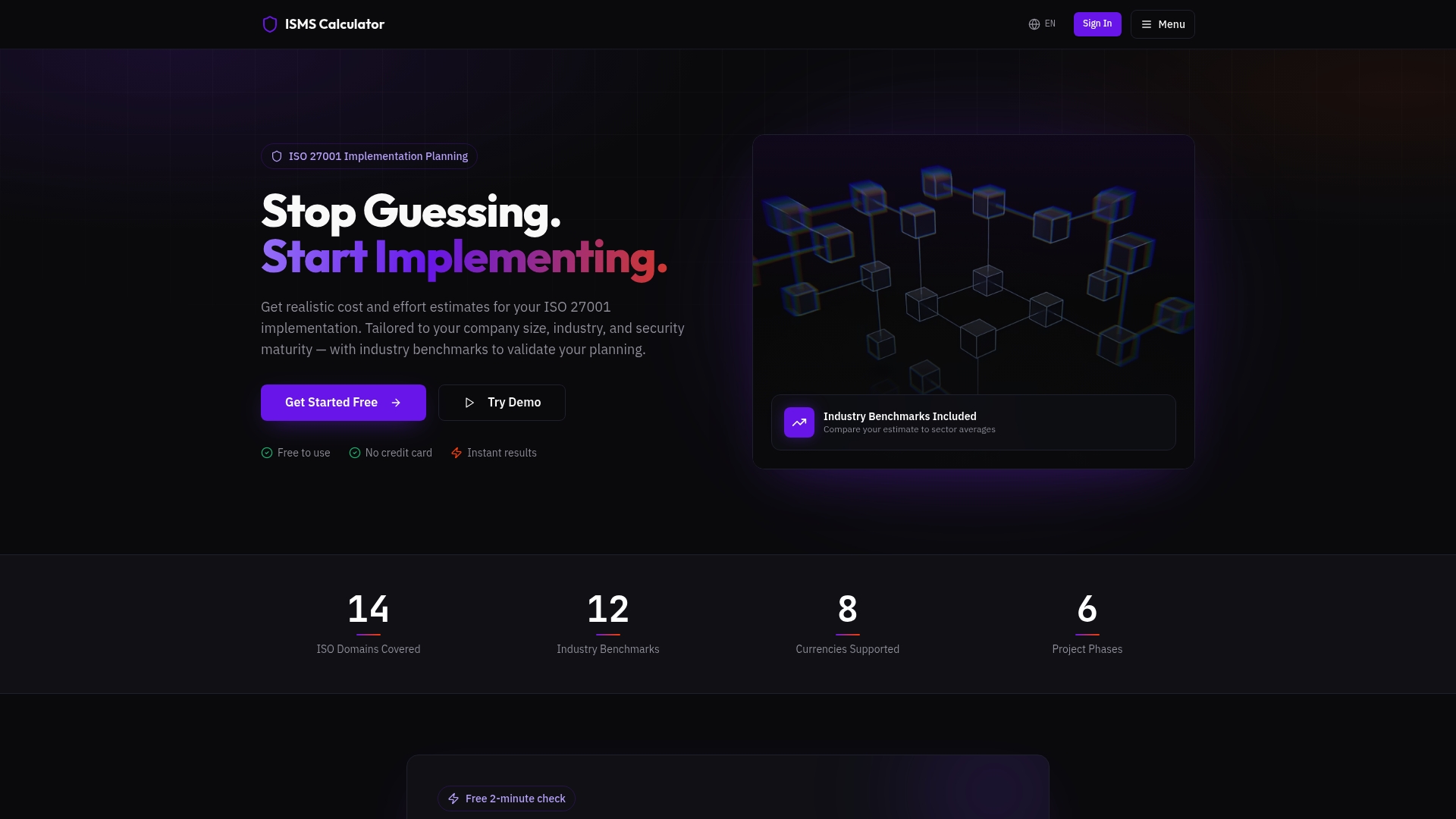
Een volwassenheidsanalyse kan worden uitgevoerd over alle relevante ISO-domeinen om te zien waar lacunes bestaan, waarna een aanpasbaar Gantt-diagram kan worden opgesteld om te vergelijken hoe een zelf-doen-tijdlijn eruitziet ten opzichte van een hybride of consultant-geleide aanpak. Meerdere ramingen kunnen naast elkaar worden opgeslagen, zodat u een budgetvergadering kunt ingaan met cijfers voor alle drie de benaderingen in plaats van enkel de offerte van één leverancier. Als u zo snel mogelijk inzicht wilt in uw huidige situatie, begin dan met de gratis readiness check van 2 minuten, of ga dieper in met de volledige readiness assessment voor een gedetailleerde, exporteerbare kosten- en inspanningsanalyse die u direct aan het management kunt presenteren.
Bronnen
- How to Budget an ISO 27001 Implementation Project (27001Academy PDF)
- ISO 27001 Certification Cost 2026 — What Do Mid-Market Companies Really Pay? | Reepa Solutions
- ISO 27001 Certification Cost in 2026: Full Breakdown | AxiPro