
L'Annexe A.8.32 exige un processus formel et documenté pour tout changement affectant les installations ou systèmes de traitement de l'information : évaluation des risques, autorisation définie, tests préalables au déploiement, plan de retour arrière et enregistrement écrit du changement. La mesure à prendre dès maintenant : ouvrez votre Déclaration d'Applicabilité, confirmez que A.8.32 est marquée applicable, et vérifiez si votre politique de changement décrit réellement ce processus ou se contente de l'évoquer vaguement.
En résumé :
- Un processus de changement documenté doit couvrir l'évaluation des risques, l'approbation, les tests, le retour arrière et la tenue des enregistrements pour toute mise à jour de système affectant les installations de traitement de l'information.
- Les politiques de changement doivent définir explicitement le périmètre, les objectifs, les rôles, les catégories et les circuits d'escalade, avec des procédures détaillant les étapes de demande, d'évaluation d'impact, d'approbation, de test et de revue.
- La séparation des tâches exige une approbation et une vérification indépendantes, avec des preuves horodatées précisément, garantissant la responsabilisation via des tickets de changement détaillés.
- Les changements d'urgence sont autorisés avec une approbation accélérée et une revue post-implémentation, mais doivent inclure un plan de retour arrière testé et une autorisation documentée dans les 48 heures.
- Des indicateurs réguliers tels que la complétude de la documentation, la fréquence des retours arrière et les délais de changement doivent être suivis pour s'assurer que le processus reste efficace et proportionné dans le temps.
Table des matières
- Ce que couvre l'Annexe A.8.32 et pourquoi les auditeurs y accordent de l'importance
- Éléments essentiels que toute politique de changement conforme doit comporter
- Gérer un changement de la demande à la revue post-implémentation
- Qui approuve quoi : rôles, CAB et séparation des tâches
- Gérer les changements d'urgence sans perdre le contrôle
- Constituer un dossier d'audit que les auditeurs accepteront vraiment
- Mesurer si votre processus de changement fonctionne réellement
- Outils opérationnels accélérant la conformité à A.8.32
- Là où les efforts de gestion des changements échouent généralement
- Sources
Ce que couvre l'Annexe A.8.32 et pourquoi les auditeurs y accordent de l'importance
L'Annexe A.8.32 s'applique aux changements affectant les installations et systèmes de traitement de l'information : mises en production logicielles, mises à jour d'infrastructure, reconfigurations réseau, nouvelles intégrations, modifications d'environnements cloud, et même les changements de processus significatifs qui touchent à la façon dont l'information est traitée. Elle ne se limite pas aux déploiements de code. Les auditeurs en ont une lecture large, et vous devriez faire de même.
Ce contrôle s'inscrit dans une structure plus large. ISO/IEC 27001 rattache A.8.32 à la planification du Chapitre 6, qui exige d'évaluer les risques avant d'agir, et non après qu'une défaillance se soit produite. Il est également directement lié à A.8.31, le contrôle régissant la séparation des environnements de développement, de test et de production. Il est impossible de satisfaire à l'exigence de test d'A.8.32 sans disposer d'un environnement isolé pour tester, ce qui explique précisément pourquoi les auditeurs vérifient souvent les deux contrôles lors du même entretien.
La logique sécuritaire est simple : appliquer la discipline de la gestion des changements réseau aide à prévenir les changements non autorisés susceptibles de compromettre la confidentialité, l'intégrité ou la disponibilité. Un changement non revu apporté à une règle de pare-feu, un schéma de base de données ou une liste de contrôle d'accès peut silencieusement rompre la confidentialité, l'intégrité ou la disponibilité — les trois propriétés que votre SMSI existe pour protéger. Un seul changement non autorisé, déployé sans test, a provoqué des interruptions de service et des expositions de données dans des organisations qui bénéficiaient par ailleurs de solides contrôles techniques. La gestion des changements est la ceinture de sécurité de tous les autres contrôles que vous avez mis en place.
Ce que les auditeurs s'attendent à voir, au minimum :
- Une déclaration de politique documentée qui désigne la gestion des changements comme un contrôle et en définit le périmètre
- Une procédure décrivant le flux de travail réel, et pas seulement des principes
- La preuve que les changements ont été évalués au regard des risques avant approbation
- La preuve qu'une personne autre que l'implémenteur a approuvé le changement
- Des enregistrements attestant que les tests ont eu lieu dans un environnement autre que la production
Les auditeurs n'attendent pas la perfection. Ils attendent une cohérence entre ce que disent vos documents et ce que montrent vos tickets.
Éléments essentiels que toute politique de changement conforme doit comporter
Une politique qui se contente d'indiquer que « les changements doivent être approuvés » ne survivra pas à un audit de certification. Les auditeurs veulent voir les mécanismes concrets, et le guide de mise en œuvre NQA est explicite sur le fait que l'évaluation d'impact, les approbations documentées, les tests hors production, les plans de retour arrière et la revue post-changement doivent tous figurer quelque part par écrit.
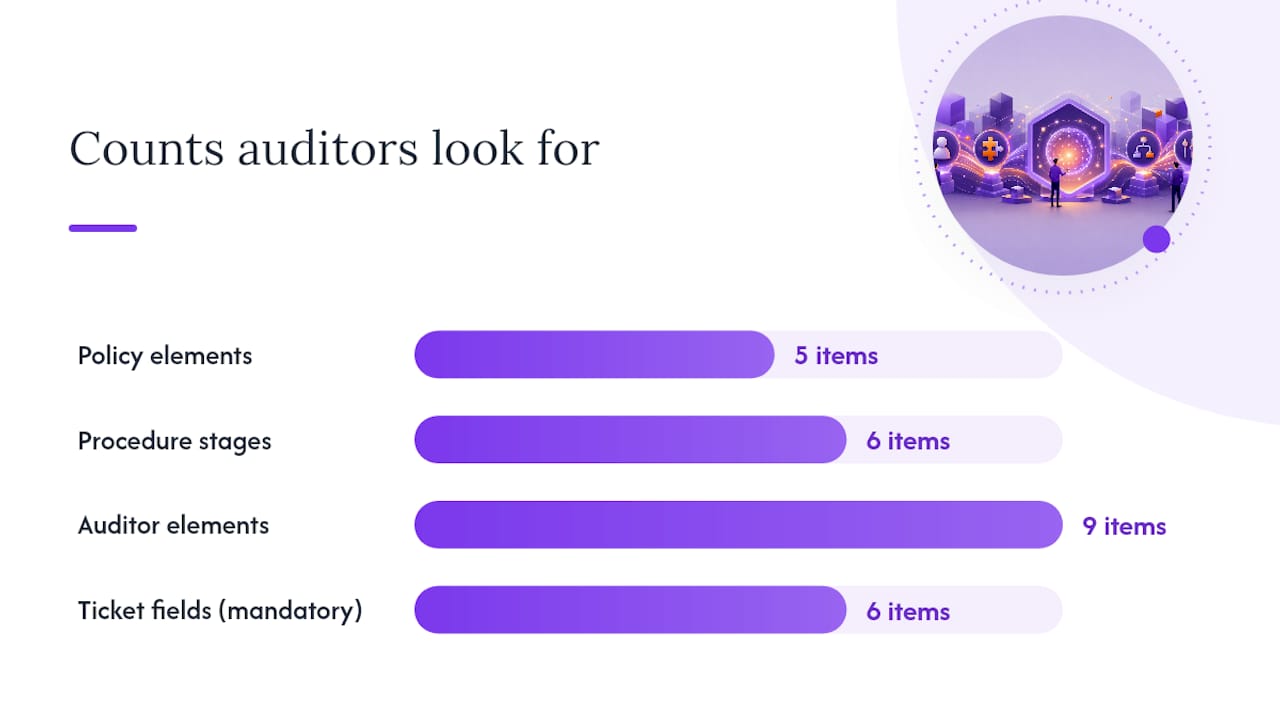
Commencez par la politique elle-même. Elle doit comporter cinq éléments :
- Déclaration de périmètre définissant précisément quels systèmes, environnements et types de changements relèvent de la politique.
- Objectifs expliquant pourquoi le contrôle existe (réduction des risques, protection de la disponibilité, conformité aux audits).
- Rôles et responsabilités, désignant qui demande, évalue, approuve, implémente et vérifie.
- Catégories de changements, généralement standard, normal et urgence, chacune assortie d'exigences de revue proportionnées.
- Circuit d'escalade pour les litiges ou les changements à risque élevé nécessitant une validation plus large.
La procédure est là où les véritables preuves d'audit sont générées. Une procédure opérationnelle se déroule en six étapes : demande, évaluation d'impact, approbation, test, implémentation et revue post-changement. La présentation détaillée du contrôle par Konfirmity liste neuf éléments que les auditeurs recherchent à travers ces étapes, notamment un circuit d'urgence documenté et l'obligation de mettre à jour la documentation associée une fois le changement déployé.
La séparation des tâches mérite sa propre ligne dans la procédure, et pas seulement une mention. La personne qui demande un changement ne doit pas être celle qui l'approuve, et dans les cas à risque plus élevé, l'implémenteur ne devrait pas non plus être le vérificateur. Les petites équipes peuvent satisfaire à cette exigence par une revue par les pairs plutôt que par un comité formel, mais la séparation doit être visible dans l'enregistrement, et pas seulement supposée.
Chaque changement doit laisser une trace probante spécifique :
- La demande initiale avec justification métier
- Une évaluation des risques/impacts complétée
- Un approbateur nommé et un horodatage
- Les résultats des tests ou un lien vers les preuves de test
- Un plan de retour arrière, même pour les changements qui n'en ont pas eu besoin
- Une note de clôture confirmant que le changement a correspondu au plan
Conseil pratique : Construisez votre modèle de ticket de changement avec ces six champs obligatoires, et non optionnels. Les auditeurs échantillonnent les tickets aléatoirement, et un ticket manquant même un seul champ donne l'impression d'une lacune dans l'ensemble du processus, et non d'un oubli ponctuel.
Les recommandations de ComplianceDocs sur la rédaction des politiques de changement soulèvent un point qui mérite d'être répété : la proportionnalité est le principe de conception, et non une réflexion après coup. Les changements standard à faible risque (un correctif de routine, un ajustement de configuration effectué cinquante fois) peuvent passer par des modèles pré-approuvés. Les changements à risque élevé nécessitent une revue complète du comité consultatif des changements et un plan de retour arrière explicite avant que quiconque touche à la production.
Gérer un changement de la demande à la revue post-implémentation
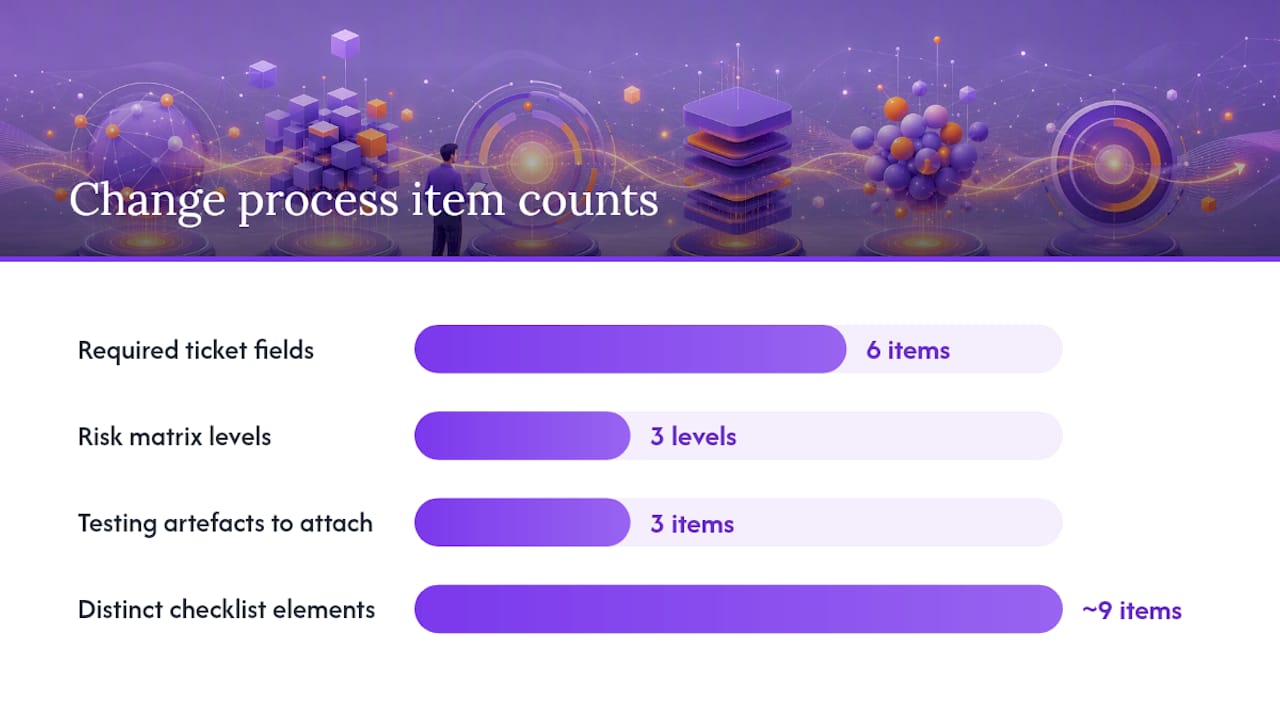
L'écart entre disposer d'une politique et avoir un processus opérationnel se manifeste généralement dans les détails du ticket lui-même. Un formulaire de demande nécessite des champs spécifiques, et non une zone de texte libre : titre du changement, système ou actif concerné, justification métier, date proposée, catégorie (standard, normal ou urgence) et nom du demandeur. Des demandes vagues produisent des évaluations des risques vagues, et les évaluations des risques vagues sont la première chose qu'un auditeur signale.
L'évaluation des risques et des impacts ne nécessite pas un modèle complexe. Une matrice 3x3 simple, notant la vraisemblance par rapport à l'impact sur une échelle faible, moyen, élevé, est généralement suffisante pour satisfaire les auditeurs tout en restant assez rapide pour que les équipes l'utilisent réellement. Le résultat importe plus que la méthode : l'évaluation identifie-t-elle ce qui pourrait être affecté, qui le remarquerait, et combien de temps prendrait la reprise ? Un changement touchant l'authentification des clients fait l'objet d'une revue plus approfondie qu'un changement apporté à un tableau de bord de reporting interne, et votre matrice devrait refléter cette différence automatiquement.
Les tests sont l'étape où de nombreuses organisations font discrètement des compromis, et c'est celle que les auditeurs sondent le plus. L'analyse détaillée du contrôle par Copla présente les tests hors production comme incontournables pour tout ce qui n'est pas une véritable urgence, car c'est le seul moyen de détecter un changement bloquant avant qu'il n'atteigne des utilisateurs et des données réels. Concrètement, cela signifie :
- Joindre les résultats des cas de test, captures d'écran ou journaux au ticket de changement
- Enregistrer l'environnement dans lequel le test a été exécuté et confirmer qu'il ne s'agissait pas de la production
- Noter tout test échoué et la façon dont il a été résolu avant l'approbation
Environ neuf éléments distincts apparaissent dans les présentations praticiennes d'une procédure de changement conforme, de l'évaluation d'impact aux mises à jour de documentation et à la revue de continuité, et les tests figurent systématiquement au cœur de cette liste chaque fois qu'elle est citée.
La planification de l'implémentation nécessite une fenêtre planifiée, un implémenteur désigné et des critères de retour arrière explicites rédigés avant le début du changement, et non improvisés après qu'un problème survient. Les critères de retour arrière doivent répondre à une question en langage clair : quel signal spécifique nous indique de revenir en arrière immédiatement sur ce changement ?
La revue post-implémentation boucle la boucle. Dans un délai défini (24 à 72 heures convient à la plupart des organisations), une personne autre que l'implémenteur vérifie que le changement a produit l'effet escompté, n'a pas causé d'effets secondaires inattendus et que la documentation est à jour. La clôture n'intervient qu'une fois cette revue validée.
Qui approuve quoi : rôles, CAB et séparation des tâches
Cinq rôles couvrent presque tous les dispositifs de gestion des changements, quelle que soit la taille de l'organisation :
- Demandeur : identifie le besoin et soumet la demande
- Propriétaire : la personne ou l'équipe responsable du système concerné
- Approbateur : évalue les risques et autorise le changement ; ne doit pas être l'implémenteur
- Implémenteur : exécute le changement conformément au plan approuvé
- Vérificateur : confirme que le changement a fonctionné et que la documentation est à jour
Un comité consultatif des changements (CAB) complet est pertinent lorsque vous gérez suffisamment de changements simultanés pour que la coordination informelle devienne insuffisante, ou lorsque vos catégories de risques commencent à inclure des changements ayant un impact à l'échelle de l'organisation. En deçà de ce seuil, un comité représente une charge inutile.
Pour les changements à risque élevé ou normaux, acheminez l'approbation vers le propriétaire du système concerné et un examinateur indépendant. Pour les changements standard à faible risque, un modèle pré-approuvé avec une seule validation est proportionné et défendable ; le cadre ComplianceDocs considère ce niveau de traitement comme la bonne façon d'éviter que les contrôles ne paralysent la vélocité de livraison.
Les petites équipes sans comité formel peuvent néanmoins satisfaire à l'esprit de la séparation des tâches. La revue par les pairs avant fusion, les workflows d'approbation de pull request dans votre système de gestion des versions, ou une simple deuxième validation par un collègue démontrent tous qu'une personne indépendante a revu le changement. Ce qui importe pour un auditeur, c'est la preuve de la séparation, et non la taille du comité.
Quel que soit le mécanisme choisi, horodatez chaque approbation et stockez-la dans un endroit immuable. Un « feu vert » verbal dans un couloir n'est pas une preuve. Une approbation enregistrée dans votre système de ticketing, liée à une personne précise et à une minute précise, l'est.
Gérer les changements d'urgence sans perdre le contrôle
Les changements d'urgence existent parce que la production tombe en panne à des moments inopportuns, et attendre un cycle d'approbation complet cause parfois plus de dommages que le correctif lui-même. ISO 27001 n'interdit pas les changements accélérés ; il exige qu'ils laissent néanmoins une trace imputable.
- Définissez dans la politique ce qui constitue exactement une urgence (interruption de service active, incident de sécurité actif ou perte de données imminente sont des seuils courants).
- Autorisez l'implémentation avec une approbation abrégée — souvent une validation verbale d'une personne autorisée — mais exigez une documentation formelle dans un délai fixe (24 à 48 heures est typique).
- Soumettez chaque changement d'urgence à la même revue post-implémentation qu'un changement standard, sans exception.
La planification du retour arrière est ce qui distingue un changement d'urgence maîtrisé d'un pari. Avant d'implémenter quoi que ce soit d'urgent, sachez vers quoi vous revenez : un instantané système, une sauvegarde de base de données ou un fichier de configuration précédent sauvegardé. Si vous ne pouvez pas répondre à la question « comment annuler ceci en cinq minutes » avant de commencer, vous n'êtes pas prêt à commencer.
Conseil pratique : Testez votre procédure de retour arrière lors d'une fenêtre de maintenance planifiée au moins une fois par an, et non seulement lorsque vous en avez besoin. Un plan de retour arrière que personne n'a jamais exécuté est un plan de retour arrière que vous n'avez pas réellement.
Planifiez une rétrospective pour chaque changement d'urgence dans un bref délai après résolution. La rétrospective doit poser une question à laquelle le ticket lui-même ne peut pas répondre : aurait-il pu être évité, ou classifié comme standard la prochaine fois ?
Constituer un dossier d'audit que les auditeurs accepteront vraiment
Lorsqu'un auditeur échantillonne vos enregistrements de changements, il cherche un fil conducteur cohérent de la demande à la clôture. Les artefacts qu'il demandera, dans l'ordre approximatif où il les demandera :
- Le ticket de changement lui-même, avec justification et catégorie
- L'évaluation documentée des risques/impacts
- L'approbateur nommé et l'horodatage
- Les preuves de test, qu'il s'agisse de journaux, de captures d'écran ou d'un rapport de test signé
- Le plan de retour arrière, présent même pour les changements qui n'en ont pas eu besoin
- La revue post-implémentation et la validation de clôture
Un détail qui distingue un audit acceptable d'un audit réussi : associez chaque changement significatif aux entrées spécifiques de la Déclaration d'Applicabilité qu'il concerne. Les recommandations de Konfirmity sur ce point soulignent que la mise en correspondance des changements avec les entrées de la DdA permet à un auditeur de voir exactement quels contrôles de l'Annexe A un changement a touchés et pourquoi votre organisation les a jugés applicables en premier lieu. Cette seule habitude transforme un ticket de changement d'un enregistrement isolé en preuve que votre SMSI fonctionne réellement en tant que système.
Conservez les enregistrements de changements pendant au moins la durée de votre cycle de certification, généralement trois ans, et plus longtemps si un cadre réglementaire auquel vous êtes également soumis l'exige. Organisez les preuves par catégorie de changement plutôt que chronologiquement. Un auditeur souhaitant voir comment vous gérez les changements d'urgence ne devrait pas avoir à parcourir six mois de correctifs de routine pour trouver trois exemples.
Examiner quelles preuves d'audit les auditeurs attendent de façon plus générale vaut la peine d'être fait avant votre premier audit de surveillance, car les enregistrements de changements ne sont qu'une catégorie de preuves parmi plusieurs que vous devrez organiser de la même façon.
Mesurer si votre processus de changement fonctionne réellement
Un contrôle de gestion des changements qui génère de la paperasse mais pas d'enseignements ne remplit pas sa fonction. Suivez un petit ensemble d'indicateurs et révisez-les à intervalles fixes, idéalement en parallèle de votre revue de direction régulière.
| Indicateur | Ce qu'il vous dit | Fréquence de revue suggérée |
|---|---|---|
| Pourcentage de changements avec documentation complète | Si votre processus est réellement suivi | Mensuelle |
| Taux de changements échoués ou annulés | Si l'évaluation des risques détecte les vrais problèmes avant le déploiement | Mensuelle |
| Délai moyen de la demande à l'approbation | Si la revue proportionnée fonctionne ou crée des goulots d'étranglement | Trimestrielle |
| Changements d'urgence en proportion du total des changements | Si votre processus standard doit absorber davantage de types de changements | Trimestrielle |
| Revues post-implémentation complétées dans les délais | Si la discipline de clôture est maintenue | Mensuelle |
Fixez des seuils qui déclenchent une action, et non simplement une observation. Si les changements échoués dépassent un niveau que vous avez défini comme acceptable, c'est le signal que votre étape d'évaluation des risques doit être recalibrée, et non une note de bas de page pour le prochain audit. Si les changements d'urgence continuent de croître en proportion du total, votre catégorie « standard » est probablement trop étroite et doit être élargie.
Utilisez ces chiffres pour ajuster vos règles de classification au fil du temps. Un type de changement exécuté proprement quarante fois d'affilée est candidat à une reclassification de normal à standard, libérant ainsi une capacité de revue pour les changements qui méritent vraiment un examen approfondi.
Outils opérationnels accélérant la conformité à A.8.32
Construire ce processus à partir de zéro prend des heures réelles que vous n'avez probablement pas budgétées. L'évaluation de maturité d'ISMS Calculator estime l'effort qu'un contrôle de gestion des changements demandera réellement en fonction de la taille de votre entreprise, de votre secteur et de votre maturité sécuritaire actuelle — ce qui transforme « nous devrions probablement formaliser cela » en un projet délimité avec un calendrier.
Une évaluation de maturité couvrant l'ensemble des quatre thèmes de contrôle d'ISO/IEC 27001:2022 peut aider à montrer précisément où la gestion des changements se situe par rapport aux autres lacunes, plutôt que de procéder par approximation. Des calendriers Gantt personnalisables permettent ensuite de séquencer la rédaction de la politique, le déploiement des modèles et la constitution du CAB par rapport à une échéance de certification, plutôt que de tout aborder à la fois. Les estimations sauvegardées et comparables fournissent quelque chose de concret à remettre à un auditeur ou à un comité budgétaire comme preuve d'une planification proportionnée plutôt qu'improvisée.
Si vous cherchez encore à confirmer si la gestion des changements entre dans le périmètre, le diagnostic de maturité gratuit en 2 minutes est le moyen le plus rapide de le savoir.
Là où les efforts de gestion des changements échouent généralement
L'échec le plus courant n'est pas une politique manquante, mais une politique que personne ne suit parce qu'elle a été rédigée pour un audit plutôt que pour l'équipe qui l'utilise. La surdocumentation tue l'adoption plus vite que la sous-documentation ne le fera jamais.
Les plans de retour arrière sont le plus souvent omis, non parce que les équipes n'y accordent pas de valeur, mais parce que personne n'a été désigné comme responsable. Résolvez cela avec un modèle basé sur les risques qui fait du retour arrière un champ obligatoire, et non une réflexion après coup, et intégrez le routage des approbations dans votre outil de ticketing afin que les horodatages se produisent automatiquement plutôt que de dépendre de la mémoire. Planifiez les revues post-changement dans l'agenda dès le moment où un changement est approuvé, et non après qu'un problème survient.
— Martin
Prêt à évaluer le coût réel et le calendrier pour intégrer ce contrôle dans votre SMSI ? L'évaluation de maturité d'ISMS Calculator vous fournit une estimation personnalisée basée sur la taille, le secteur et la maturité actuelle de votre entreprise, étayée par des comparaisons avec des modèles de référence afin que vous sachiez si votre plan est proportionné avant de le présenter à la direction. Comparez des estimations sauvegardées côte à côte, exportez un PDF pour votre comité de pilotage, et passez de « nous avons besoin d'une politique de changement » à un projet planifié avec un calendrier Gantt en une seule session.
Sources
- ISO/IEC 27001 Sécurité de l'information, cybersécurité et protection de la vie privée — ISO
- NQA — Guide de mise en œuvre ISO 27001 (extrait sur la gestion des changements)
- Gestion des changements ISO 27001 : présentation détaillée avec modèles | Konfirmity
- ISO 27001 et gestion des changements : politiques, procédures et modèles expliqués | Copla
Recommandé
- 3 à 5 exemples d'enregistrements : étapes d'audit ISO 27001 dont les équipes de conformité ont besoin
- Préparation à l'audit ISO 27001 pour les entreprises financières : guide 2026
- Exemples de non-conformités ISO 27001 : guide d'audit 2026
- Audit interne ISO 27001 : le guide opérationnel prêt pour la certification