
Eine Sicherheitszertifizierung durch Dritte verkürzt Verkaufszyklen, öffnet Türen zu Enterprise-Beschaffungsprozessen und signalisiert Investoren operative Reife. Das ist die Kernaussage – und sie gilt, ob Sie Ihren ersten sechsstelligen Vertrag anstreben oder ein Series-A-Deck vorbereiten. Eine Zertifizierung ist keine Compliance-Steuer, die man einmal zahlt und vergisst. Sie ist ein Wachstumsmechanismus mit drei wesentlichen Komponenten:
- Vertrauen und Zugang zur Beschaffung — Zertifizierte Anbieter überspringen wochenlange manuelle Sicherheitsfragebögen, weil Prüfer die Kontrollen bereits verifiziert haben.
- Operative Disziplin — Der Aufbau eines Informationssicherheits-Managementsystems (ISMS) zwingt Sie dazu, Prozesse zu dokumentieren, zu überwachen und zu verbessern, die zuvor wahrscheinlich auf implizitem Wissen basierten.
- Vorteile für Investoren und Versicherungen — Due-Diligence-Teams und Versicherer werten eine Zertifizierung als Beleg für geringeres Risiko – was sich in Bewertungsgesprächen und Prämienhöhen niederschlägt.
Wenn Sie an US-amerikanische B2B-Käufer verkaufen, ist SOC 2 meist zuerst relevant. Wenn Sie international expandieren oder Enterprise-Kunden bzw. Kunden aus regulierten Branchen ansprechen, öffnet ISO 27001 in der Regel mehr Türen. Die meisten schnell wachsenden Startups streben beide Zertifizierungen an – in dieser Reihenfolge.
Die wichtigsten Erkenntnisse
Eine Sicherheitszertifizierung beschleunigt das Startup-Wachstum, indem sie Verkaufszyklen verkürzt, die Due-Diligence-Anforderungen von Investoren erfüllt und die operative Disziplin stärkt, die Sicherheitsvorfallskosten und Versicherungsausgaben reduziert.
| Punkt | Details |
|---|---|
| Zertifizierung auf Käufertyp abstimmen | SOC 2 für US-amerikanische B2B-Beschaffung, ISO 27001 für internationale oder Enterprise-Expansion. |
| Mit einem fokussierten Sprint beginnen | Ein Type-I-Readiness-Sprint kann nur drei bis acht Wochen dauern und blockierte Deals freischalten. |
| Puffer einplanen | 15 bis 20 Prozent auf die ursprüngliche Kostenschätzung aufschlagen, da Gap-Assessments meist unerwartete Arbeit aufdecken. |
| Scope eng halten, Nachweise früh automatisieren | Scope auf Systeme beschränken, die Kundendaten berühren, dann Logging, SSO und Secrets Management zuerst automatisieren. |
| Vor der Entscheidung kalkulieren | Den Ismscalculator-Readiness-Check oder Kostenschätzer nutzen, um allgemeine Zeitpläne in ein auf Unternehmensgröße und Reifegrad zugeschnittenes Budget zu überführen. |
Inhaltsverzeichnis
- Warum Sicherheitszertifizierung für das Startup-Wachstum für Gründer entscheidend ist
- Was eine Zertifizierung in Ihrem Unternehmen tatsächlich verändert
- Welche Zertifizierung sollten Sie anstreben – und wann?
- Was eine Zertifizierung wirklich kostet und wie lange sie dauert
- Vorbereitung: Eine praktische Checkliste für dieses Quartal
- Wo Startups bei der Zertifizierung Fehler machen
- Was die Forschung tatsächlich zeigt
- Wann eine Zertifizierung sich lohnt – und wann sie warten kann
- Ihr ISO 27001-Projekt budgetieren, bevor Sie sich festlegen
- Häufig gestellte Fragen
- Quellen
Warum Sicherheitszertifizierung für das Startup-Wachstum für Gründer entscheidend ist
Gründer behandeln Zertifizierungen häufig als technisches Problem, das später gelöst werden kann. Das ist der falsche Ansatz. Eine Zertifizierung ist ein Vertriebs- und Fundraising-Problem mit einer technischen Lösung als Bestandteil.
Folgendes ändert sich, wenn Sie es richtig angehen: Beschaffungsteams bei mittelständischen und großen Unternehmen prüfen jeden Anbieter vor der Vertragsunterzeichnung sicherheitstechnisch. Ohne Zertifizierung bedeutet diese Prüfung einen Fragenkatalog mit 40 oder mehr Punkten, Folgegespräche mit Ihrem CTO und wochenlangen Abstimmungsbedarf. Mit einem SOC-2-Bericht oder einem ISO 27001-Zertifikat übergeben Sie ein Dokument und gelangen direkt zur Vertragsverhandlung. Leitfäden für wachstumsstarke Unternehmen beziffern die Verkürzung des Verkaufszyklus nach Erhalt der Zertifizierung auf rund 30 bis 40 Prozent, vor allem weil Beschaffungsteams kein eigenes Risikobild mehr aufbauen müssen.
Investoren lesen dasselbe Signal anders, aber sie lesen es. Ein Startup mit einem funktionierenden ISMS hat bereits einen Teil der operativen Due Diligence absolviert, die ein Erwerber oder Series-A-Investor andernfalls im Rahmen eines Deals einfordern würde. Eine Zertifizierung wirkt als strategische Steuerungsmaßnahme, die Gespräche von „Wir haben vor, sicher zu sein" zu „Hier ist unser Nachweis" verschiebt – was in einer Vorstandssitzung oder einer Term-Sheet-Verhandlung einen völlig anderen Eindruck hinterlässt.
Hinzu kommt ein Kostenersparnispotenzial. Sicherheitsvorfälle verursachen im Durchschnitt Millionenkosten, und ein erheblicher Anteil der Verbraucher wechselt den Anbieter nach einem Sicherheitsvorfall, wie Branchendaten belegen, auf die in Empfehlungen zum Aufbau von Kundenvertrauen hingewiesen wird. Zertifizierte Unternehmen neigen dazu, Vorfälle schneller zu erkennen und einzudämmen, weil sie bereits über Logging-, Monitoring- und Incident-Response-Prozesse verfügen – nicht weil eine Zertifizierung ein magischer Schutzschild wäre.
Stellen Sie sich ein fünfköpfiges Seed-Stage-SaaS-Unternehmen vor, das seinen ersten Enterprise-Piloten abschließen möchte. Das Sicherheitsteam des Interessenten schickt einen Fragenkatalog mit 60 Punkten und fordert einen SOC-2-Bericht, den das Startup nicht hat. Anstatt ein vollständiges ISMS von Grund auf aufzubauen, führt der Gründer einen fokussierten sechswöchigen Type-I-Readiness-Sprint durch: Passwortrichtlinien, Zugriffskontrollen, ein grundlegendes Incident-Response-Konzept und zentralisiertes Logging. Das Ergebnis ist ein abgeschlossener Type-I-Bericht, der oft ausreicht, um den Piloten freizuschalten, während der Type-II-Beobachtungszeitraum parallel läuft. Ein solcher komprimierter Zeitplan ist realistisch. Startup-fokussierte Playbooks beschreiben ähnliche Sprints, bei denen fokussierte Teams in nur drei bis acht Wochen Type-I-Readiness erreichen.
Was eine Zertifizierung in Ihrem Unternehmen tatsächlich verändert
Eine Zertifizierung ist kein Siegel, das Sie in Ihre Website-Fußzeile kleben. Jede Zertifizierung erzwingt spezifische, messbare Veränderungen in der Arbeitsweise Ihres Unternehmens. Hier ist die Aufschlüsselung nach Nutzenkategorien.
1. Beschleunigung von Vertrieb und Beschaffung
Der bei weitem größte Treiber des Zertifizierungs-ROI sind weniger blockierte Deals. Das Sicherheitsteam jedes Enterprise-Käufers hat eine Standardcheckliste, und eine Zertifizierung beantwortet den Großteil davon, bevor das Gespräch überhaupt beginnt. Startups, die das sorgfältig verfolgen, verzeichnen messbare Verkürzungen der Zeit zwischen Sicherheitsprüfung und Vertragsabschluss.
Praxistipp: Verfolgen Sie, wie viele Deals im letzten Quartal gezielt in der Sicherheitsprüfungsphase ins Stocken geraten oder gescheitert sind. Multiplizieren Sie diese Anzahl mit Ihrem durchschnittlichen Deal-Wert. Diese Zahl ist das Umsatzpotenzial Ihrer Zertifizierung – und sie ist meist größer, als Gründer erwarten.
2. Kundenwechselrate und -bindung
Bestandskunden verlängern Verträge zuversichtlicher, wenn Sie auf ein unabhängiges Audit verweisen können statt auf Ihre eigenen Zusicherungen. Das ist besonders wichtig in Branchen, in denen ein Sicherheitsvorfall bei einem Anbieter die Käufer gegenüber allen Anbietern in dieser Kategorie verunsichert.
Praxistipp: Fragen Sie Ihr Customer-Success-Team, wie häufig „Sicherheit" oder „Compliance" in Vertragsverlängerungsgesprächen zur Sprache kommen. Wenn es ein wiederkehrendes Thema ist, verteidigt eine Zertifizierung bereits vorhandene Umsätze – nicht nur die Akquise neuer Umsätze.
3. Signale für Investoren und M&A
Due-Diligence-Checklisten für Series A und spätere Runden enthalten zunehmend eine Sicherheitsprüfung. Ein abgeschlossener SOC-2- oder ISO 27001-Prozess bedeutet, dass Ihr Datenraum bereits die notwendigen Nachweise enthält: Richtlinien, Risikobeurteilungen, Zugangsprotokolle, Incident-Response-Unterlagen.
Praxistipp: Fragen Sie den Associate Ihres Lead-Investors, welche Sicherheitsdokumentation bei der Due Diligence üblicherweise angefordert wird. Definieren Sie den Scope Ihrer Zertifizierung so, dass diese Fragen zuerst beantwortet werden.
4. Operative Resilienz
Der Aufbau eines ISMS bedeutet, dass Sie endlich dokumentierte Prozesse für Zugriffskontrolle, Lieferantenrisiko, Änderungsmanagement und Incident Response haben. Das sind keine abstrakten Governance-Übungen. Sie verkürzen die Zeit, die benötigt wird, um herauszufinden, was passiert ist, wenn etwas schiefläuft, und sie verringern die Wahrscheinlichkeit, dass ein ausscheidender Mitarbeiter sechs Monate später noch Zugriff auf Produktionssysteme hat.

Praxistipp: Messen Sie, wie lange es aktuell dauert, die Frage „Wer hat Zugriff auf unsere Produktionsdatenbank und warum?" zu beantworten. Wenn die Zusammenstellung mehr als ein paar Minuten dauert, ist das genau die Lücke, die Ihre ISMS-Arbeit als Erstes schließen wird.
5. Versicherung und Kostensenkung
Cyber-Versicherungszeichner kalkulieren Risiken teilweise auf Basis dokumentierter Kontrollen. Startups, die ISO 27001 abschließen, berichten in einigen Fällen von Cyber-Versicherungsprämiensenkungen im Bereich von 25 bis 30 Prozent, verbunden mit einem einfacheren Zugang zu internationalen Beschaffungsprozessen, die andernfalls lokale Sicherheitsnachweise erfordern.
Praxistipp: Holen Sie ein Cyber-Versicherungsangebot vor und nach Ihrem Gap-Assessment ein. Schon ein vorläufiger Angebotsvergleich liefert Ihnen eine reale Zahl für das Vorstandsdeck.
Welche Zertifizierung sollten Sie anstreben – und wann?
Nicht jedes Startup benötigt jede Zertifizierung, und die falsche zuerst zu verfolgen verschwendet Budget, das Sie noch nicht haben. Hier ist eine Übersicht der vier gängigsten Zertifizierungen.
SOC 2 belegt, dass Ihre Kontrollen in den Bereichen Sicherheit, Verfügbarkeit, Verarbeitungsintegrität, Vertraulichkeit und Datenschutz wie vorgesehen funktionieren – geprüft durch eine unabhängige Wirtschaftsprüfungsgesellschaft. US-amerikanische B2B-Käufer, insbesondere SaaS-Unternehmen, fordern dies am häufigsten an. Type I bestätigt, dass Ihre Kontrollen zu einem bestimmten Zeitpunkt vorhanden sind; Type II bestätigt, dass sie über einen Beobachtungszeitraum – üblicherweise drei bis zwölf Monate – effektiv funktioniert haben. Type I ist der schnellere Erfolg; Type II ist das, was die meisten Enterprise-Beschaffungsteams letztlich sehen wollen. Frühphasen-Startups, die an US-amerikanische Mid-Market- und Enterprise-Kunden verkaufen, sollten in der Regel zuerst SOC 2 anstreben.
ISO 27001 ist ein international anerkannter Standard für ein Informationssicherheits-Managementsystem, der alle vier Annex-A-Kontrollthemen abdeckt und ein Audit durch eine Zertifizierungsstelle statt einer Wirtschaftsprüfer-Bescheinigung erfordert. Internationale Käufer, regulierte Branchen und Unternehmen, die staatliche oder grenzüberschreitende Aufträge anstreben, fordern ihn häufig. Er ist der richtige zweite Schritt (oder der erste, wenn Sie früh nach Europa oder Asien expandieren) für Startups, die eine internationale Expansion planen.
PCI DSS gilt speziell für jedes Unternehmen, das Karteninhaberdaten speichert, verarbeitet oder überträgt. Wenn Sie ein Zahlungsprodukt entwickeln oder Kartennummern direkt statt über einen Zahlungsdienstleister wie Stripe verarbeiten, wird dies zur Pflicht – nicht zur Option – und wird von den Kartennetzwerken vorgegeben, nicht nach Ermessen des Käufers.
HIPAA-Konformität (technisch gesehen keine „Zertifizierung" im ISO-Sinne, aber von Käufern funktional so behandelt) gilt, wenn Sie geschützte Gesundheitsinformationen für eine Covered Entity oder als Business Associate verarbeiten. Health-Tech-Startups benötigen dies weit vor ihrem ersten Pilotprojekt mit einem Krankenhaussystem oder einer Versicherung, da HIPAA-Verstöße direkte regulatorische Sanktionen nach sich ziehen.
Die Entscheidungsheuristik ist einfach: Ermitteln Sie zunächst, wer Ihnen zuerst zahlt, dann wo diese Kunden ansässig sind, dann welche branchenspezifischen Vorschriften gelten, und wägen Sie erst dann Kosten gegen Zeitplan ab. Eine praxisnahe Übersicht der Zertifizierungsmechanismen kann Ihnen helfen, Ihr spezifisches Käuferprofil dem richtigen ersten Schritt zuzuordnen. Die meisten Unternehmen, die sowohl SOC 2 als auch ISO 27001 benötigen, profitieren davon, dass beide Rahmenwerke eine Kontrollüberschneidung von 80 bis 90 Prozent aufweisen, sodass eine zeitnahe Verfolgung beider Zertifizierungen weitaus effizienter ist, als sie als separate Projekte mit Jahren Abstand zu behandeln.
Was eine Zertifizierung wirklich kostet und wie lange sie dauert
Die Kosten variieren stark je nach Unternehmensgröße, vorhandener Tooling-Infrastruktur und dem Umfang der Nachbesserungsarbeiten, die erforderlich sind, bevor ein Prüfer überhaupt beginnt. Die wesentlichen Kostentreiber sind Beratungshonorare, die eigentliche Prüf- oder Zertifizierungsstellengebühr, Tooling- und Automatisierungsplattformen für die Nachweissammlung, Engineering-Aufwand für die Behebung von Lücken und Penetrationstests, wo gefordert.
Ein fokussierter SOC-2-Type-I-Aufwand für ein kleines, cloud-natives Startup bewegt sich abhängig vom Scope oft im unteren bis mittleren fünfstelligen USD-Bereich – in der Regel weit weniger als die Kosten für die Einstellung einer erfahrenen Vollzeit-Sicherheitsfachkraft zum Aufbau desselben initialen Kontrollsets. ISO 27001 dauert generell länger und kostet mehr, da der Scope alle vier ISO/IEC 27001:2022-Kontrollthemen abdeckt und die Zertifizierungsstelle in den Jahren zwei und drei verpflichtende Überwachungsaudits durchführt.
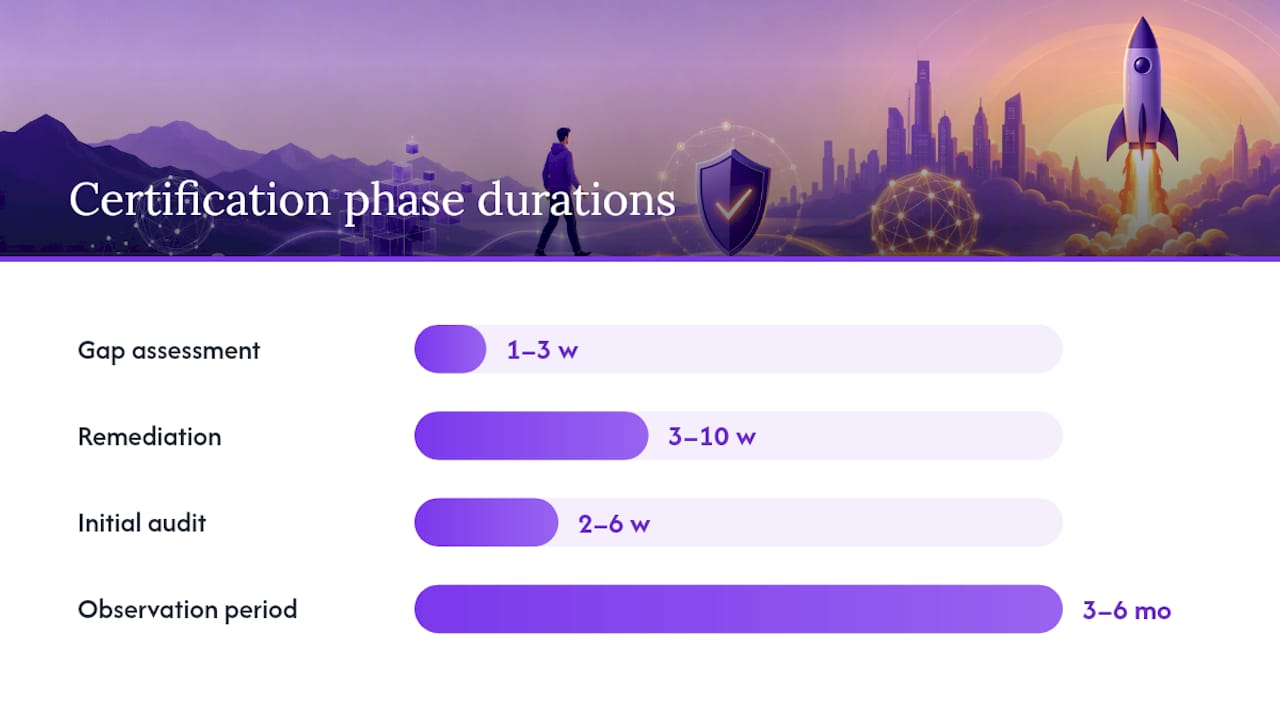
| Phase | Was passiert | Typische Dauer |
|---|---|---|
| Gap-Assessment | Bestandsaufnahme der vorhandenen Kontrollen gegenüber dem Zielrahmen und Identifikation fehlender Nachweise | 1 bis 3 Wochen |
| Nachbesserung | Aufbau oder Verbesserung von Richtlinien, Zugriffskontrollen, Logging und Lieferantenmanagementprozessen | 3 bis 10 Wochen |
| Erstaudit (SOC 2 Type I / ISO 27001-Zertifizierungsaudit) | Unabhängiger Prüfer oder Zertifizierungsstelle prüft Nachweise und stellt den Bericht oder das Zertifikat aus | 2 bis 6 Wochen |
| Beobachtungszeitraum (SOC 2 Type II) | Prüfer beobachtet den Kontrollbetrieb über einen Zeitraum, bevor der Type-II-Bericht ausgestellt wird | 3 bis 6 Monate |
| Überwachungsaudits (ISO 27001) | Zertifizierungsstelle überprüft Kontrollen jährlich zur Aufrechterhaltung der Zertifizierung | Fortlaufend, jährlich |
Praxistipp: Eine einfache ROI-Formel funktioniert in dieser Phase besser als ein vollständiges Finanzmodell: Nehmen Sie den Umsatz aus Deals, die derzeit durch Sicherheitsprüfungen blockiert oder verlangsamt werden, und dividieren Sie ihn durch Ihre geschätzten Zertifizierungskosten. Liegt dieses Verhältnis deutlich über 3 zu 1, schreibt sich der Business Case von selbst – für Ihr Vorstandsdeck.
Anstatt diese Bandbreiten zu schätzen, nutzen Sie einen Readiness- und Kostenschätzer, der auf Unternehmensgröße, Branche und aktuellem Sicherheitsreifegrad angepasst ist – denn ein zehnköpfiges Startup und ein 200-köpfiges Series-B-Unternehmen stehen selbst unter demselben Rahmenwerk vor sehr unterschiedlichen Nachbesserungsaufwänden.
Vorbereitung: Eine praktische Checkliste für dieses Quartal
Sie brauchen kein Sicherheitsteam, um in diesem Quartal echte Fortschritte zu erzielen. Sie brauchen eine priorisierte Liste und jemanden, der dafür verantwortlich ist, sie abzuarbeiten.
- Systeme und Daten inventarisieren. Erfassen Sie alle Systeme, die Kundendaten berühren, alle Drittanbieter mit Zugriff darauf und alle Mitarbeitenden mit administrativen Rechten.
- Kernrichtlinien dokumentieren. Zugriffskontrolle, zulässige Nutzung, Incident Response und Lieferantenmanagement sind die Richtlinien, nach denen Prüfer zuerst fragen.
- Zentralisiertes Logging aktivieren. Sie benötigen einen Nachweis darüber, wer wann auf was zugegriffen hat – in Ihrer gesamten Produktionsumgebung.
- Single Sign-On und Multi-Faktor-Authentifizierung durchsetzen. Das ist die einzelne Kontrolle, die Prüfer und Beschaffungsfragebögen am häufigsten bemängeln, wenn sie fehlt.
- Lieferantenrisikobewertung durchführen. Dokumentieren Sie, welche Daten jeder Unterauftragsverarbeiter verarbeitet, und bestätigen Sie, dass diese eigene Sicherheitsnachweise vorweisen können.
- Tabletop-Übung zur Incident Response durchführen. Spielen Sie mit Ihrem Team ein simuliertes Sicherheitsszenario durch, damit der Plan nicht rein theoretisch ist, wenn ein Prüfer danach fragt.
Wenn Sie beginnen, Angebote von Prüfern oder Beratern einzuholen, stellen Sie direkte Fragen: Welche Stichprobenmethodik verwenden sie für Type-II-Nachweise? Haben sie bereits Unternehmen in Ihrer Phase und Ihrer Branche zertifiziert? Was genau gilt als akzeptabler Nachweis und in welchem Format? Vage Antworten sind ein Warnsignal – die Kompetenz von Prüfern variiert erheblich, und ein ungeeigneter Prüfer ist einer der häufigsten Gründe, warum Zertifizierungsprojekte ins Stocken geraten.
Wenn Ihr Budget knapp ist, priorisieren Sie die Kontrollen, die den höchstgewichteten Fragen in typischen Beschaffungsfragebögen entsprechen: Zugriffskontrolle, Verschlüsselung, Incident Response und Lieferantenmanagement belegen in Enterprise-Sicherheitsprüfungen durchgängig die vorderen Plätze.
Praxistipp: Automatisieren Sie Logging, SSO und Secrets Management vor allem anderen. Diese drei Kontrollen erzeugen die Nachweise, die Prüfer in jedem Auditzyklus wiederholt anfordern – was bedeutet, dass die einmalige Automatisierung Ihnen jedes Jahr, in dem Sie rezertifiziert werden, manuelle Nachweiserfassungsarbeit erspart.
Eine 80-Punkte-Zertifizierungscheckliste kann Ihnen dabei helfen, diese Arbeit zu strukturieren, wenn Sie mehr Granularität wünschen, als ein quartalsweiser Plan bietet.
Wo Startups bei der Zertifizierung Fehler machen
Der teuerste Fehler ist ein zu weit gefasster Scope. Gründer versuchen manchmal, vom ersten Tag an alle Systeme des Unternehmens zu zertifizieren, anstatt den Scope auf das Produkt und die Systeme zu beschränken, die tatsächlich Kundendaten berühren. Ein enger, klar definierter Scope führt zu einer schnelleren und günstigeren Zertifizierung – der Scope lässt sich später mit dem Wachstum des Unternehmens erweitern.
Der zweithäufigste Fehler ist die Beauftragung eines unqualifizierten oder unerfahrenen Prüfers. Die Kompetenz von Prüfern variiert enorm, und eine systematische Überprüfung der Zertifizierungsforschung weist ausdrücklich auf die Abhängigkeit vom Prüfer als eine der zentralen Herausforderungen des Zertifizierungsmodells hin – neben den hohen Kosten. Ein günstiger Prüfer ohne Verständnis der SaaS-Architektur fordert die falschen Nachweise an, verlangsamt den Prozess und stellt manchmal einen Bericht aus, der anspruchsvolle Enterprise-Käufer ohnehin nicht zufriedenstellt.
Wer eine Zertifizierung als einmaliges Ereignis statt als fortlaufende Praxis behandelt, bekommt ein Jahr später Probleme, wenn Überwachungsaudits oder Type-II-Verlängerungen zeigen, dass auf Papier dokumentierte Kontrollen aufgehört haben, befolgt zu werden, sobald der erste Prüfer das Haus verlassen hat. Die Nachweissammlung muss eine kontinuierliche, automatisierte Gewohnheit sein – kein Hektikprogramm in jedem Auditzyklus.
Planen Sie einen Nachbesserungspuffer ein – etwa 15 bis 20 Prozent auf Ihre ursprüngliche Schätzung –, denn Gap-Assessments decken fast immer unerwartete Probleme auf. Als Faustregel gilt: Unterbrechen Sie die Zertifizierungsarbeit, wenn sie mehr als ein Viertel Ihrer Engineering-Kapazität verbraucht, ohne dass ein konkreter Enterprise-Deal oder ein Investorengespräch die Dringlichkeit rechtfertigt. Setzen Sie die Investition fort, wenn ein bestimmter Deal, ein regulatorischer Termin oder eine Finanzierungsrunde im Kalender steht.
Was die Forschung tatsächlich zeigt
Der stärkste und am häufigsten wiederholte Befund der Zertifizierungsforschung ist eindeutig: Zertifizierungen bewirken eine messbare Risikoreduktion, stärken das Kundenvertrauen und verbessern die interne Sicherheitssteuerung. Ein systematischer Literaturüberblick zu Zertifizierungsergebnissen bestätigt, dass diese drei Vorteile in den untersuchten Studien am häufigsten auftauchen – während Kosten und Prüferkompetenz als am häufigsten genannte Nachteile hervorgehoben werden.
| Behaupteter Vorteil | Belege | Belastbarkeit der Belege |
|---|---|---|
| Kürzere Enterprise-Verkaufszyklen | Anbieter- und Branchenberichte nennen Reduzierungen von rund 30 bis 40 Prozent | Mäßig, überwiegend anbieterseitig berichtet |
| Niedrigere Cyber-Versicherungsprämien | Berichte nennen Reduzierungen von rund 25 bis 30 Prozent nach der Zertifizierung | Mäßig, kontextabhängig |
| Reduzierte sicherheitsvorfallsbezogene Kosten | Branchenberichte zu Vorfallskosten plus akademische Befunde zur Risikoreduktion | Kohärent, aber begrenzt, variiert nach Sektor |
| Verbessertes Kundenvertrauen und -bindung | Verbraucherverhaltendaten zu Anbieterwechsel nach Sicherheitsvorfällen | Mäßig, korrelativer Natur |
| Governance und operative Reife | Konsistenter Befund über mehrere akademische Überprüfungen hinweg | Stark, gut repliziert |
Die empirische Forschung zur Informationssicherheitszertifizierung identifiziert konsistent Risikoreduktion, Vertrauensaufbau und verbesserte organisatorische Sicherheitssteuerung als die deutlichsten Ergebnisse, während Kosten und Abhängigkeit von der Prüferkompetenz die am häufigsten genannten Einschränkungen des Zertifizierungsmodells bleiben.
Diese Lücke ist relevant. Die Zahlen zu Verkaufszyklen und Versicherungsprämien stammen überwiegend aus Anbieter-Fallstudien und Branchenberichten und nicht aus unabhängiger akademischer Forschung. Behandeln Sie sie daher als richtungsweisend, nicht als garantierte Ergebnisse für Ihr Unternehmen. Die Befunde zu Governance und Risikoreduktion stehen auf soliderer akademischer Grundlage. Wenn Sie ein Vorstandsdeck erstellen, können Sie die Vertrauens- und Governance-Vorteile mit Überzeugung anführen und die Umsatzzahlen als realistische Bandbreiten statt als Versprechen darstellen.
Wann eine Zertifizierung sich lohnt – und wann sie warten kann
Eine Zertifizierung amortisiert ihre Kosten am schnellsten unter bestimmten Bedingungen: Sie verkaufen an regulierte Branchen oder Enterprise-Käufer, die sie vertraglich fordern; Sie befinden sich in einer Series-A-Runde oder einer späteren, bei der die Due Diligence der Investoren sie erfordert; oder Sie expandieren in einen Markt, in dem lokale Käufer einen international anerkannten Standard wie ISO 27001 erwarten. Außerhalb dieser Bedingungen ist die Investition echter Engineering-Zeit in eine vollständige Zertifizierung vor dem Product-Market-Fit in der Regel eine Fehlallokation knapper Ressourcen.
Die einzige Entscheidungsregel, die es wert ist, in eine Vorstandsdiskussion einzubringen: Wenn ein konkreter Deal, ein Investor oder eine Marktanforderung spezifisch am fehlenden Zertifikat scheitert, verfolgen Sie es jetzt; wenn eine Zertifizierung ein hypothetischer zukünftiger Vorteil ohne konkreten Deal ist, bauen Sie die zugrundeliegenden Kontrollen opportunistisch auf und verschieben Sie das formale Audit.
Die am besten geführten Startups behandeln eine Zertifizierung nicht als separaten Workstream, der dem Engineering-Roadmap aufgepfropft wird. Sie integrieren Zugriffskontrolle, Logging und eine standardmäßig sichere Architektur von Anfang an in das Produkt selbst – was genau der Grund ist, warum eine frühe Einführung in der Regel weniger kostet, als Sicherheit nachträglich in ein Produkt einzubauen, das bereits über einige Dutzend Kunden hinaus skaliert ist. Verankern Sie die ISMS-Gewohnheiten jetzt – und das Audit wird zur Formalität statt zur Feuerwehraktion.
Ihr ISO 27001-Projekt budgetieren, bevor Sie sich festlegen
Zertifizierungskosten anhand von Blog-Post-Bandbreiten zu schätzen ist der Weg, auf dem Gründer entweder das Projekt unterfinanzieren oder ihren Vorstand mit einer überhöhten Zahl erschrecken. Eine maßgeschneiderte Schätzung schlägt jedes Mal eine generische Bandbreite, denn Ihre tatsächlichen Kosten hängen von Unternehmensgröße, Branche und dem Reifegrad Ihrer aktuellen Kontrollen ab.
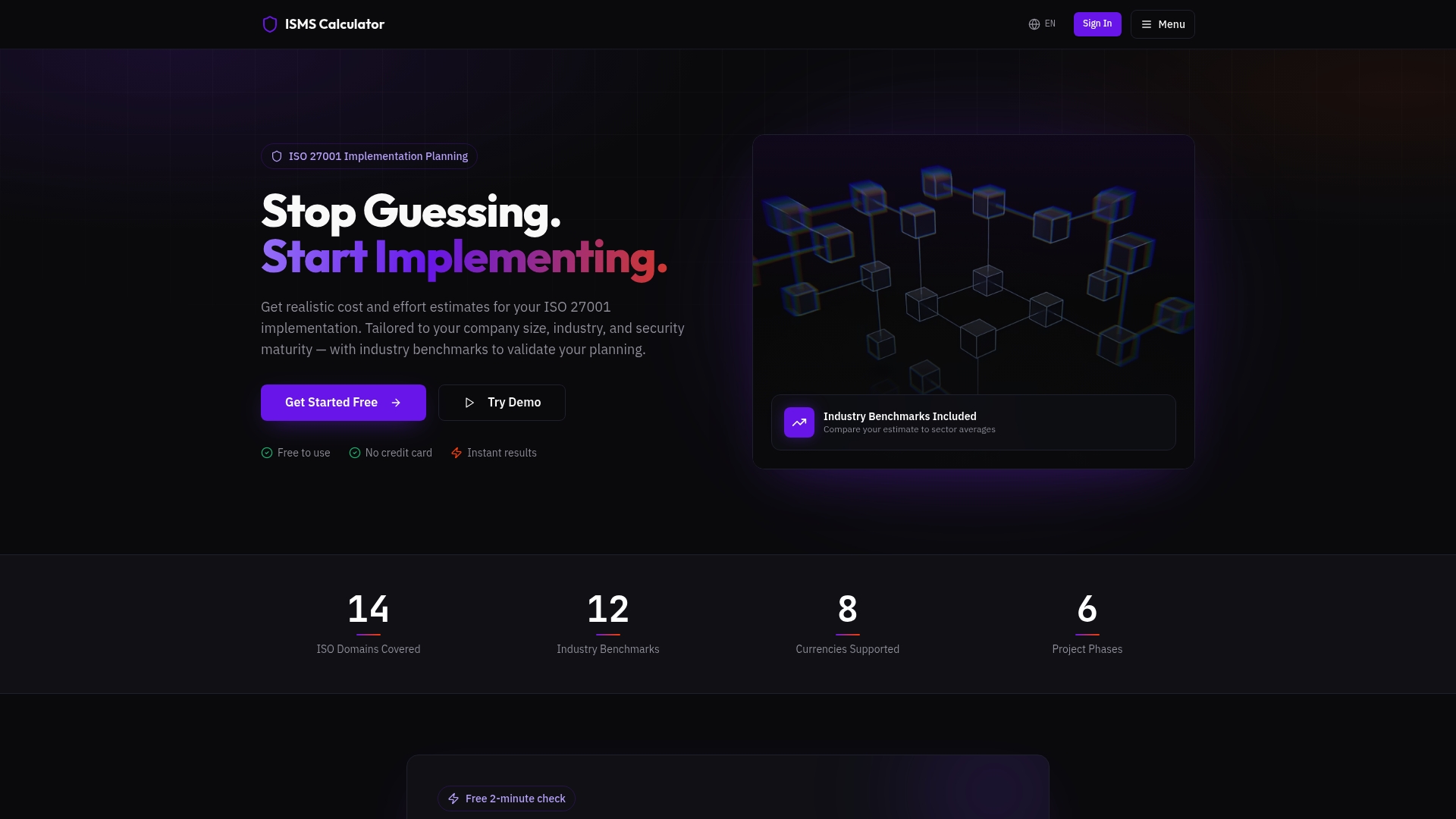
Der Readiness- und Kostenschätzer von Ismscalculator liefert Ihnen eine Aufschlüsselung, die auf genau diese Variablen abgestimmt ist: eine maßgeschneiderte Kosten- und Aufwandsprojektion, einen Gantt-ähnlichen Implementierungszeitplan, den Sie der Engineering-Leitung übergeben können, domänenspezifische Reifegradbewertungen über alle vier ISO/IEC 27001:2022-Kontrollthemen sowie einen PDF-Export, den Sie direkt in einen Investoren-Datenraum oder eine Anbieter-Ausschreibungsantwort einfügen können. Gründer nutzen diese Schätzungen als Planungsinput für Vorstandsgespräche und Fundraising-Decks – nicht als Ersatz für ein endgültiges Angebot der Zertifizierungsstelle. Die tatsächlichen Gebühren der Zertifizierungsstelle variieren je nach endgültigem Scope und gewähltem Prüfer.
Beginnen Sie mit dem kostenlosen 2-Minuten-Readiness-Check, um zu sehen, wo Ihr aktueller Reifegrad steht, oder führen Sie eine vollständige ISO 27001-Readiness-Bewertung durch, um eine detaillierte, teilbare Schätzung vor Ihrem nächsten Vorstandstreffen oder Prüfergespräch zu erhalten.
Häufig gestellte Fragen
Hilft eine Sicherheitszertifizierung dem Startup-Wachstum tatsächlich, oder ist sie überwiegend ein Compliance-Kostenfaktor? Sie wirkt als beides, aber der Wachstumseffekt ist real und messbar. Zertifizierte Startups berichten von schnelleren Enterprise-Verkaufszyklen und weniger blockierten Deals in der Beschaffungsphase – weshalb Gründer, die an Mid-Market- oder Enterprise-Käufer verkaufen, eine Zertifizierung zunehmend als umsatzfördernde Investition statt als reinen Kostenfaktor betrachten.
Welche Zertifizierung sollte ein Startup zuerst anstreben: SOC 2 oder ISO 27001? Beginnen Sie mit dem Rahmenwerk, das Ihre zahlenden Kunden tatsächlich fordern. US-amerikanische B2B-SaaS-Unternehmen benötigen in der Regel zuerst SOC 2, da amerikanische Beschaffungsteams es am häufigsten anfordern; Startups, die international oder in regulierten Branchen verkaufen, brauchen ISO 27001 meist früher.
Was kostet eine SOC-2- oder ISO 27001-Zertifizierung ein Startup typischerweise? Die Kosten hängen stark von der Unternehmensgröße und dem vorhandenen Sicherheitsreifegrad ab. Ein fokussierter SOC-2-Type-I-Aufwand für ein kleines Startup liegt häufig im unteren bis mittleren fünfstelligen Bereich, während ISO 27001 aufgrund des breiteren Scopes und der mehrjährigen Überwachungsauditanforderungen in der Regel mehr kostet.
Wie lange dauert es, bis ein Startup zertifiziert ist? Ein SOC-2-Type-I-Bericht kann für ein fokussiertes Team in drei bis acht Wochen erreichbar sein, während ein Type-II-Bericht danach einen drei- bis zwölfmonatigen Beobachtungszeitraum erfordert. ISO 27001-Zertifizierungsaudits folgen in der Regel einer Gap-Assessment- und Nachbesserungsphase, die mehrere Monate dauert.
Interessieren sich Investoren tatsächlich für Sicherheitszertifizierungen bei der Due Diligence? Ja, besonders ab Series A. Eine Zertifizierung gibt Investoren dokumentierte Belege für operative Reife und geringeres Risiko, was Due-Diligence-Zeiträume verkürzen und Ihre Position in Bewertungsgesprächen stärken kann.
Was ist der größte Fehler, den Startups bei der Zertifizierung machen? Den Scope zu weit zu fassen und Systeme einzubeziehen, die keine Kundendaten berühren, sowie Prüfer ohne Startup-spezifische Erfahrung zu beauftragen. Beide Fehler erhöhen Kosten und Zeitaufwand, ohne das tatsächliche Sicherheitsergebnis zu verbessern.
Quellen
- Systematischer Literaturüberblick zu Vorteilen und Herausforderungen der Informationssicherheitszertifizierung
- Why Certification Has Become a Strategic Control for CISOs | CISO Collective
- The Real Business Value of ISO 27001 Certification - Beyond the Badge | SecComply
- Startup Compliance Guide: SOC 2, ISO 27001 & Beyond | LowerPlane
- Building Customer Trust Through Security Certifications | BPM
- Why Startups Need SOC2 Before Series A | 100x Engineering